Category Archives: Lexington-70’s

A Quietly Extraordinary Afternoon

40-plus people gathered in a room in an historic neighborhood in Lexington. The people brought food. They brought wine. They brought minds and hearts questing for a higher dialogue than we endured in Cleveland last week. They were promised Beethoven. That was the lure that brought them out on an insufferably hot Central Kentucky afternoon.

A word about the room itself.

It’s located on New Street; no more than an alley inaccurately named, since it’s one of the oldest streets in town. The room was designed with this afternoon in mind. As our pianist declaimed; “It’s not a living room, it’s a musical salon.” The walls of the room are ornamented with musical instruments – real musical instruments with individual histories of performance. The room is strewn with photographs that document the personal saga of our hostess performing the words of Thomas Merton with John Jacob Niles.

Indulgent Side Note.
Playboy 02

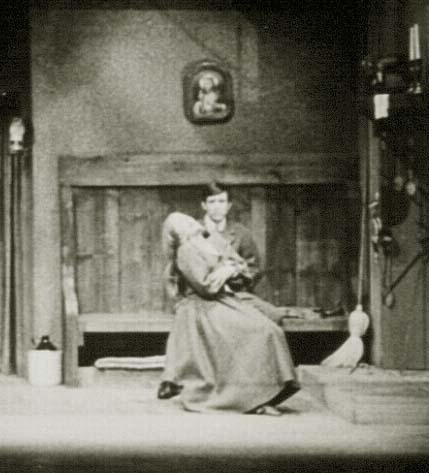
  • My first show at the University of Kentucky was J. M Synge’s “Playboy of the Western World” in 1969 (pictured above). I had been a student at UK for about four weeks when the show opened. I initiated the show by slowly pushing a center stage door open, peering straight out at the audience, and timidly inquiring; “Where’s himself?” On opening night, I pushed the door and peered straight into the whiskered face of John Jacob Niles. I wasn’t quite sure if I should say my line or simply sit down on the floor and wait for him to pull out his dulcimer and sing. Understand, I would pretty much be in heaven with either choice. My fellow actors, the rest of the audience, and probably Mr. Niles himself were lucky that I chose to move on with the play.

End of Indulgent Side Note.

Our hostess this afternoon is Jackie Roberts, a remarkable singer and teacher who has nurtured and continues to nurture several generations of Lexington musicians. When I arrived early this afternoon to set up the chairs for the concert, she had already completed the task herself and “hoped that was alright.” We sat and chatted. She told me with a pride I could only envy from afar that one of her young students had just been cast in this October’s production of “Ragtime” by the University of Kentucky Opera Theatre.

The crowd, the food, and the performers arrived.

The musical program was superb.

Dr. Tedrin Lindsay’s introduction to his performance of Beethoven’s Piano Sonata #2 to open the afternoon placed us in the time and spirit of the piece. I felt as if I was sitting, turning pages for, and peeking over the shoulder of Beethoven as Tedrin played. It was not a performance tethered to today. It was adrift in time. We could have been in a room today, a room in Tedrin’s early years (he played today from his sheet music as a youth), or a room in Vienna in 1796. And the Rondo ended with the sigh Tedrin promised, closely followed by my own.

Then Dr. Lindsay introduced Janet Scott, a gifted local actress. I’ve worked with Janet in two productions by On the Verge Theatre; Lillian Hellman’s “Little Foxes” and Shakespeare’s “Much Ado”. Tedrin and Janet were featured last year in Athens West Theatre’s “33 Variations” by Moises Kaufmann. Janet and Tedrin performed several selections from that play which features Beethoven’s Diabelli Variations. Janet’s diction in this material is as precise and pleasing as the music. Her character’s initial striving for logic decays into a longing for more time…more variations…and the music ends as of course it must…teasing us with the suggestion of the perpetual existence of more music…but no more time. Bravo Beethoven! Brava Ms. Scott!

I think.

Dr. Lindsay closed the afternoon with Beethoven’s Piano Sonata #18, an excellent choice after the first two selections and a favorite of mine. It sounds so modern, so purposeful, so energetic (but energetic with a plan). This is not a young person’s damn the torpedoes idealism. It’s a celebration and exhortation of what’s possible if we’ll just get up and do it.

The room was rapt.

There was no fear in the room.

There was art in the room.

And we all participated.

And we were all made great again

…as we always are when art is in the room.

This happens with frequency in Lexington. We should recognize it and celebrate it every time it does.
Pre-Ernest Musings

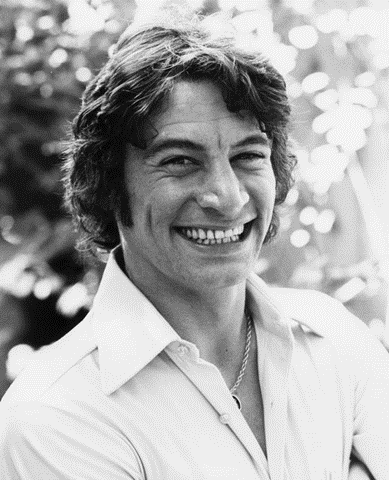
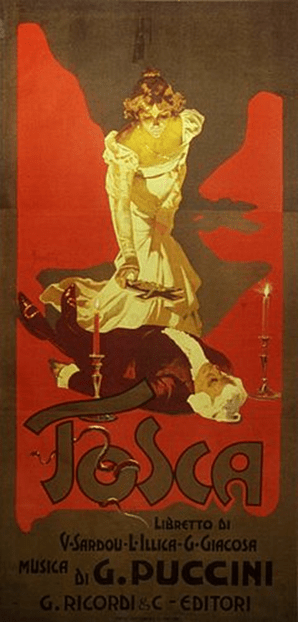
I had the great good luck to be about the same age as Jim Varney which means I’m old and any reminiscences I might relate about Jim would have to be a ragout of truth, legend, wishful thinking, the haze of decades, and a heavy dose of; “this is how it shoulda been”. To quote singer/songwriter Mitch Barrett; “I ain’t lyin’, I’m just tellin’ you a story.”

I met Jim when we were both in high school. I was participating in the State High School Drama Festival. It was held that year in a cavernous theater on the Eastern Kentucky University campus. I had performed the day before and was sitting in the house watching that day’s performers when Jim came loping up the aisle. At that time he was legendary as a high school actor and was already developing riffs and routines that would evolve later into his standup comedy routines and, of course, Ernest. He stopped where I was sitting, squinted, stuck out his jaw and drawled;

“I’m Jim Varney.”

I snappily replied; “Yes, you are.”

“You’re Roger Leasor.”

“Yes, I am.” (striving to maintain the high level of repartee).

He then took us to a higher place and purpose; “I can spell ‘antidisestablishmentarianism’ – on my hands!”

I hurled the gauntlet; “Then do it.”

He proceeded to flop his hands about like a cross between a birthday party magician, a seal asking for a fish, and Ted Cruz giving a speech.

When he completed his charade, I took a wild shot and pointed out; “You left out ‘dises’.”

He squinted harder and said; “Well, goddy-dam, that’s closer’n I usually get.”

He sat down next to me and for the next two hours I wept with laughter and shame as he eviscerated each performance he didn’t like and grunted at each performance he admired.

Jim was good company, but he “was not a tame lion” (thank you C. S. Lewis).

Puns or Guns? A Time to Declare.

I have been connected to the Guignol Theatre and the University of Kentucky Theatre Department since my junior year at Bryan Station High School.

My high school English teacher arranged for our class to have access to discounted tickets to UK’s production of Shakespeare’s TWELFTH NIGHT. Jill Geiger played a major role in that production. Jill went on to perform with and later own The Dorset Playhouse in Vermont. She was a successful person.

The day before we attended the show, my teacher gave us instructions on how we were to behave in “The Guignol”. The quotation marks come from my remembrance of my teacher’s obvious reverence for this Temple of the Arts we were entering. How quaint.

I wore my clip-on tie (my fellow Guignolite and playwright/screenwriter Charles Edward Pogue – a successful person – was not to teach me to tie a proper knot for another five years), applauded at all the proper places, and was suitably impressed. So much so that I attended (on my own this time) UK’s next production in the Guignol of Richard Brinsley Sheridan’s THE RIVALS. Bekki Jo Schneider (friend, mentor, and ex-sister-in-law) played a major role in that show. She became the owner/operator/director of Derby Dinner Playhouse in Southern Indiana. She was a successful person.

The next year, my senior year in high school, I attended DARK OF THE MOON in the Guignol and UNDER MILKWOOD in the Laboratory Theatre which is now named the Briggs Theatre (Wally Briggs spent his adult life teaching theatre to UK students. Yes, he was a successful person). DARK OF THE MOON featured Julieanne Pogue. Julieanne has gone on to a strong regional acting career, become an award-winning reader of books for the blind, and an uber-caring psychologist. Julieanne is a successful person.

Both of these shows also featured a freshman in leading roles.

This explains why I attended UK to study theatre. Where else could I possibly want to go? UK offered an immediate opportunity to act…..in major productions…..in real costumes…..on beautiful and exciting sets…..in front of real audiences.

I remember these audiences as being drawn from ALL of Lexington. John Jacob Niles (another successful person) sat in the middle of the first row every opening night I can remember. Teachers from Lexington schools were there. Mary Agnes Barnes reviewed for Lexington Herald. John Alexander reviewed for the Lexington Leader. Betty Waren wrote a theatre page for the Herald every Sunday. The Theatre Department faculty was there…usually multiple nights. One memorable Sunday matinee was attended by Jose Ferrer (he was successful too).

I attended UK for two and half years, performed in seventeen shows, and became an adult; a thinking, listening, caring, listening, evaluating, listening, tax-paying, listening, voting, listening adult.

The arts do that for you. They make you whole. They make you reason. They make you listen.

Teach our children to add and subtract. Teach them to write a logical paragraph. Teach them to tell a whimsical story. Teach them their country’s history. Teach them the scientific method. Teach them to sing. For God’s sake, teach them civics so they know how their government works and are thus less vulnerable to the lies being shouted.

Make them whole. Make them successful.

Frankly, I feel safer around a good guy with a pun than a good guy with a gun.

How I Met Tosca

I discovered opera in the Cub Scouts.

Now admit it, that’s a sentence you never thought you’d read.

But it’s true. Many times my “reminiscences” are not true and I don’t care, but this one I think will be…mostly.

I was manning a booth in a Saturday afternoon Cub Scout Jamboree being held, as I remember, on the floor of Memorial Coliseum. “Manning”…how quaint…how old could I have been? I was a cub scout lookin’ for a badge.

As I recall, there were not too many people in attendance that afternoon. Thus, my duties were not compelling. To be exact, had I the word “ennui” at that age, I would have relished the chance to use it so aptly.

The adjoining booth was staffed by an adult scout leader who was whiling away the afternoon listening to the Metropolitan Opera Broadcast on WBKY-FM (the call letters were later changed to WUKY). I knew the Cincinnati Reds were playing that same afternoon and I thought I might entice him to switch over to the game. Sly boots that I am, I casually asked what he was listening to.

He just looked at me. I think he was considering how much he could tell me before he’d have to kill me.

How could he explain the love-sick foolishness of Cavaradossi or the jealous foolishness of Tosca or, to put as simply as possible, the un-foolishness of the music…ah.yes, the music? I don’t recall there being an achievement badge for opera.

Finally, he explained; “We’re nearing the end of the first act. In a moment, you’ll hear three gigantic, scary chords. They will announce the entrance of a truly evil, foolish man. His name is Baron Scarpia. His name is also those three chords. If you ever hear them again, be assured he is nearby. If you’re not hearing them on a radio or a stage, I would advise you to flee.”

Sure enough, I heard the chords, and wide-eyed and wide-eared I listened to Scarpia’s scene with Tosca to the end of the act. When it finished, I asked the scout guy what Scarpia had said at the end (the opera being in Italian and my Italian being no better then than it is now). He translated; “Tosca! You make me forget God!!”

Well, my little Southern Baptist jaw dropped at that. I listened the rest of the afternoon and was hooked.

I had experienced grandeur, and largeness of spirit, and the gargantuan tragic foolishness to which humans in a post-Puccini world can aspire. Mostly, I fell in love with Tosca (not liked…loved) and I hated Scarpia (not disliked…hated). My little Cub Scout world had expanded exponentially. My values had not changed, but they were applied to a larger venue. I had been made, not different, but bigger.

Yes, I was hooked and I have gone through decades of being alert for “those three chords.” Scarpia will not catch me by surprise again!

Backyard Baseball

Ah, I see the Dodgers are on TV baseball this week; from Dodger Stadium. Great. Now I’m gonna want a Dodger Dog all night.

I know I’ve mentioned once or twice…or perhaps a hundred times before how much I love baseball. I come by this infatuation honestly and early.

I grew up in North Lexington, on a street named Gay Place. Go ahead, snicker if you wish, but all it meant to us then was that it made it easy to fill out any forms requiring a home address. I didn’t need to write out street names like “Henry Clay Boulevard” and “Avenue of Champions” until much later in my intellectual development. To be perfectly accurate, the street was South Gay Place and yes, there was and still is a North Gay Place. Today I suppose we would call this configuration a cul-de-sac, but in the late 50’s/early 60’s the only French we knew was French’s Yellow Mustard (See? Completely obsessing on those Dodger Dogs).

On Gay Place, in the summer, we played baseball all the time, everywhere, and with all kinds of equipment or no .

We mowed the vacant field behind our street and played on the stubble. The field was severely canted on a hill. What did we care? Oh sure, the run uphill to first base was arduous and rarely successful, but if you made it, you could attain Olympic speed from first to third. Flat is seriously over-rated.

We played intense whiffle ball. We would locate the densest shrub in the neighborhood and put home plate in front of it. That eliminated the need for a catcher. I recall one memorable game when my participation was cut short after I reached into the catcher/bush to retrieve the ball and retrieved a wasp nest instead.

We played in driveways using a fishing cork for the ball and a broomstick for the bat.

My favorite games were played in our backyard. The ground rules were Byzantine and vital to know to determine a winning strategy.

  • A ball hit over the right field fence was a home run UNLESS;
    • It crossed over my dad’s vegetable garden. Then it was a foul ball. If it landed in the garden, it was an out – no, it was the ultimate out. We weren’t allowed to play anymore that day. OR…
    • …if the people who lived in that house were home. Then the ball was considered un-retrievable until they left and the game was over or suspended.
  • A ball hit over the left field fence was considered to be “in the outfield”. It could be caught on the fly for an out or fielded to hold the runner to a single or a double. UNLESS…
  • …it was a ball hit over the left field fence AND traveled beyond the tree in the middle of the neighbor’s back yard. That was considered to be a home run and would initiate an argument over measurement of such vitriol it would dwarf today’s chats between Trump supporters and non-supporters.
  • Games would continue until twilight, at which time we would switch to horseshoes, just to irritate ALL the neighbors.

No matter which incarnation of “baseball” we happened to be playing each day, the score for each game was meticulously kept and just as meticulously forgotten the next day. Players switched teams with complete fluidity. Feelings were hurt…and healed. People were offended…and survived. Heroes were made…and humbled. The sun set…and then rose again. We could spell “Gay Place”, but we couldn’t spell “Republican”, or “Democrat”. We had heard of the Reds and the Yankees, but we had never heard of conservatives or liberals. If, in the middle of the game, we felt the call of nature, we ran home or to a neighbor’s house or to that catcher/bush and no one checked any birth certificates about it.

We had all the time in the world, but there was no time to waste on foolishness like that. We had a game to play.

Oh yeah, I love baseball. I earned the right to that love. Those wasps…!