Category Archives: Lexington Theatre

Broken Things

I’m old enough now to have been several things. Over the last six decades, I’ve been a library clerk, a husband, a retail store manager, a stepfather, a student, an advertising manager, a wine consultant, a friend, a singer in musical theatre, a husband again, a Frisbee artiste, a party planner, a government relations director, a voracious reader, the president of a chain of liquor stores, a book collector, a singer in a rock-n-roll band (the whitest soul-singer you’ve ever seen), and……an actor/storyteller.

I’ve been pretty good at some of these things. Others? Well…I still throw a decent Frisbee.

During the “ugly hour” (thank you, David Bromberg for that troubling concept) of looking in the morning mirror, the person I most often see is that last listed; actor/storyteller. It feels like I have consumed a huge chunk of my life by instantly pondering in every situation; “How am I gonna tell other people about this?”

Storytelling and acting…it’s my comfortable place.

So…

I’m remembering a time when I was rehearsing a play.

It was Athens West Theatre’s production of The Christians by Lucas Hnath and I was spending my evenings rehearsing a gripping and relevant script with a literate and incisive director and a cast whose passion humbled me.

It was a real good time.

What enhanced the rehearsal process were the spaces in which we rehearsed.

We rehearsed in various rooms at a private school in Lexington. One night we would be in the school’s cafeteria, the next in the school’s music room, the next in the school’s theatre office. The spaces were warm and clean and neat. Everything worked. Everything pointed to civility and creativity. Their hygienic competency inspired us to leave the spaces as pristine as we found them. That was their message to us; “Work. Create. Dream. Respect those that follow.”

I have worked in rehearsal spaces (and theatres themselves) that were far from pristine. In one space we tried to create an Antarctic setting in the basement of a downtown building that was thermostat-challenged in January (I assure you imagining the cold was no problem at all). In another, we rehearsed Sam Shepard and Sherlock Holmes in a building that shook with every passing car and the dust hovered in the air looking for a parking spot in our lungs. Another space nourished our creative efforts with water fountains that spewed burnt-siena-tinged fluids. Other spaces saluted our presence with deliberate car horns. Shakespeare was challenged by rain and heat and barking dogs (sometimes simultaneously).

Our storytelling efforts were not improved in these broken environments.

Striving to create, surrounded by broken things.

It reminds me of a Christmas I witnessed where a six-year-old boy received a bonanza of presents. Every complicated gizmo advertised on TV that holiday season was unwrapped Christmas morning. He was delighted and overwhelmed…for a day. By the next day, the charms of every toy and gizmo had faded. The six-year-old with six-year-old motor skills had compromised every item in some way. He sat in his play space pitifully surrounded by things that did not work as they should. They were all broken…in some way.

Surrounded by broken things.

What good can possibly come from that?

I was envious of the bubble created by the private school. I wanted to play with all the guitars and drums. I wanted to share their meals and thrill to their daily discoveries. The message to the students was clear; “We don’t expect you to merely survive. We expect you to thrive. We expect you to make things better.”

But outside the bubble…?

What about the broken things elsewhere?

Bridges, water slides, county water systems, sinking cities, neighbors sinking into substance abuse, and teenagers carrying weapons of mass destruction and brains that will not be fully developed for another five to ten years…

We are surrounded by broken things.

We are not improved by the messages those broken things impart.

We must fix the broken things for everyone.

It’s not dramatic…or sexy…or rapid. I’m old and may not see the harvest of such a mending, but I know it’s the better path and I’ll sleep better and tell a better story if we’re heading in a better direction.

Work.

Create.

Dream.

Respect those that follow.

This is not hard.
Just Act the Hell Out of It

In the theatre, I have been blessed to work with inspiring directors. Many of them seemed to enter and re-enter my life at times when they could fulfill dual roles; stage director and off-stage mentor. Just as I could not have become the on-stage kings, fools, lawyers, doctors, and errant knights required, so I could not have become the geezer I am today (for better or worse) without their genuine care and, at times, curious advice.

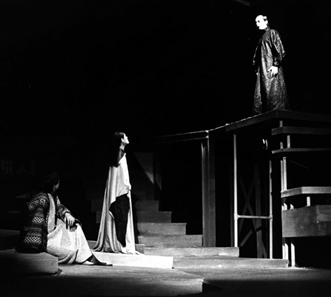
Prof. Charles Dickens lurking on the right

Perhaps preeminent among them, if for no other reason than my bewildered youth at the time, was Charles Dickens.

Yes, that was his real name.

Charles was my adviser at UK. On the Tuesday before my first year at UK, during the “advising” session required before classes began on Monday, Charles filled out my roster of classes (my input was restricted to an awed and tiny “ok”), and informed me that my part-time job at the public library wouldn’t impede my freshman theatre activities since they didn’t cast freshmen anyway…but that I should attend and participate in the Sunday auditions of the season’s opening show (which he was directing) for the experience.

I responded with another tiny; “ok”.

Monday morning, at 9:00, I attended my first college class (Physics: 101 – we learned to bend water with a comb) and was cast in my first show (“Playboy of the Western World”). I was slack-jawed that September at my Physics classmates (“Is that real water?”), and dazzled by my sometimes shabby but always quick cast mates in rehearsal. My path was clear.

That was in the fall of 1969.

In the spring, Charles cast me in his elaborate production of Shakespeare’s “Measure for Measure”. By then, I was a complete “gym rat” in the theatre. Every day began and ended in the Fine Arts Building; the Guignol Theatre, the Laboratory Theatre (now the Briggs), the Green Room, the Scene Shop, the Costume Shop…even an occasional classroom. I lurked in every rehearsal I could find.

Angelo, on the right, acting the hell out of it

During “Measure”, Charles was deep into his Peter-Brook-THE-EMPTY-SPACE period. I may have learned half of what I know about the theatre listening to him coach actors in these rehearsals. One night, Bill Hayes, a nice actor and UK alumnus brought in by Charles to play “Angelo”, paused rehearsal to question the meaning of the line; “Let’s write ‘good angel’ on the Devil’s horn, tis not the Devil’s crest.” Charles sprang to the stage and took Bill’s script and they pondered…and pondered… Finally Charles handed the script back to Bill with the profound instruction; “Just act the hell out of it.”

Just act the hell out of it?

I had fallen in love with Shakespeare with “Measure for Measure”.

I knew what that line meant!

I could say that line!!

I could change people’s lives with that line!!!

Trump would never be elected if I said that line!!!!

I swore if I ever got the chance…

Well, of course, having sworn, I did, 23 years later.

Me acting the hell out of it in 1993

In 1993, the uber-smart Ave Lawyer cast me as “Angelo” in her production of “Measure”. This production featured a remarkable cast; Eric Johnson, Sidney Shaw, Holly Hazelwood Brady, Laurie Genet Preston, Jeff Sherr, Joe Gatton, Glenn Thompson, Donna Ison, Karen Czarnecki, Spencer Christiansen… WOW!

I had my chance.

I said my line.

I acted the hell out of it.

I changed people’s lives.

I saved the planet…from something.

And dammit, Trump was still elected.

I got up the next day and went to my day job.

A Dream Cast…in a Nightmare

Lexington has theatre this week! I’m reminded of a dream cast from antebellum days. You can pick whichever “bellum” you prefer, I’m sure this “ante’s” them all.

Imagine, if you will, a show in Lexington with a cast consisting of Trish Clark, Jane Dewey, Eric Johnson, Kevin Hardesty and Paul Thomas.

Sweeter than sweet. If you’re the director of that cast your duties are basically to turn on the lights at rehearsal, yes?

Now, imagine that show being not so hot.

In fact, imagine it being thoroughly shredded by the Herald’s reviewer.

As Tom Waits so elegantly puts it;

“Impossible you say?

Beyond the realm of possibility?

Nah!”

It can and did happen. I have the scars.

All it takes is a director with little directorial experience, even less experience with improvisational farce, and no real vision beyond “Wouldn’t it be cool if…?” (I’m reminded of Mickey Rooney’s immortal query; “Hey! Why don’t we put on a show!!”).

If you’re lookin’ for a director of your production of Bullshot Crummond with exactly that resumé, I’m your guy.

This was back in the early, early years of Actors Guild when they were performing in the basement of Levas’ Restaurant on Vine Street. The cast worked hard. Kevin played about eight different characters. Eric played two, including one duet scene with himself (a dream come true for him, I’m sure). Trish was ultra-sultry. Jane was innocent and dizzy. Paul was checking out the locations of the exits. All were trying to figure how to get new agents when they had no agents to begin with.

What can I say?

The show seemed funny to me. (BUZZER! Thank you for playing, Mr. Leasor.)

Then came opening night and we played our farce to an audience of seven (7) (VII)…plus the reviewer (Tom Carter).

It was a long night’s journey into sad.

(Fade to…)

The next morning I awoke to the devastating review. Tom summed things up by saying “Leasor has done his friends the disservice of casting them in roles for which they are not suited.”

Harsh.

My wife, Janie removed the poison/razor/gun from my hand and convinced me that though life was obviously no longer worth living it was still necessary to do so as we still owed a lot of money on the house.

Therefore, my next concern was how to help my cast through this undeserved (on their part) catastrophe.

I called an acquaintance who owned a t-shirt shop, set the wheels of foolishness in motion, and that night each member of the cast found, at their make-up station a bright red t-shirt that read “I am NOT Roger Leasor’s friend, please cast me”.

It seemed to help break the ice.

After that evening’s show, Eric went out for his post-show “snack” to Columbia’s Steakhouse (that Nighthawk Special and a Diego Salad always serves well when it’s time for a little something to take the edge off at midnight). He was resplendent in his new t-shirt. Guess who was standing at the bar…none other than the reviewer himself. Eric, of course, diplomat that he is, made sure Tom saw the shirt…less than 24 hours after the review was written!

Lexington’s a small town at heart. I saw Tom at lunch the next week at the Saratoga (the “Toga” always served well when a wedge and a chicken-fried steak was needed to take the edge off at noon). He was gracious and impressed with the alacrity of our response (if not our show) and life in our small town went on.

Sometimes it all falls into place, deserved or not.

A Letter to Hannah

Hannah goin back to LA brunch-group outside

I had a fine omelet today. Debbie Long’s staff at Dudley’s cooked and served it. The room was suffused with sunlight, making you almost forget there was snow on the ground and it was 19 degrees in Lexington (which, if not flat out illegal, is certainly unethical in my opinion).

The room was also suffused with 400+ years of garnered wisdom in my life; my brunch mates.

This “tribe” is bound together in life by the theatre.

Instead of queries of “How’s the wife and kids?” and “How’s business?” and “Where ya goin’ on vacation?”, the questions run to “How’re rehearsals goin’?” and “Did you see So-and-so at Studio?” and “What’re ya readin’?”

This tribe has held each other’s hands through line-learning, missed cues, rain and lightning on outdoor stages, stage mothers, and glimpses of the glory humanity can achieve in the works of Shakespeare, Sondheim, Mamet, Hellman, and Tennessee Williams.

Glimpses of glory…it’s enough to bind you…it has to be.

Yes, this tribe is bound together by the theatre……but today, it’s also bound together by the love and hope they feel for a young woman they’ve known since before she was even born.

She’s been home for the holidays from her inchoate adult life in Los Angeles. She will return to LA tonight, leaving behind her Lexington tribe (temporarily) and four not-so-wise wisdom teeth (permanently).

She will assemble her Los Angeles tribe going forward.

It will not come instantly and it will not mirror her Lexington tribe exactly, but it will be her tribe — informed by her Lexington tribe, but her tribe. It will take decades……so what? The assembling is the journey and the journey is all……all.

My letter to Hannah is simply to say; when it seems at times the tribe you’re assembling is failing you, don’t quit on it. It takes time.

When there are low moments, come home.

Your Lexington tribe is here to celebrate and renew you.

Oh, and by the way, thanks for today.

You renew these geezers in Lexington as well.

My First and Last Job Interview

It was spring, 1972, and suddenly I needed a job. Make that both of us needed a job.

Ersatz Harbach and Youmans

My friend Chuck Pogue and I had written a musical. It was a surefire boffo smash. It had everything, gangsters, gals, bumpkins (besides us), 20-30 songs (all stunners), and repartée (snappy, very snappy).

We had just spent an afternoon recreating the script and songs in Professor Charles Dickens’ (yes that was his real name) backyard. Charles seemed amused and amazed at the rampant hubris of two college actors whose musical education consisted of several years singing in a rock band for one and a teen years’ immersion in the films of Fred and Ginger for the other.

But the 100-page script and the sheer number of songs were undeniably real – maybe not real good, but real. How could Charles break the news to these aspiring Harbach & Youman’s without also breaking their hearts?

Professor Dickens on the left

He punted.

He promised he would mount a “backers’ audition”-style production of the show next fall if we would rewrite over the summer.

Great!

But…

Chuck was from Northern Kentucky and my folks were living in Michigan. If we were to stay in Lexington that summer, we’d have to find a way to pay the bills.

That meant getting a job.

Chuck got the bright idea of calling an acquaintance of ours who acted in local stage productions and owned a small chain of women’s sportswear shops. Our acquaintance gently pointed out our deficiencies for selling women’s sportswear, but mentioned his partner was just beginning to open a string of liquor stores and seemed to always need help.

Contact information followed and was followed up. There were two openings at two different stores. I got one interview, Chuck got the other. Off we went.

Don’t call us…
Hire that man – NOW!

Chuck went to his interview impeccably groomed, coat and tie…and cape……and cane.
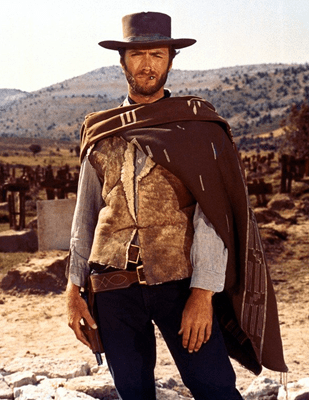
I went to my interview with shoulder-length hair, wearing jeans, moccasins, and my floppy leather Clint Eastwood hat (I did eschew the poncho, it being after Derby Day and all).

I’m not sure which of us was more proud.

The store manager who conducted my interview was desperate. He had no other employees and was expecting a houseful of dinner guests in about 27 hours.

The interview consisted of four questions, verbal — nothing in writing;

1. Do you know anything about liquor? Answer; nope, don’t drink.
2. Do you know how to run a cash register? Answer; never have, but I’m a pretty quick study.
3. Are you 21? Answer; yeah, my birthday was last week.
4. Can you start tomorrow? Answer; what time?

Chuck’s interview wasn’t quite as sanguine (I suspect the cane was a mite intimidating), but he soon got a job for the summer at Shillito’s department store.

My four-question grilling led to a job for the next 44 years.

It was a different time.

Joe Gatton; You Say Lichen & I Say…

It was a brutally cold night in Lexington and for some unfathomable reason I was recalling a blistering hot summer afternoon in 1989.

We were rehearsing King Lear for Lexington’s Shakespeare in the Park. It was directed by Joe Ferrell and it was a strong cast, featuring Fred Foster, Lisa and Paul Thomas, Walter Tunis, Becky Smith, Robert Brock……and Joe Gatton.

Joe Gatton is a fine actor and a remarkable fellow. Smart, loyal, loud, murderously thoughtful, imaginative, hard-working, and an ardent admirer of cheezy movies featuring diaphanous costuming and intense backlighting. In short, a renaissance man.

Joe possesses a pragmatic artistic wisdom that affects those who work with him. Michael Thompson, another highly experienced local actor explained to me one evening that he made many creative decisions by considering; “what would Joe Gatton do?” Was he serious? Knowing Michael, probably not, but it was just plausible enough…

This particular summer afternoon was a true ordeal by fire. Sunny, ninety-something degrees, 150% humidity…a real beauty. Amplifying these balmy conditions was our rehearsal space. It was outdoors, in the sun, on a concrete slab that had at one time doubled as a shuffleboard arena.

The air simmered – it was hard to breathe.

The concrete sizzled – our shoes melted.

Gatton and I weren’t required on stage for a spell. We sought a shady respite. I can’t just sit and melt in the heat. I pulled out my ever-present Frisbee. Joe and I began a super-slow-motion tossing of the disc. The emphasis was not on running and jumping. The goal was tossing and catching with a minimum of actual movement.
It was cerebral, like a meditation.

Who am I fooling?

It was @%^&$#* hot.

I suggested we instead imagine something amazingly cool to fool our brains into cooling our bodies. Joe was game for the experiment. I suggested a co-o-o-ol, dark, cave with walls covered in lichen. I pronounced it; “litchen”.

“What’s that?”

“Litchin…litchin! That green moss that grows in co-o-o-ol, dark caves.”

“Oh, you mean ‘liken’.”

“No-o-o, I think it’s litchen.”

“I always thought it was liken.”

Well, we could never agree on the pronunciation, but we tried the thought experiment anyway. It failed (big surprise there) and we attributed the failure to the pronunciation uncertainty. These were pre-Google days. How’ya gonna look it up? Besides, we were being called to the stage – our turn to broil in iambic pentameter under a rampant thermometer.

However, the question has festered in the back of my mind for 28 years and a few weeks ago I thought I had stumbled upon the answer.

I was binge-watching a 1962 British TV sci-fi series called Pathfinders to Mars (no diaphanous costuming, no backlighting, just a boxy studio set with un-moving dials and blurry monitors). Yes, I am the world’s oldest hippie-nerd. Everyone else binge-watches Outlander and Game of Thrones. What can I say? Nerds gonna nerd. In the first episode of the series, the young actress uses “litchen”, but in every other episode it’s “liken”. I’m guessing the first actor goofed.

I’m ready to call Joe after 28 years and announce my discovery.

BUT!

There’s always a “but”.

BUT…I live in a new and wondrous age now. We have (as the 2nd President Bush called it) “the Google”. I found a site that offered an audio pronunciation for the US and the UK.

US = liken

UK = litchen

Now we know. I’m not quite sure of the usefulness of what we know, but now we know.
Does that mean we have to do King Lear again?

@%^&$#*

Pronounce that.

A Geezer Remembers; Bill Nave

I have a bunch of video tapes (I almost said “OLD video tapes”). I’ve been transferring them to

discs off and on over the last five years. Occasionally I run across one that affects me a little too much.

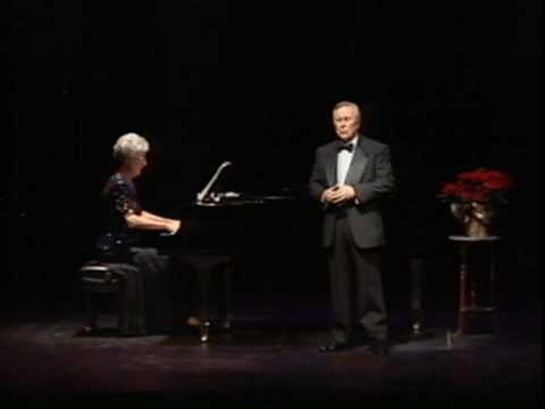
The other day I picked up the tape of Bill Nave’s 1996 concert on the Guignol Theatre stage.

Sigh.

I miss Bill and frankly, as much I cherish living in present-day Lexington, it was an even better place when Bill was here.

Bill established two dinner theatres in Lexington; the Red Mile Dinner Theatre (1970’s) and the Diner’s Playhouse (1980’s). There are still veterans of those theatres haunting Lexington’s theatre scene today. I’ll let them raise their own hands.

Bill performed and performed well. The list of shows is long, but my favorite was his starring turn in Most Happy Fella (1983, I think) directed by Dr. Jim Rodgers in the Guignol. I was rehearsing The Fifth of July in the Music Lounge (now the Dickens Movement Studio) next door. I’ve written about that experience in this blog before; “Hey, It’s What We Do”. During breaks and after rehearsal I would sneak into Bill’s rehearsals to watch.

Bill’s various efforts were all important to Lexington theatre.

But the best was Café Chantant.

Café Chantant was his French restaurant. It was elegant, it was tasty, and it was civilized (“civilized” meaning it had a fine wine list).

It also had Le Cabaret in the basement. It was elegant, it was tasty, and it was civilized (“civilized” meaning the ghosts of Noel Coward and Cole Porter regularly materialized). It was open until the wee hours, an unusual thing for Lexington in those days. You could go to the theatre and finish the night at the Le Cabaret. Who knew such a thing was possible?

The company of Le Cabaret was witty, boisterous, a bit tipsy, and fiercely talented. Just when an evening seemed to be spinning into mayhem, Bill would unleash that voice and stun the room into gratitude for just being there to hear it. I loved those evenings.

In the concert on the tape, Bill explains that his first singing teacher was Nelson Eddy. His grandmother had a bunch of Nelson Eddy records (I almost said “OLD Nelson Eddy records”). Bill would listen to them and imitate what he heard. Similarly, my first singing teacher was Bill. He would perform around town in shows and at the Café Chantant. I would hang on every song like a groupie. I would imitate his sound and his demeanor. I never achieved either, but trying led me to far better places artistically than I would have ever found on my own.

Bill was smart, gracious, generous, and he sang like a dream. All of that was in full view on the concert tape.

I still miss Bill.

Audition Valor

I love to audition.

That sounds insane but it’s true, and it’s always been true. If it involves speaking and/or singing I’m in heaven. If it involves dancing…well…I might be busy that day.little-night-music-01 My point is; it takes no special bravery, or any bravery at all, for me to show up for an audition. I think it’s a pretty jolly time.

I know this is not true for everyone and I admire those performers who persist in auditioning in the face of dread. That’s bravery. The bravest audition I ever witnessed was one evening in 1987 in the Guignol Theatre at the University of Kentucky.

Eric is a great friend of mine. He is a fine illustrator/water-colorist and a fine actor. He can also carry a tune, but in his mind at that time, as a singer…he was a fine illustrator/water-colorist and a fine actor.

One afternoon we were chatting and I mentioned that I would be auditioning that night for Sondheim’s A Little Night Music. I urged him to join me. He dismissed the suggestion summarily; “I’m no singer!” He looked a little pale at the suggestion. Always sympathetic (well…occasionally), I made a mental note that if I ever had to express utter dread on the stage, his reaction to the thought of a singing audition would be a good reference memory (an actor prepares, right?).

That evening, about an hour into the auditions, I was sitting in the last row of the theatre watching the efforts of others. I had already sung and read a few scenes and was foolishly longing to be asked to read another 20-30 scenes – did I mention I love to audition?

BANG!

The door to the theatre flew open and Grimness and Ferocity entered, personified by my friend Eric. He commandeered (commandeered – yes – le mot juste) an audition form from the stage manager, and slouched into a seat as far from humanity as the Guignol allows. All evidence suggested to me that it would be prudent to leave him the hell alone.

He was called upon to read a couple of scenes.

Then he was called upon to sing.

He marched on the stage and waved the provided accompanist away with; “I won’t be needing you.” He then announced; “This is my favorite Christmas carol.” He proceeded to sing/declaim an acapella rendition of “Good King Wenceslas” that was loud, in tune, and capable of being marched to by any competent armed forces unit.

It was stunning and strange and perfect for the part of Carl-Magnus in the show.

I understood what it had cost him and I was proud to know him…and maybe a little relieved to know he was not a concealed-carry type of guy.

His reward for his valor?

He was cast.

He and I shared a duet in the second act. It was singled out by the local reviewer as one of the highlights of that year’s theatre season in Lexington.

My reward for his valor?

I now have a new favorite Christmas carol in loud 4/4 time.

Cue the Fog………Ack!!

If you hang out with theatre people for any length of time (say 15-20 minutes), you will hear many stories and quickly perceive that many of their stories fall into genres. Most theatre folks have tales about;

  • Working with children.
  • Working with animals.
  • Costume or prop malfunctions.
  • Outdoor theatre misadventures (there’s a sub-genre about bugs).
  • And……fog.

Yes, fog.

And yes, I’ve got a few fog tales if you’ve got a minute (or say 15-20 minutes).

My fog adventures, unfortunately, are not John Carpenter’s; pirates emerging to terrorize my home town while Adrienne Barbeau croons seductively on the local radio station from her lighthouse studio.

Sigh.

I attribute that lack to the fact that Lexington is land-locked. Our nearest body of water is the Town Branch of Elkhorn Creek (and we covered that trickle with concrete a long time ago), our closest Pirates are the baseball team in Pittsburgh, and our closest lighthouse might be 400 miles away on Sullivan’s Island in Charleston.

No, my on-stage fog experiences are more pedestrian, but here they are anyway.

Fog in the theatre usually comes from machines though there are exceptions.

I was in a production of The World of Carl Sandberg in the spring of 1972. My friend and fellow cast member, Vicki James, gave a rendition of Mr. Sandburg’s poem “Fog” that was so evocative I remember it vividly 50+ years later. Indeed, I have many times been balked or paused in life, gathered myself……”and moved on.” Fog won’t stop me. It will only make me pause…think……and move on.

Ten years later, in a more-than-dubious production of Dracula, my friend and fellow cast member, Paul Thomas, managed to manufacture a personal fog bank by furiously puffing (heaving!) on his pipe in a sad attempt to obscure his presence in one particular way-more-than-dubious scene. I still harbor hope that I can forgive him for his attempted escape one day.

But those are exceptions. Most stage fog emanates from machines wittily referred to as “fog machines.”

My first experience with fog machines was in a 1981 production of Brigadoon. Oddly enough, it also included Paul Thomas, though in this case he is blameless. The show was in the Opera House in Lexington. The opening scene featured Paul and me as American hunters in the wilds of Scotland who have lost our way in the fog. We discuss our predicament and spot a village in the distance (neat trick considering the fog in which we’re supposed to be lost) – all behind a scrim as the orchestra in the pit plays gorgeous Lerner and Loewe music.

The dress rehearsal went fine, but the director wasn’t satisfied with the quality and quantity of the fog in the first scene. It wasn’t convincing as a fog that would baffle vibrant Americans. He ordered a second fog machine for opening night.

On opening night, the music began and the fog machines (plural) began. By the moment our opening lines were required, the fog, restrained by the scrim, had achieved a height of 7.3 feet. Paul and I could not see the audience, and the audience could not see us. When we spoke we waved our guns in the clear air above the fog to let the audience (and each other) know where we were.

Then the scrim arose and a slow tsunami of fog rolled out over the edge of the stage, into the orchestra pit, and into the first few rows of the audience. It was a blurry sight to see; the violinists slashing at the fog with their bows. I think they feared pirates were eminent. I think the audience in the front row feared they had been lured into a bizarre Gallagher-esque experience (albeit with prettier music).

We all tend to resist taking steps backwards in our lives, especially in the arts, but the second night’s performance of Brigadoon employed but one fog machine.

In 1989 I was cast in an outdoor production of King Lear as Lear’s Fool. I have played a couple of Shakespeare’s fools. I have a wealth of personal, real-life experience to bring to such roles. It’s a gift.

Early in the rehearsal process, I made a creative decision that was accepted as valid by the director, Joe Ferrell. I felt the Fool would grovel and slither throughout the story as he insinuated his opinions on Lear’s actions and decisions, never reaching past the height of Lear’s waist. I wore out a set of kneepads during the show’s run.

Mr. Ferrell had also made quite a few creative decisions himself (as directors are wont to do), one of which was to employ fog machines during Lear’s nighttime meanderings through the stormy countryside, bereft of shelter and family, and increasingly bereft of his very senses.

Reasonable enough.

From my Fool-ish point of view however (about three feet high, remember), the fog machine was at eye level and only an arm’s length away. In one long scene, as Lear (my friend and fellow cast member, Fred Foster) raged against his daughters, his fate, and the weather for what seemed like four iambically-pounding hours, I crouched in the mouth of the belching fog. My makeup melted off. My costume dripped in streams. I gurgled my lines.

When I came out for my curtain call, I didn’t bow.

Instead I shook myself like a dog to share my wealth of moisture with those nearby.

It’s good to share.

My favorite and grandest stage fog episode was on closing night of a 1992 production of Sweeney Todd.

The house was sold-out. The cast was in place behind the curtain prepared for their grand reveal. I was storming around backstage, working myself into a damn decent homicidal frenzy.

The fog machines commenced.

However, a sold-out house was not enough for the kind-hearted and slightly greedy director, Dr. James Rodgers. He was scurrying about to find room to seat some last-minute, ticketless arrivals. He had folding chairs located and brought to place one-by-one in the corners of the house.

The fog machines dutifully blew.

A pre-show announcement was deemed necessary.

The fog machines gleefully blew and blew.

The orchestra finally began the overture.

The curtain was raised.

The cast began to “…tell the tale of Sweeney Todd.”

I strode to the doors I expected to open and allow me to attempt to scare the bejeezus out 400+ people.

Instead, the fire alarm, triggered by the fog, had summoned first responders.

The fire department arrived with the Lexington and UK police – all with bells and whistles and lights a-blazin’. We were evacuated from the building; the audience to the front lawn of the Fine Arts building and the cast and crew to the street behind the building’s loading dock. Both groups could see other in the emergency-light-decorated twilight of a lovely Kentucky summer evening – a far cry from the dingy, industrial Fleet Street of our show.

Eventually, the authorities were persuaded that conflagration was unlikely. They were thanked for their efforts and invited to stay for the show. They chose to go about their duties instead, which was a good thing as I don’t know where Jim would’ve seated them! The audience, the orchestra, the crew, and the cast reassembled and an evening of theatre juiced by the pre-show capers turned out to be real nice clambake after all.

The fog machines were smug despite having grossly overplayed their part.

The Kindest Critic

If you do theatre, you will face critics.

How do you feel about that?

If you do one play and one play only in your life, you either soar or you crash. A good review, and you are Icarus unbound – and we know how that turned out. A bad review (or even a lukewarm notice), and you wonder how you’ll ever be able to face any living being on the morrow, you are outraged by the vindictive cruelty of the reviewer (who you probably don’t even know), and you conduct a Carl Sandberg-ish dialogue with yourself about the desirability and logistics of ending it all. Eventually, you get up, you face all the people in your life (who didn’t even know you were in a play or that the paper actually reviewed plays), and you reach the same conclusion about suicide that Sandburg did; it’s overrated and way more trouble than it’s worth.

But if you do a lot of theatre, you have to reach some accommodation between yourself and published criticism. Who can live with roller-coasters of life-and-death repeated after every opening night?

Not this cowboy.

I think I was still in my teens when it occurred to me the foolishness of allowing one person’s opinion on one night validate or invalidate 6-10 weeks of my life. Hell, they might have had a tough day or a bad meal…you don’t know. Or, perish the thought, the reviewer might be right.

So what?

Frankly, after opening night, their correct or incorrect opinion doesn’t affect you much. You and your cast mates are pretty well committed to your chosen path by opening night. The show generally goes on.

Please understand.

A good review is still a boost and a bad review still stings, but the reviews don’t provide either a raison d’être or a raison not to d’être.

It’s interesting to me that most of the actors I know rarely quote their own reviews. Oh, they remember them…word for word. They squirrel them away in needy corners of their psyche and nurture them to cyclopean proportions (could that be the derivation of the phrase; “big head”? And if you prompt these outwardly modest thespians, after a few drinks, reviews from 30 years past may come tumbling out to the glee or utter boredom of others in the room. That’s a genetic flaw in the species and can surely be forgiven as it harms no one.

Yes, the reviews are remembered, especially the bad ones.

I have been reviewed favorably and unfavorably, cleverly, pointedly, accurately and inaccurately. Stephen Sondheim seems apt to quote at this moment; “I’m still here.”

I think the kindest bad published review I ever received was no review at all.

I was playing the key character in a drama. Six weeks of fine, engrossing rehearsal had us poised for a successful opening night, and it was. The review came out and it was enthusiastic about the production.

It didn’t mention that I was in the show at all.

Ouch.

I was bewildered…and then angry…………and then grateful.

Obviously the critic was unimpressed by my performance…no, make that bothered and possibly offended by my performance.

The critic could have put that in writing for the world of local newspaper readers to see.

But the critic didn’t.

The silence hurt.

I disagreed with the negative implication of the silence, but perhaps I should be grateful for it.