Category Archives: Lexington Theatre

A Geezer Breakfast

I came across this note from the spring of 2016. Not much has changed.


“It was a geezer breakfast!

  1. Average age; 70-plus – check.
  2. Aches and pains chronicled in excruciating detail – check.
  3. Mutual acquaintances in the medical profession established and marveled over – check.
  4. Flirting with the married, mother-of-two waitress – check.
  5. Head shaking over the attention span (or alleged lack thereof) of anyone younger than 50 – check.
  6. Joe Gatton and Walter Tunis stories exchanged and enlarged upon – check.
  7. Re-validation of the miracle of baseball – check.
  8. Conundrums of the 2016 presidential race and various other problems of the world solved – check.

So what made this geezer breakfast a bit different?

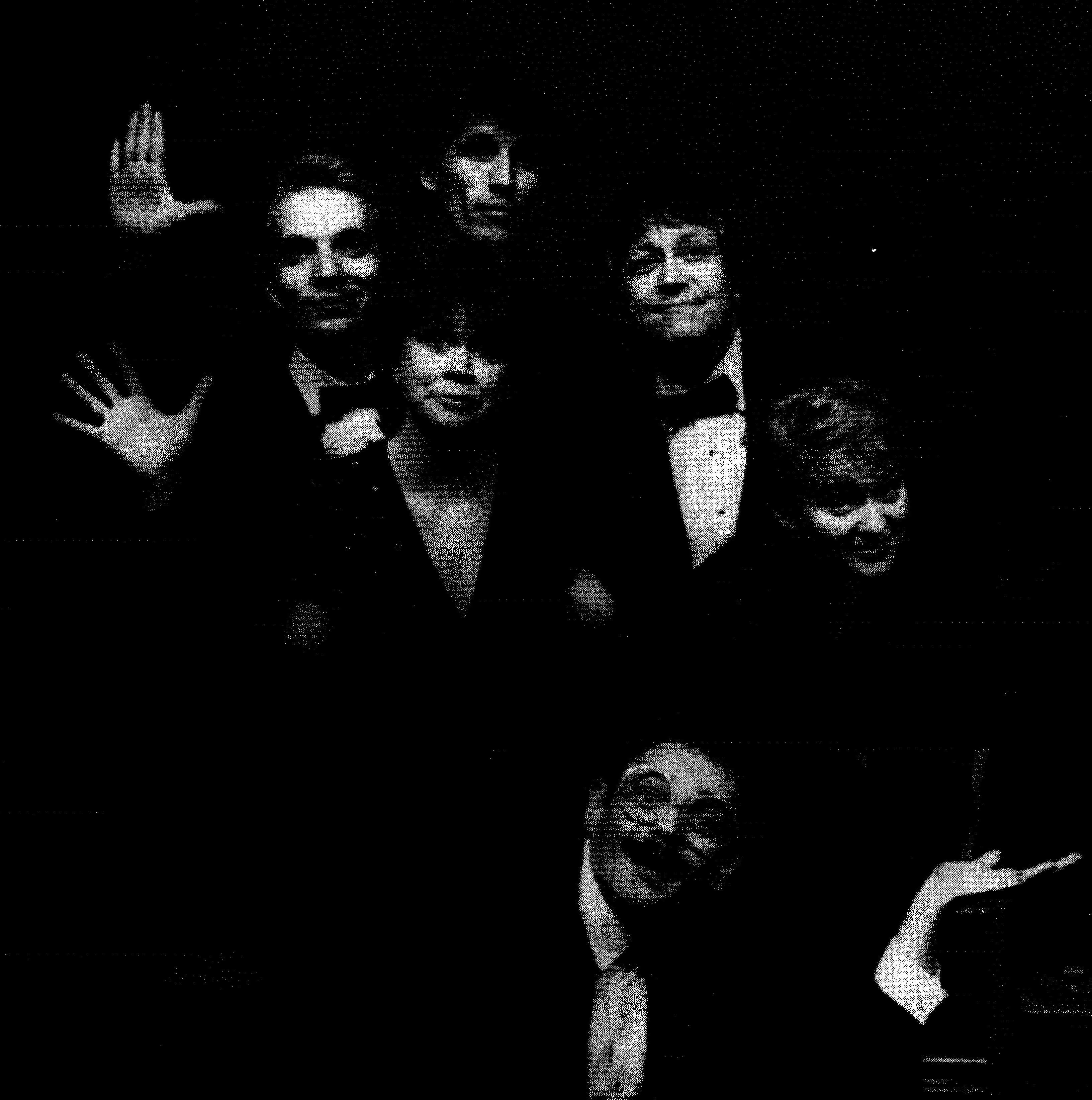
The three geezers breakfasting have probably been involved in over 250 theatrical productions in the Lexington area and yet have only worked in the same show once. How, oh how is this possible and (more important to my selfish interests) how can it be remedied?

By the way, for the record;

I’m younger than some of the trio, my back’s OK (knock on wood), I only knew one of the doctors discussed, the waitress was patient and bored, I know at least two whippersnappers who actually read books, I’m saving my Gatton and Tunis tales for my tell-all book (unless useful payments are sent to a PO box number I will provide), I will watch the Reds this year even if they suck, and as for the problems of the world……..my omelet was spot on!

I’m good.”


Follow up note –

Since this exercise, I’ve met about fifty (truly…fifty!) millennials who I’m convinced can make America great again, or at least make America sing again which is almost as good.

Curse of the Starving Class

curse01

Yet another new/old Lexington theatre yarn.

Just to let ya know, if you’re doing a Sam Shepard play and want me to come see it, I’m busy that evening…all the evenings.

If you’d like me to do a Sam Shepard play, I’m more than likely available.

I feel the same way about Pinter, Ibsen, and Albee. I love performing them, but I’m not beatin’ down the doors to watch. It’s a mental defect I guess, but there it is. For me, Godot is simply not worth waiting for.

So, it’s 1987 and Joe Ferrell is directing Sam Shepard’s The Curse of the Starving Class for Actors Guild Lexington (usually referred to as “AGL”). This is when AGL was performing in a rickety building in downtown Lexington called the LMNOP building (usually referred to as “LMNOP” – go figger). The LMNOP moniker stemmed from its life as “Club LMNOP”, a legendary night club in its day. By 1987 this building had been rode hard and put up wet to dry. Creaked? No, it shrieked. It wobbled. It was seasonal, which is an apt euphemism for little discernible heat and air. But the rent was right and in the theatre, that usually rules (remind me to bore you with my “theatre verismo” experience one January doing Terra Nova in the basement of a downtown Lexington restaurant — all of Antarctica in a room that sat 50 people – yes, I have pictures).

Well, I was hot for this project. I had worked with Joe on Shepard’s Buried Child a couple of years earlier and it had been a very satisfying time. In that play, I portrayed a raging psychotic single-amputee who was tormented in the second act by his own brother (played by Vic Chaney) who used his own his prosthetic leg as a club against him. It was a laugh-a-minute riot. I was proud of the portrayal even though it took my knee a year to fully recover. I was hungry for another bit of fluff like that.

My previous role for Joe was as a gay, double-AK-amputee Vietnam War vet. It was intriguing to me to get an opportunity to finally do a show with Joe in which I could use all my limbs.

Oh sure, the script of Curse called for a scene with complete male nudity, but it wasn’t my character and surely Joe would find a work-around to avoid going that far in my beloved 1987 Lexington, where I was dealing with the public every day in my retail career……surely…………surely.

Well, it was a remarkable cast and crew. It included Joe Gatton, Martha Campbell, Glenn Thompson, and Carol Spence, all of whom I had worked with numerous happy times.

It also included Kevin Haggard. Kevin and I had never worked together before and we’ve not worked together since. Dammit. In Curse Kevin played my son in a strikingly (emphasis on “strike”) abusive father/son relationship. I tend to work quickly in the rehearsal process – Kevin works more thoughtfully. I didn’t know that at the time. The first two weeks of rehearsal I kicked his ass all over the stage. I feared I might kill him if he didn’t start reacting with a bit more alacrity and how was I gonna explain that to his mother.

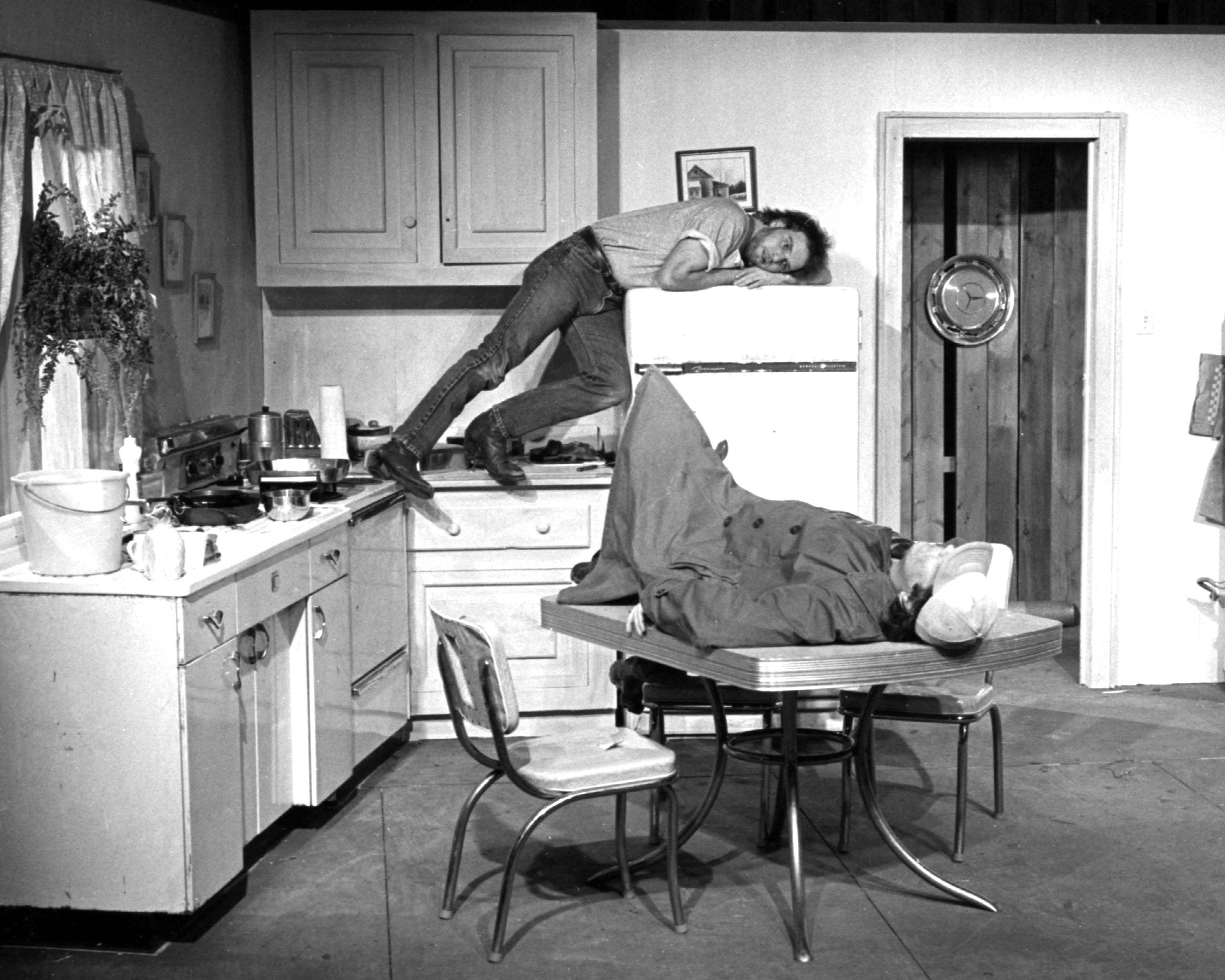
Not to worry; from the third week of rehearsal through closing night, Kevin’s character grew every night. I was impressed and bit scared for my own well-being. By opening night I discovered in one scene Kevin had ascended the heights of our kitchen and assumed a manic 45 degree angle against the fridge. I was supine on the kitchen table at the time and chaos was eminent.

It was a fine moment.

curse05
It was a fine moment

It was Kevin’s character that had to deal with the nude scene.

As the rehearsals proceeded, it was sometime in week three that it dawned on me that Joe was dealing with the nude scene by simply doing it as written.

Whatta concept!

What made the scene more special was that Kevin had to carry a sheep during it. This was after a first act scene in which he took his sister’s 4-H project “How to Butcher a Cow” chart, tossed it on the floor, and pee’d on it. He was an endearing character.

I was envisioning letters to the editor at least, or pitchforks and torches at worst. Didn’t happen. Instead, we played to great reviews and sold-out houses. Go figger.

About six months after the show closed, two gentlemen came to see me at work to discuss Liquor Barn’s participation in the United Way. One of the gentlemen noticed a picture on my office wall of one of my shows. He remarked; “My wife and I go to the theatre often. Last year we saw a play where a character actually pissed on the stage!” I gave him my biggest grin, shook his hand, and said; “I played that boy’s father!!”

That was the last I heard from the United Way that year.

But all in all, Curse of the Starving Class was a good experience.

  • Big audiences.
  • The building didn’t collapse.
  • I got to work with Cambo the Clown and his “Ya-Ya Juice” (another story for another time).
  • I didn’t have to deal with the sheep.

Baa-a-a-a.

Drinkers of the Wind


Drinkers 01

The answering of the phone

One day in the late summer of 1987 the phone rang at Roger and Janie’s house and the wrong person answered.

It was a time of great changes and great busy-ness.

Janie and I had just gotten married and bought a new house.

The liquor stores which were my business career had just unexpectedly become mega party stores (Liquor Barn) and my primary responsibility.

I had just completed an eighteen month performance schedule of directing one play (Bullshot Crummond – Actors’ Guild), singing and acting in two (A Little Night Music – UK, and Man of La Mancha – UK), acting in three (The Curse of the Starving Class and The Ebony Ape – Actors’ Guild, and Deathtrap – UK), and singing in one friend’s doctoral recital.

Whine, whine, whine… too much goodness…too much opportunity… woe is me.

But I truly was stretched thin and worn out at that moment.

And then Dr. James Rodgers called and Janie answered.

In 1987 Janie knew there were two phone calls to which my answer was nearly always “yes”; Jim Rodgers and Joe Ferrell. Well, why waste time? Jim wanted me to do a show. She said; “Of course, Jim, whatever you want.”

“Of course.”

Oh-h-h man!!

Well there’s no lettin’ Jim down once you’ve promised. I was now a member of the cast of Drinkers of the Wind.

Jim wrote Drinkers. It was a celebration of the horse, a compilation of poetry, songs, stories, and chants by Shakespeare, Shel Silverstein, Saki, Steinbeck, Greek legend…and Doc Rodgers himself. Jim wrote the piece! Another reason why ya don’t let him down. It’s his baby!

Yes, it was a celebration of the horse, but in one scene I had to play a goose. Go cypher on that for a while.

I hated that goose.

At least I wasn’t alone. Jim had recruited a stellar cast; actors that I admired and was challenged by; Billy Breed, Martha Campbell, Trish Clark, Russell Henderson, and Eric Johnson. Unfortunately, it seemed that everyone in the cast was experiencing personal pressures of their own. It led to a grumpy group meeting each night in the face of Doc Rodgers’ sunny instructions. Despite that, progress was made.

BUT…there was the challenge of Helen Hayes looming.

Helen Hayes

UK’s College of Fine Arts wanted to enhance their visibility. To do so, they scheduled a “Gala”. It was held in the Singletary Building and featured performances by various disciplines of the College capped by an appearance by the legendary Helen Hayes. It was a big deal and the night of the Gala the Singletary was packed and the crowd was decked out to the nines and all a’twitter.

Jim had committed our cast to provide a scene for the Gala and not just any scene. The most difficult scene in the show was a retelling of the legend of Bellarion and Pegasus. It was long, it was complex, and it included Billy Breed as Pegasus dancing to the words – words, mind you, not music. Any misplaced or mis-stressed syllable would pretty well leave Billy hangin’ high and dry.

Ah-h-h, no pressure there. It was a week before our opening night and instead of having a useful working rehearsal, we were doing our hardest scene in front of 1000+ people and Helen Hayes.

I remember, before the show that night, looking around the small dressing room in which we were all crowded and thinkin’; “Well, at least we’re rockin’ these tuxes.” You seek solace where you can.

In that dressing room we decided to run the lines for the scene one…more…time. As we did, I noticed Billy over in the corner marking his choreography with tiny moves as we recited. I’m not namin’ names, but one us skipped a line.

Silence ensued.

Soul-crushing silence ensued.

A silence of the damned ensued.

We immediately looked at Billy and he had acquired the hue of Casper the friendly ghost…with a facial expression that was far from friendly.

We were called to the stage.

We were introduced individually. Little Martha Campbell was first. When her name was announced, she marched martially and grimly to her place, fists clenched. She picked up her chair, ate it, and spit the splinters into the lights. She gave the audience a look that said; “I got yer Helen Hayes right here.”

I dunno…

It gave me a kind of perverse courage.

We did the scene.

Billy lived to tell the tale……and later moved to Oregon, about as far away from UK as you can go.

Whatever.

We hadn’t embarrassed ourselves in front of Helen Hayes (though I don’t believe she bought season tickets).

Now, we only had to do the show.

Opening night

A week later we opened. After the Gala we worked diligently, confident in the knowledge that our loved ones would still love us (as long as we didn’t press the matter) and that we probably wouldn’t derail the performing career of Billy (as long as we destroyed the evidence). Plus, we were still rockin’ those tuxes.

Then Jim dropped a little bombshell.

It seemed there was something called “The Dean’s Circle”. This was a group of donors to the College of Fine Arts. One of the perks of being in The Dean’s Circle was having a Q&A with the cast after Theatre Department production opening nights. The cast of Drinkers did not see it as a “perk”.

Whine, whine, whine, whine.

I mean, if anyone from the audience asked me about my motivations while playing that damned goose…well, the College of Fine Arts was probably gonna be lookin’ for a few new donors.

We did the show.

We peeled off our tuxes…slowly.

We trudged upstairs to face Judgement.

It was a love fest.

There were no questions. It was a contest between audience members to extol their favorite scenes from the show. They liked everything and everybody……except for the goose.

The grumpy cast members looked at each other. The shame in each other’s eyes was palpable.

The rest of the run featured an enthusiasm fueled by “let’s make up for”.

It was great.

But (sigh) …it wasn’t over.

The National Tour

Jim reassembled the cast and reconstituted the show that early spring (you cannot say “no” to this man!). He had booked us in colleges and junior colleges in Eastern Kentucky for the week of UK’s spring break.

For three days the cast (sans Jim who had developed a convenient cold/flu-like symptoms/plague/pneumonia/bone spurs) loaded our stools, boom box, and tuxes into a van and charged out to the exotics of Cumberland, Betsy Layne, Somerset, Hogwarts, Riverdale, etc. Eric was driving – a poor choice. The redbuds were a’blooming – an excellent choice.

We arrived at one venue (which will remain nameless) after driving on a mountain trail on which I swear I saw, while peering down the rider’s side of the hill, Gandalf crying “Fly, you fools!”, and then through the back of a bedroom closet through Narnia, and then through the rabbit hole, and then down the yellow brick road. I’m sure there was probably a more direct route but, as I said, Eric was driving.

We were scheduled for two performances at this stop. We set our stage (six stools) and our technology (one boom box), donned our tuxes (still and always stylin’) and waited in place to be introduced. I was in the wings stage left and could clearly see Trish in the wings stage right.

A small matronly lady marched to center stage and said; “Y’all settle down now, y’hear?”

And they did.

That’s when I knew I was in the presence of a mensch.

I confess to being impressed and more than little intimidated.

Then she said; “These people have come all the way from Lexington.”

And walked off the stage.

I looked across the stage at Trish and she gave me a wide-eyed shrug that announced; “We’re on our way, Buster!”

And we were.

After the first performance, we had lunch in the school cafeteria and pulled ourselves together for our second show. I will admit that there were some unkind aspersions made in respect to Jim Rodgers’ health and absence. Something to the effect of “If he thinks he’s sick now, wait till I get a’hold of him!” But it was all in good fun……right?

I was stage left.

Trish was stage right.

The mensch marched.

And said; “Y’all settle down now, y’hear?”

And they did.

Then she said; “Yer ‘bout to see some real good actin’.”

And left the stage.

I looked across at Trish and she gave me a wider-eyed two-thumbs-up that announced; “We’re stars, Buster!!”

And we were.

I’m proud of that show.

I’m happy for the time I spent with my friends…yes, even Jim.

And that one sentence from the mensch might be the review in my life of which I’m most proud.

Be that as it may, I try to answer the phone at home before Janie whenever I can…and I still hate that goose.

A Guignol Meditation

I have felt connected to the Guignol Theatre and the University of Kentucky Theatre Department in some way since my junior year at Bryan Station High School.

Playboy 03
Guignol Theatre; PLAYBOY OF THE WESTERN WORLD (1969)

My high school English teacher arranged for our class to have access to discounted tickets to UK’s production of Shakespeare’s Twelfth Night. Jill Geiger played a major role in that production. Jill went on to perform with and later own The Dorset Playhouse in Vermont. She was a successful person. (Side note; Jill’s bridge-playing was precise but conservative. Bridge was our time-killer of choice in the Green Room — I learned a good bit of acting while playing bridge with other actors).

The day before we attended the show, my teacher gave us instructions on how we were to behave in “The Guignol”. The quotation marks come from my remembrance of my teacher’s obvious reverence for this Temple of the Arts we were entering.

How quaint.

How helpful for me.

I wore my clip-on tie (my fellow Guignolite and playwright/screenwriter Charles Edward Pogue – a successful person – was not to teach me to tie a proper knot for another five years – how absolutely helpful for me). I applauded at all the proper places, and was profoundly impressed by the show. So much so that I attended (on my own this time) UK’s next production in the Guignol of Richard Brinsley Sheridan’s The Rivals. Bekki Jo Schneider (friend, mentor, and ex-sister-in-law) played a major role in that show. She became the owner/operator/director of Derby Dinner Playhouse in Southern Indiana – a successful person. (Bekki Jo’s bridge-playing was aggressive but distracted).

The next year, my senior year in high school, I attended Dark of the Moon in the Guignol and Under Milkwood in the Laboratory Theater which is now named the Briggs Theater (Wally Briggs spent his adult life teaching theatre to UK students. Yes, he too was a successful person – Wally’s bridge-playing, by the way, was ultra, ultra conservative). Dark of the Moon featured Julieanne Pogue. Julieanne has gone on to a strong regional acting career, become an award-winning reader of books for the blind, and an uber-caring psychologist. Julianne is another successful person. Her bridge-playing? It was occasionally brilliant when she bothered.

Both of these shows also featured a freshman in leading roles which explains why I attended UK to study theatre. Where else could I possibly want to go? UK offered an immediate opportunity to act…..in major productions…..in real costumes…..on beautiful and exciting sets…..in front of real audiences.

Real audiences…

I remember those audiences as being drawn from all of Lexington. John Jacob Niles (another successful person and a legend to me — if you don’t know him, look him up, you’ll be intrigued) sat in the middle of the first row every opening night I can remember. Teachers from all the Lexington schools were there. Mary Agnes Barnes reviewed for the Lexington Herald. John Alexander reviewed for the Lexington Leader. Betty Waren wrote a theater page for the Herald every Sunday. The Theatre Department faculty was there…usually multiple nights. One memorable Sunday matinee was attended by José Ferrer (he was successful too).

I attended UK for two and half years, performed in seventeen shows, and became an adult; a thinking, listening, caring, evaluating, listening, tax-paying, voting, listening adult.

The arts do that for you.

They make you whole.

They make you reason.

They make you listen…with all your senses…and with your mind…and with your heart.

By all means, teach our children to add and subtract…please. Teach them to write a logical paragraph. Teach them to tell a whimsical story. Teach them their country’s history — all of it. Teach them the scientific method. Teach them to sing. For God’s sake, teach them civics so they know how their government works and are thus less vulnerable to the lies filling the air about them.

Make them whole. Make them successful.

A couple of years ago, I spent a lot of time with the students at UK as a small part of Ragtime. I was frankly thrilled and intimidated by the talent and work ethic of the cast and proud to be associated with them.

Then I attended the UK Theatre Department’s production of Once on This Island. This is not my favorite show, but I was again impressed by the talent and cowed by the revelation that the cast’s closing performance was to be followed by a week of finals before graduation.

These millennials have no bridge game at all. They’re workin’. They’re becoming whole.

I’m OK with that.

Droning Tonto and the Atomic Bic

I’m reading a script these days that was originally performed to some acclaim as part of the Humana New Play Festival at Actors’ Theatre Louisville. It reminded me of another Humana New Play Festival experience Janie and I had years ago that was, shall we say, “differently acclaimed.”

I subscribed to Actors Theatre of Louisville for about 24 years. I love this theatre and have enjoyed a number of transcendent evenings over the years. Susan Kingsley and Ken Jenkins in “Childe Byron” was magical. Likewise, “Tobacco Road”, “The Three Musketeers”, “The Sea Gull”, were wonderful, and their production of “The Tempest” was the best I’ve ever seen. There were some head-scratchers along the way (“King Lear” in burkas plumb bewildered me), but overwhelmingly most of the shows were inspiring and entertaining.

So…why did we stop subscribing?

I was working almost every Saturday then. The only performance we could count on attending was the nine o’clock curtain on Saturday nights. I would get away from work about five, we would drive to Louisville, have dinner at the Bristol, make the curtain at nine, get out of the theatre about midnight, and drive home.

Ah, there’s the rub.

That late night drive home became increasingly burdensome. Before dogs took control of our lives and clocks, sometimes we would snuggle in after the show at the Seelbach, have a languorous brunch, and get back home sometime Sunday afternoon. Well-l-l-l, you can fergit dat, O Keepers-of-the-Kibbles!

Janie and I began to question how much pleasure we were getting out of our Louisville theatre habit. Impetuous kids that we are, we debated it for a couple of years. Then there were two productions in that last subscription season that finally convinced us to drop the commitment.

The first production was actually quite well done. It was a gospel concert nominally disguised as theatre. Now, I can enjoy gospel music (or bluegrass, or German lieder) for about fifteen minutes just as well as the next guy, but this was two hours and forty-five minutes more gospel music than the Geneva Conventions probably allow. That night’s drive home was glazed in bitterness and that is the gospel truth.

The other show…

(…shudder, squint, tears begin to flow…)

The other show…

The other show was titled “Beyond Infinity”. It was part of the Humana New Play Festival.

The play consisted of three intertwined (sorta) stories set in the same desert at three different times in history.

One story was of an ill-fated wagon train. Beyond sad. I found myself expecting Ward Bond to come out wailing “Bring out your dead!” (100 trivia points for identifying the geezer reference.)

Mr. Silverheels

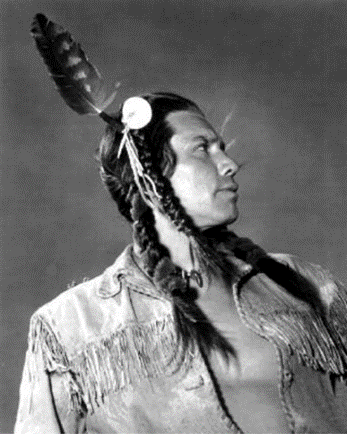
The second story was told in a sporadic monologue in monotone by one of ATL’s regular actors whose name eludes me at the moment. He was a gaunt, Sam-Waterston-Abe-Lincoln-Harry-Dean-Stanton-looking fella. For this show he was dressed like Tonto. I don’t mean he was dressed like a Native American. I mean he was dressed like Jay Silverheels in “The Lone Ranger.” Whenever the show’s innate hilarity moaned towards out-of-control, the lights would come up on Tonto. He would gaze at a spot about ten feet over my head (looking for what?…inspiration?…his light?…his lines?…his agent?) and drone. I caught occasional words (kemo sabe, walla wah walla walla walla wah, bibbity bobbity boo) but we were never EVER in the same time zone as a coherent thought.

The third story…

Ah YES-S-S-S-S, the thir-r-rd story…

(Imagine that having just been said by Christopher Lee as Fu Manchu. Go on. Go back and repeat it just that way. You’ll love the way it feels and sounds and you’ll work it into your personal dialogue tomorrow. You’ll owe me.)

Ah YES-S-S-S-S, the thir-r-rd story…

Mr. Oppenheimer

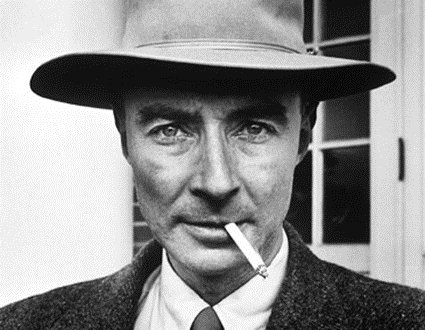
The third story involved J. Robert Oppenheimer and his merry pranksters in the desert working on the atomic bomb. At one stretch in the second act (second act of twelve, as I recall), Oppenheimer is standing in the desert night, holding an address-book-sized volume of the Bhagavad Gita (you can’t make this up!) and a cigarette. His assistant is standing next to him. For ten minutes Oppenheimer reads aloud, translating on the fly, from his tiny book by the light of his assistant’s Bic lighter…you can’t make this stuff up!!

1940’s translation tool

Wait…someone did, didn’t they?

About this moment, Janie, who had shed her shoes and was curled up in her seat in the fetal position, tugged on my sleeve, leaned near and whispered “there are 87 lights up there.” Why not count the lights? What else was there to do?

It ended…as all things eventually must (except baseball games).

We shook the sand from our shoes and shuffled out of the theatre.

Now, one of the rituals involved with living in Lexington, two glasses of wine at dinner, and attending shows in Louisville is the obligatory pre-drive-home bathroom visit. Well, I’m there, at the urinal, “inflagrante delicto” as it were, when the bathroom door is banged open by a three-piece-suit type who angrily announced to the room; “Well, I have been to the desert on a horse with no name!”

I just about missed the urinal.

Were You in That? – A “Grand Night” Memory

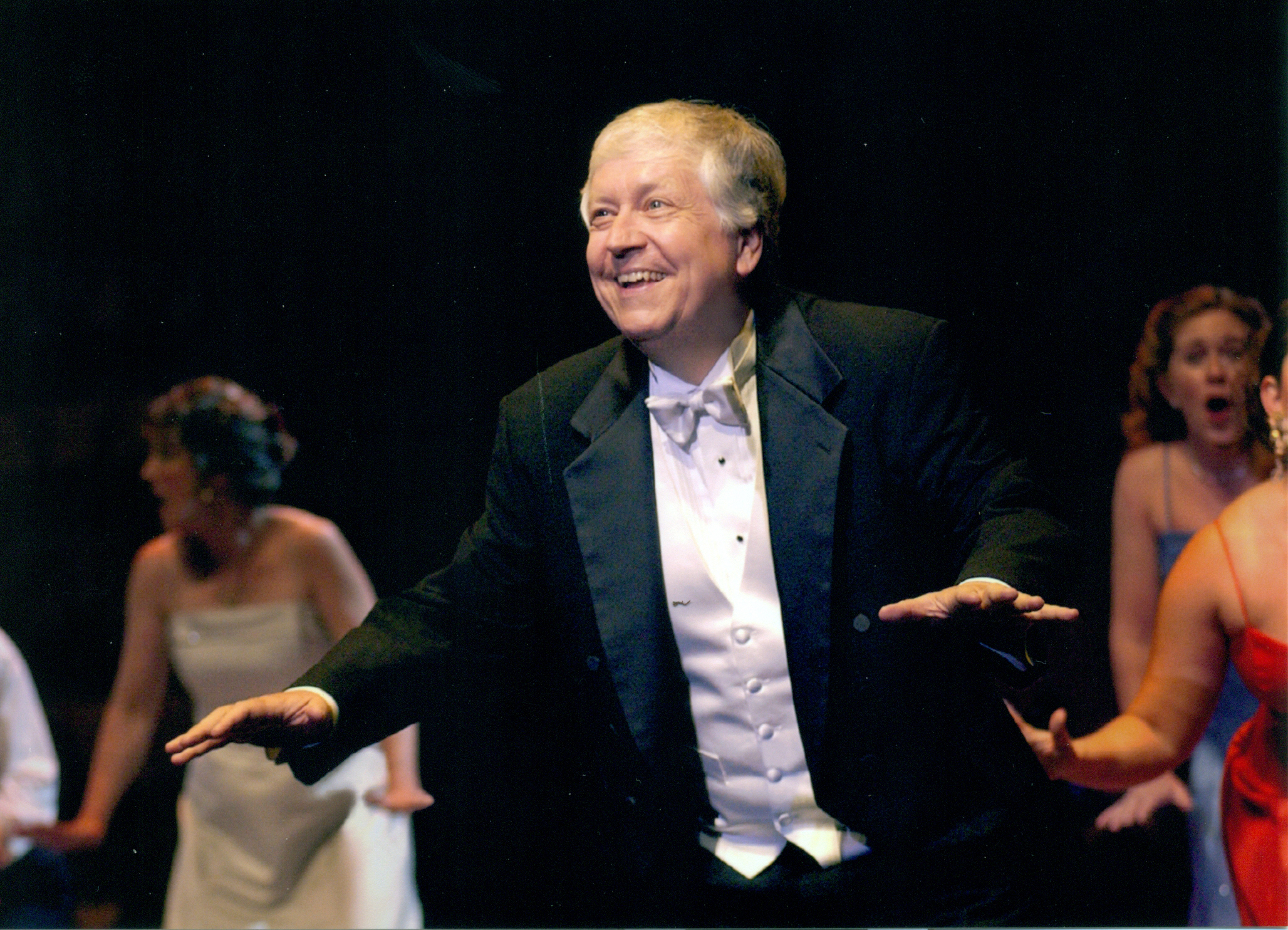
In Lexington, the University of Kentucky’s extraordinary Opera Program has for the last 25+ years staged an extraordinary event; “It’s a Grand Night for Singing”. Over a thousand people a night for two weeks assemble to hear remarkable voices sing Broadway/Hollywood/Billboard tunes. It’s supported by an orchestra and choreographed by a team of Broadway-seasoned professionals. It’s a startling evening. You just don’t GN 02expect this level of performance, energy, and talent from a basketball school. It’s a great tribute to Dr. Everett McCorvey who conceived the idea and has nurtured it through two-and-a-half decades and a couple of generations of participants.
I have been fortunate to have been a participant in this event a number of times. In fact, I think I may hold the record for having the most numbers cut from “Grand Night”. Hey, the standard’s high.

My friend, Dr. Tedrin Lindsay, has been a featured performer in this event for 20+ years. His piano-playing is energetic and passionate, yes. But he is also a man of great imagination and this shines forth in his performances. This is what live performance is about.

Tedrin has posted some of his remembrances of “Grand Night” moments.

May I indulge in one myself?

For the third year of “Grand Night”, Everett asked me to be part of a quartet of singers to sing a medley from “Kismet”; And This is My Beloved/Baubles, Bangles and Beads. I had never met my fellow singers until I arrived at the first rehearsal for the number in Everett’s old studio, the studio that was so tiny it was 80% piano. We crowded in; Everett, Cliff Jackson at the piano, and singers Angelique Clay (soprano), Phumzile Sojola (tenor), and a young bass from Louisville whose name evades my geezer memory.

We rehearsed for about an hour. My fellow singers didn’t sing to me, they sang through me. I had never heard so much sound in my life. You could see the sound in that little room. After the rehearsal, I crossed the street to the Medical Center for an MRI to confirm that all my major organs were intact and in their proper places.

I was in heaven.

I was singing these stunningly beautiful songs with these crazy talented singers in front of an orchestra for a thousand people a night……in a tux.

Just kill me now.

After the show, I asked my wife if she liked the number. She replied; “Were you in that one?”

Everyone’s a critic.

Julie et Jim

The title is a total stretch but there’s a “Julie” and a “Jim” in the tale. I couldn’t pass it up. Sorry.

The Southeastern Theater Conference (SETC) was held recently in Lexington and I enjoyed reading articles about it, and hearing friends’ reports of their activities during the event. I was particularly interested and inordinately proud of my friends Julieanne and Chuck Pogue’s efforts. Chuck conducted two sessions; “Auteurs-NO!  Raconteurs-YES!!” and “Tips for Adapting Plays from Sanskrit and/or Cave Paintings”. Julieanne packed the house with her session; “Concatenations from the Clash of Jung and the Restless in Tennessee Williams’ Mother Plays”. I may not have those titles exactly right, but I was mightily impressed – so impressed, that it triggered a remembrance of my first visit to SETC.

It was spring of 1970 and SETC was being held in Memphis. I had never been to Memphis, I had a ride with other UK theatre folks, I had twenty bucks, and my friend Jim Varney agreed to split the cost of a hotel room with me. Hey, as Christine Kane says; “When courage comes, you never see it comin’.”

The conference was being held in the Peabody Hotel in downtown Memphis. I believe today it’s called the Sheraton Peabody. Jim and I couldn’t afford the Peabody. We went across the street to something called; The Hotel Tennessee. It was five dollars a night, which we split.

Decades later, when I first saw Jim Jarmusch’s brilliant film; MYSTERY TRAIN, I felt very much at home in the accommodations depicted.

There were cockroaches…lots of ‘em…big ones…and bold. One of ‘em sat on the end of Jim’s bed and bummed cigarettes from him. Another one sat on the back of the commode and charged a quarter for access and a moment of privacy. I went downstairs to the desk to complain and noticed the clerk had six arms and I quailed. I was dubious, but it was cheap and had the asset of proximity.

The proximity paid off the next morning. I awoke to Jim practicing his smile in the mirror. He had just discovered Pearl Drops Tooth Polish and was pretty sure that his new “all-teeth” smile was gonna launch his professional acting ship tout suite. He urged speed with ablutions and let’s get our “petite little small-ass bods” over to the Peabody. We might miss something!

He was right.

The Peabody had a fountain in the middle of its lobby and people gathered around it at nine o’clock AM and five PM for the ducks. That’s right, ducks. At nine AM, the public address system wheezed to life to blare; “Welcome to the Peabody Hotel and the Peabody Marching Ducks!” The elevator doors would then open and a red carpet would roll out to the foot of the fountain. A Sousa march would play on the PA and three white ducks and one brown duck would regally march down the carpet, hop up on the lip of the fountain, and splash into the water to swim the rest of the day until five o’clock when they would, with similar pomp, reverse the process and return to their evening penthouse quarters. The crowd loved it and would applaud. The applause would prompt the brown duck to turn to the crowd from the lip of the fountain, spread his wings, and……well……quack.

Yes, the crowd loved it, but Jim was enthralled. In the brown duck, Jim had found a spiritual brother. He never missed a duck event that weekend. He got there early and would sit akimbo next to the carpet and croon in “duck language” to the bird. The duck would pause, turn to Jim, and conduct a quick inventory of available exits in case this madman turned ugly.

It was a great conference and just got better from there.

At that time and perhaps still today, one element of SETC was a mass audition of actors looking for summer work. That year, 43 casting agents representing 43 southern theatres were observing those auditions. There were 568 hopeful auditionees. I was number 438 and Jim was 437. We stood leaning against the hotel hall wall for hours awaiting our chance for the Golden Ticket/Everlasting Gobstopper/Maltese Falcon/Holy Grail/Door #3.

While we waited, we rehearsed and fretted. (I’m convinced that if the proper studies were conducted, scientists would discover the leading cause for cancer is fretting.)

We were promised one minute for our audition – one minute.

Three days, 500 driving miles, $5 per night rent, and cockroaches for one minute.

Today, when see a young starry-eyed actor commencing their theatrical career, I don’t wish them luck. I wish them resilience and a full can of bug spray.

But in 1970, I was good with the proposition. I had a killer one minute segment from Tom Stoppard’s “Rosencrantz and Guildenstern Are Dead” that was gonna land me on Johnny Carson’s “Tonight Show” within the week.

Jim agonized. He had two pieces and he couldn’t choose. Should he do Hamlet’s first act monologue (“Tis not alone my inky cloak…”), or Tom Wingfield’s diatribe from “The Glass Menagerie” (“I’m goin’ to opium dens…”)? Shakespeare or Tennessee Williams? Argh-h-h-h. Plus, at the rate this is going, we’re gonna miss the ducks!

Fretting…I’m tellin’ ya, it’s deadly.

Then the SETC officials came out in the hall and announced the audition time would have to be cut to 50 seconds or they couldn’t get everybody in.

50 seconds.

Fretting went through the roof. What was I gonna do? Pragmatism was all I had to offer at that point…I was simply gonna have to speak faster.

Jim however, became serene. His quandary was solved. Somehow, 50 seconds made things clear; he would do BOTH monologues.

They took us into the audition room in groups of ten. Thus, Jim and I were in the same group and I got to witness the deed. 43 auditioner heads hovering 2-4 inches over their tables and notes in utter fatigue and defeat. Hope had left the building with Elvis.

Jim’s turn came, right before mine. He loped to the center of the room, announced his number, and began;

“Seems,” madam? Nay, it is; I know not “seems.”
‘Tis not alone my inky cloak, good mother,
Nor customary suits of solemn black,
Nor windy suspiration of forcéd breath,
No, nor the fruitful river in the eye,
Nor the dejected ‘havior of the visage,
Together with all forms, moods, shapes of grief,
That can denote me truly: these indeed seem,
For they are actions that a man might play:
But I have that within which passeth show;
These but the trappings and the suits of woe.

The tones were round and pure, the diction crisp, the anger immediate and like a knife to his betraying mother.

And then, without pause or breath, as if from the same son centuries later;

Well you’re right, Mother. I’m going to opium dens. Yes, mother. Opium dens. Dens of vice and criminals’ hangouts, mother, I am a hired assassin, I joined the Hogan gang, I carry a tommy gun in a violin case, and I run a stream of cat houses in the valley, they call me Killer, Killer Wingfield, see I’m leading a double life, really, a simple honest warehouse worker by day, but by night a dynamic czar of the underworld, mother, I just go to gambling casinos, spin away fortunes on the roulette tables, mother, I wear a patch over one eye, and a false moustache and sometimes I put on green whiskers, on those occasions, they call me “El Diablo,” I can tell you many things to make you sleepless, mother, my enemies plan to dynamite this place, they’re gonna blow us sky high! And I will be glad? I will be very happy, and so will you be. You will go up, up, up, over Blue Mountain, on a broomstick with seventeen gentleman callers! You ugly, babbling old witch!

43 sagging heads snapped to attention. In today’s litigious times, there might have been a rash of whiplash claims the next day. Jim finished and one voice intoned; “Thank you, Mr. Varney.” Forget about his number. He was Mr. Varney now.

I followed that…………

When the callbacks were posted, Jim had 34. I had 15.

Maybe it was the Pearl Drops.

Theatre sucks.

Hey! It’s What We Do

fifth-07

I’ve written before about the first time I was directed by Joe Ferrell in That Championship Season on the Laboratory Theatre stage at the University of Kentucky. A couple of years after that show, Joe cast me as Kenny Talley in The Fifth of July on the Guignol Stage at UK. It was a wondrous cast, though at the time they were all new to me as performers except for the actor playing Jed. I had just finished directing him in Whodunit Darling at Studio Players, but I had never worked with Martha, Sheila, Tim, Michael, or Sue. The early rehearsals were filled with delightfully intimidating discoveries as we explored each other’s’ storytelling gifts. I’ve gone on happily to do a lot of theatre with those folks. I count every one of them as an admired friend.

“Jed” and I had the interesting challenge (for the mid-1980’s) of two straight actors playing gay lovers. My character had the further complication of being a double AK amputee veteran of the Vietnam War.

Hey!

I know it’s a stretch.

That’s why we’re here.

It’s what we do.

In the first scene of the play, in the first ten minutes of the play, Jed and Kenny (my character) quarrel about our garden, our house, our guests, and our lives. The argument reaches its peak and a relationship-testing silence ensues. In that silence, Jed kisses Kenny and we all understand in that moment there are things on the planet more important than our garden, our house, and our guests…and maybe our lives. It is our loves that matter. Having established that “minor” understanding, we can now have a play and tell our story.

An explanation is in order here.

I love to rehearse.

Strangely enough, I also like to audition. Un-strangely enough, I really like to perform.

But I love to rehearse.

By the time an audience sees the show, they’re only seeing one of about a dozen things we’ve tried in rehearsal. Many of those unseen choices are embarrassing or just plain awful, but in rehearsal it’s OK to try ‘em anyway. It’s where a useful new reality gets invented; the “alternative” reality of an imaginary world. For me, there may not be a more powerful reality. But…it’s not for the real world. Don’t try this at home. And most certainly don’t try this in the White House. Please.

This was our first rehearsal on our feet for The Fifth of July.

The first few rehearsals of a Joe Ferrell-directed play usually take place around a table, reading and discussing. That’s good, that’s good…but let’s get up and move, even if it’s with crutches (double AK amputee, remember?).

For this first rehearsal on our feet, we were in a large rehearsal room and we began at the top of the show. “Jed” and I were on stage and the rest of the cast arranged themselves around the perimeter of the room with their books and knitting and whittling. I’m lyin’ ‘bout the whittling, but remember these were primitive days before laptops, ipads, and smart phones. Hell, this was back when you actually had to know things – you couldn’t just google it – primitive! I like it better now.

Jed and I stumbled through the opening argument and arrived at the kiss.

The rehearsal room became silent. Everyone was still bent over their distractions, but their eyes had shifted to an impossible position on the side of their heads. Avid nonchalance reigned.

Silent…

Like the first time you mentioned a girl to your parents…

Silent…

Like your wisest response to the officer’s query; “Sir, do you know why I pulled you over?”…

Silent…

Like your friends’ reactions when you let slip the fact you actually liked Independence Day: Resurrection.

Silent.

We went on for a few more lines and then Joe stopped us. I vaguely remember we discussed the opening spat and the possible reasons for it. We discussed phlox and verbena in Jed’s garden and what legless Kenny might see every morning in the mirror. Then we did the scene again from the top.

The big moment returned and so did the silence.

We stopped again and discussed how we felt about Aunt Sally’s (Martha’s character) visit, and my feckless friends’ (Sue and Michael) visit, and the heat of a Fourth of July weekend in Missouri. And we did the scene again.

And again.

And again.

By about the tenth time through, the kiss meant nothing except in the flow of the story of these two men. It also meant nothing to the rest of the cast except for their desire for us to get it right so they could finally rehearse their scenes.

Awkwardness had been diffused – an urgent truth had coalesced in its place.

A new reality had been established in about 45 minutes.

Hey!

It’s what we do.

25 years later or so, I was cast by Joe in his production of A Lion in Winter at Woodford Theatre. My character had to kiss his mistress (30+ years younger than me) in front of his wife and his grown children in full knowledge of all involved. Awkward.

We did the scene once, stopped, discussed, Joe suggested a cruel, slow, twirl of the young lady in the face of the family to precede the kiss. We did the scene once more. A new reality was created in about 15 minutes.

Hey!

It’s what we do.

We seek surprise to capture it and add it to what we are.

We open ourselves to growth and growth comes.

We grow bigger as our world grows bigger.

It’s what we do.

A Horizontal Lincoln at That

Seeing pictures of Washington last week sparked a memory.

The scene of the crime…er…opera

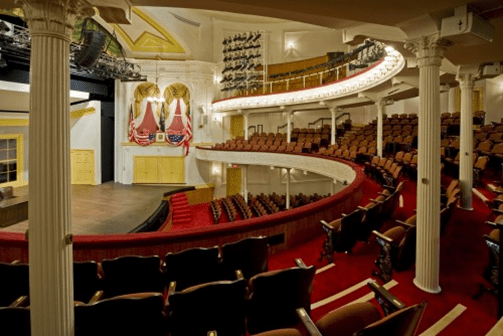
I played Abraham Lincoln on the Ford Theatre stage in Washington, DC,

…at the age of 18,

…in an opera,

…with Mrs. Nixon, Mrs. Agnew, and Col. Sanders in the audience.

It gets better.

It was in the spring of 1970. I was in my freshman year at the University of Kentucky. My un-mown hair cascaded between my shoulder blades. I wore moccasins, a poncho, army surplus shirts, and a poorly-stitched leather hat.

I knew everything. “I was so much older then, I’m younger than that now.” –Bob Dylan.

Dr. Kenneth Wright of UK had written an opera about the insanity trial of Mary Todd Lincoln.

Ponder that for a moment while I digress.

<< You know, it’s my blog, and if you’ve spent any time at all here you know I don’t feel at all tethered to facts – actual or alternative. I agree with my friend Chuck Pogue; if you have to choose between the facts and tellin’ a story, you go with the story…every time. Hell, It’s not like I’m runnin’ fer president!

That said, everything I’ve written in this piece (thus far) is actually true. Dr. Wright wrote an opera about the insanity trial of Abraham Lincoln’s wife. What kind of mind would write an opera about that kind of mind? It’s a wunnerful world. >>

There was a historic preservation group in Washington, DC working on restoring the house across the street from the Ford Theatre to which a wounded Lincoln was carried. It is the house in which President Lincoln actually died. As a part of their efforts to raise interest and funds for this restoration, the group commissioned UK to produce Dr. Wright’s opera; “Wing of Expectation” and perform it in the Ford Theatre.

The horizontal Lincoln

Ray Smith directed.

<< I could write a book about that last sentence……and may one day……, but I’ll try not to splinter in this narrative. >>

Ray decided he wanted me to be his stage manager.

God knows why.

I was a freshman. I had yet to take a single technical theatre class. I was an actor/storyteller. Still am for that matter.

The technical staff and faculty at UK objected. For several of them, it was their first year at UK. They are to be forgiven for not knowing that objecting to Ray’s whims only transformed those whims into concrete ramparts. I certainly wasn’t gonna refuse the assignment – I knew everything, remember? Sing it with me; “I was so much older then…”

In addition to being the stage manager of the show, I also had to play the role of the Drunken Farmer in a second act number. It required me to stagger around the stage (poorly, as I recall), warble a couple of slurred lines, get picked up bodily and tossed in the air (let’s sing again; “I was so much lighter then…”), and get carried off the stage.

Not to worry – hold my beer – I got this.

Those were my duties in the show…until we got to Washington.

When we got to Washington, the group that was picking up the tab for this fiasco finally had the epiphany that there was nothing in Dr. Wright’s opera that had anything to do with the house they were trying to save. They insisted on adding a silent scene, behind a scrim, depicting the carrying of Lincoln’s wounded body from the theatre on a stretcher from the theatre to the house in question.

OK, no big deal.

Wait! Not so fast.

Three professional singers had been hired for the leads in the show. The gentleman hired to play Lincoln decided that being carried on a stretcher was not in his original contract and was not a desirable way to extend his evenings in the show. After all, he had counted on bein’ shot and bein’ through for the night and settling in for some quality Green Room time (AKA: the dead people’s happy hour). Now, perhaps this was ungenerous on his part, but given the timbre of the reviews of the show, perhaps truncation of participation was a wise career choice.

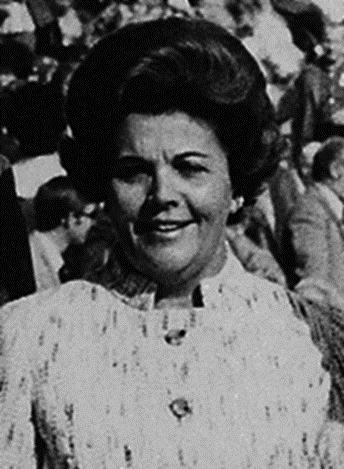
Mrs. Spiro Agnew aka my audience

What to do?

Opportunity beckoned and the Stage Manager/Drunken Farmer answered. Yes, I was supine on a stretcher, but who could pass up the chance to play Abraham Lincoln on the Ford Theatre stage?

Certainly not this fool.

And before you ask, yes I did recreate Booth’s balcony-to-stage leap one afternoon after rehearsal. Those were looser times and stage managers (and drunken farmers…and former presidents, I suppose) were allowed much latitude.

Audition Valor and Good King Wenceslas

little-night-music-01

I love to audition.

That sounds insane but it’s true, and it’s always been true. If it involves speaking and/or singing I’m in heaven. If it involves dancing…well…I might be busy that day. My point is; it takes no special bravery, or any bravery at all, for me to show up for an audition. I think it’s a pretty jolly time.

I know this is not true for everyone and I admire those performers who persist in auditioning in the face of dread. That’s bravery. The bravest audition I ever witnessed was one evening in the Guignol Theatre at the University of Kentucky.

Eric is a great friend of mine. He is a fine illustrator/water-colorist and a fine actor. He can also carry a tune, but in his mind at the time, as a singer…he was a fine illustrator/water-colorist and a fine actor.

One afternoon we chatted and I mentioned that I would be auditioning that night for Sondheim’s A LITTLE NIGHT MUSIC. I urged him to join me. He dismissed the suggestion summarily; “I’m no singer!” He looked a little pale at the suggestion. Always sympathetic (not), I made a mental note that if I ever had to express utter dread on the stage his reaction to the thought of a singing audition would be a good reference memory (an actor prepares, right?).

That evening, about an hour into the auditions, I was sitting in the last row of the theatre watching the efforts of others. I had already sung and read a few scenes and was foolishly longing to be asked to read another 20-30 scenes – I love this!

BANG!

The door to the theatre flew open and Grimness and Ferocity entered, personified by my friend Eric. He commandeered (commandeered – yes – le mot juste) an audition form from the stage manager, and slouched into a seat as far from humanity as the Guignol allows. All evidence suggested to me that it would be prudent to leave him the hell alone.

He was called upon to read a couple of scenes.

Then he was called upon to sing.

He marched on the stage and waved the provided accompanist away with; “I won’t be needing you.” He then announced; “This is my favorite Christmas Carol.” He proceeded to sing/declaim an acapella rendition of “Good King Wenceslas” that was loud, in tune, and capable of being marched to by any competent armed forces unit.

It was stunning and strange and perfect for Carl-Magnus in the show.

I understood what it had cost him and I was proud to know him…and maybe a little relieved to know he was not a concealed-carry type of guy.

His reward for his valor? He and I shared a duet in the second act. It was singled out by the reviewer as one of the highlights of that year’s theatre season in Lexington.

Damn straight!