Tag Archives: King Lear

A Recipe for Something Amazing

Movie night!

A week that began with Hamilton and a Constitutional Convention of dancing patriots staggers to Howard Vernon madly operating (literally) in Castle of the Creeping Flesh (1968).

Putting aside any false equivalencies one might be tempted to offer of good and bad (or, for that matter, good and evil), there’s no denying both experiences are…special.

But for the sake of true absurdity, let’s save the hip-hoppin’ Hamilton founding fathers for the legions of fans (count me in) and spend a few moments with the mad doctor behind the portcullis.

Sometimes all the elements of shockingly bad film-making fall into place and something amazing happens;

  • Start with lousy dialogue made worse by clumsy dubbing and then spruced up dizzyingly with mad quotes from Hamlet and King Lear.
  • Add Howard Vernon delivering yet another execrable mad doctor performance (Acting Tip #1; Marty Feldman eyes do not enliven deadpan line deliveries – believe me on this…I know).
  • Stir in Byzantine plot contrivances that only exist to risably explain the mid-film introduction of medieval costumes in a film with automobiles.
  • Throw in a tedious sexy eating scene. Tedious. Sexy. Eating. Scene. How is such a thing even possible? Didn’t the director see Tom Jones?
  • Slip in a dash of explicit surgical harvesting of body parts for obscure recycling purposes.
  • Add a hint of a wax museum gallery from nowhere for no reason.
  • Also from nowhere and for no discernible reason, add a murderous bear.
  • Mix it all in soft-focus (artsy euphemism for “blurry”) flashbacks featuring way more bizarre sex in the straw than Goldfinger.
  • Grind in generous amounts of gratuitous gore and nudity at the drop of a bodice.
  • Add a gazillion pink candles (??).
  • And for the coup de grace; no ending…none…nada…zilch.

This and less constitutes Castle of the Creeping Flesh.

And what, pray tell, is the “something amazing” that happens?

Well, aficionados, this film is STILL not as bad as Manos, Hand of Fate.

Did I mention there’s a bear?

Joe Gatton; You Say Lichen & I Say…

It was a brutally cold night in Lexington and for some unfathomable reason I was recalling a blistering hot summer afternoon in 1989.

We were rehearsing King Lear for Lexington’s Shakespeare in the Park. It was directed by Joe Ferrell and it was a strong cast, featuring Fred Foster, Lisa and Paul Thomas, Walter Tunis, Becky Smith, Robert Brock……and Joe Gatton.

Joe Gatton is a fine actor and a remarkable fellow. Smart, loyal, loud, murderously thoughtful, imaginative, hard-working, and an ardent admirer of cheezy movies featuring diaphanous costuming and intense backlighting. In short, a renaissance man.

Joe possesses a pragmatic artistic wisdom that affects those who work with him. Michael Thompson, another highly experienced local actor explained to me one evening that he made many creative decisions by considering; “what would Joe Gatton do?” Was he serious? Knowing Michael, probably not, but it was just plausible enough…

This particular summer afternoon was a true ordeal by fire. Sunny, ninety-something degrees, 150% humidity…a real beauty. Amplifying these balmy conditions was our rehearsal space. It was outdoors, in the sun, on a concrete slab that had at one time doubled as a shuffleboard arena.

The air simmered – it was hard to breathe.

The concrete sizzled – our shoes melted.

Gatton and I weren’t required on stage for a spell. We sought a shady respite. I can’t just sit and melt in the heat. I pulled out my ever-present Frisbee. Joe and I began a super-slow-motion tossing of the disc. The emphasis was not on running and jumping. The goal was tossing and catching with a minimum of actual movement.
It was cerebral, like a meditation.

Who am I fooling?

It was @%^&$#* hot.

I suggested we instead imagine something amazingly cool to fool our brains into cooling our bodies. Joe was game for the experiment. I suggested a co-o-o-ol, dark, cave with walls covered in lichen. I pronounced it; “litchen”.

“What’s that?”

“Litchin…litchin! That green moss that grows in co-o-o-ol, dark caves.”

“Oh, you mean ‘liken’.”

“No-o-o, I think it’s litchen.”

“I always thought it was liken.”

Well, we could never agree on the pronunciation, but we tried the thought experiment anyway. It failed (big surprise there) and we attributed the failure to the pronunciation uncertainty. These were pre-Google days. How’ya gonna look it up? Besides, we were being called to the stage – our turn to broil in iambic pentameter under a rampant thermometer.

However, the question has festered in the back of my mind for 28 years and a few weeks ago I thought I had stumbled upon the answer.

I was binge-watching a 1962 British TV sci-fi series called Pathfinders to Mars (no diaphanous costuming, no backlighting, just a boxy studio set with un-moving dials and blurry monitors). Yes, I am the world’s oldest hippie-nerd. Everyone else binge-watches Outlander and Game of Thrones. What can I say? Nerds gonna nerd. In the first episode of the series, the young actress uses “litchen”, but in every other episode it’s “liken”. I’m guessing the first actor goofed.

I’m ready to call Joe after 28 years and announce my discovery.

BUT!

There’s always a “but”.

BUT…I live in a new and wondrous age now. We have (as the 2nd President Bush called it) “the Google”. I found a site that offered an audio pronunciation for the US and the UK.

US = liken

UK = litchen

Now we know. I’m not quite sure of the usefulness of what we know, but now we know.
Does that mean we have to do King Lear again?

@%^&$#*

Pronounce that.

Cue the Fog………Ack!!

If you hang out with theatre people for any length of time (say 15-20 minutes), you will hear many stories and quickly perceive that many of their stories fall into genres. Most theatre folks have tales about;

  • Working with children.
  • Working with animals.
  • Costume or prop malfunctions.
  • Outdoor theatre misadventures (there’s a sub-genre about bugs).
  • And……fog.

Yes, fog.

And yes, I’ve got a few fog tales if you’ve got a minute (or say 15-20 minutes).

My fog adventures, unfortunately, are not John Carpenter’s; pirates emerging to terrorize my home town while Adrienne Barbeau croons seductively on the local radio station from her lighthouse studio.

Sigh.

I attribute that lack to the fact that Lexington is land-locked. Our nearest body of water is the Town Branch of Elkhorn Creek (and we covered that trickle with concrete a long time ago), our closest Pirates are the baseball team in Pittsburgh, and our closest lighthouse might be 400 miles away on Sullivan’s Island in Charleston.

No, my on-stage fog experiences are more pedestrian, but here they are anyway.

Fog in the theatre usually comes from machines though there are exceptions.

I was in a production of The World of Carl Sandberg in the spring of 1972. My friend and fellow cast member, Vicki James, gave a rendition of Mr. Sandburg’s poem “Fog” that was so evocative I remember it vividly 50+ years later. Indeed, I have many times been balked or paused in life, gathered myself……”and moved on.” Fog won’t stop me. It will only make me pause…think……and move on.

Ten years later, in a more-than-dubious production of Dracula, my friend and fellow cast member, Paul Thomas, managed to manufacture a personal fog bank by furiously puffing (heaving!) on his pipe in a sad attempt to obscure his presence in one particular way-more-than-dubious scene. I still harbor hope that I can forgive him for his attempted escape one day.

But those are exceptions. Most stage fog emanates from machines wittily referred to as “fog machines.”

My first experience with fog machines was in a 1981 production of Brigadoon. Oddly enough, it also included Paul Thomas, though in this case he is blameless. The show was in the Opera House in Lexington. The opening scene featured Paul and me as American hunters in the wilds of Scotland who have lost our way in the fog. We discuss our predicament and spot a village in the distance (neat trick considering the fog in which we’re supposed to be lost) – all behind a scrim as the orchestra in the pit plays gorgeous Lerner and Loewe music.

The dress rehearsal went fine, but the director wasn’t satisfied with the quality and quantity of the fog in the first scene. It wasn’t convincing as a fog that would baffle vibrant Americans. He ordered a second fog machine for opening night.

On opening night, the music began and the fog machines (plural) began. By the moment our opening lines were required, the fog, restrained by the scrim, had achieved a height of 7.3 feet. Paul and I could not see the audience, and the audience could not see us. When we spoke we waved our guns in the clear air above the fog to let the audience (and each other) know where we were.

Then the scrim arose and a slow tsunami of fog rolled out over the edge of the stage, into the orchestra pit, and into the first few rows of the audience. It was a blurry sight to see; the violinists slashing at the fog with their bows. I think they feared pirates were eminent. I think the audience in the front row feared they had been lured into a bizarre Gallagher-esque experience (albeit with prettier music).

We all tend to resist taking steps backwards in our lives, especially in the arts, but the second night’s performance of Brigadoon employed but one fog machine.

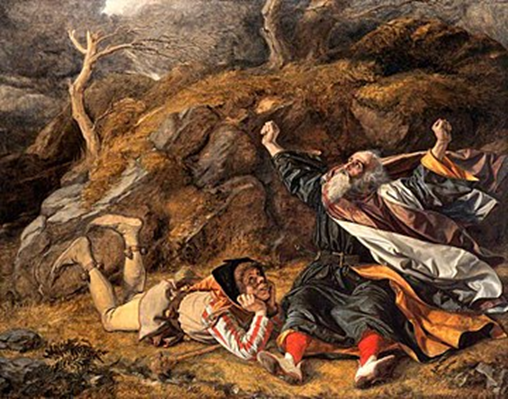
In 1989 I was cast in an outdoor production of King Lear as Lear’s Fool. I have played a couple of Shakespeare’s fools. I have a wealth of personal, real-life experience to bring to such roles. It’s a gift.

Early in the rehearsal process, I made a creative decision that was accepted as valid by the director, Joe Ferrell. I felt the Fool would grovel and slither throughout the story as he insinuated his opinions on Lear’s actions and decisions, never reaching past the height of Lear’s waist. I wore out a set of kneepads during the show’s run.

Mr. Ferrell had also made quite a few creative decisions himself (as directors are wont to do), one of which was to employ fog machines during Lear’s nighttime meanderings through the stormy countryside, bereft of shelter and family, and increasingly bereft of his very senses.

Reasonable enough.

From my Fool-ish point of view however (about three feet high, remember), the fog machine was at eye level and only an arm’s length away. In one long scene, as Lear (my friend and fellow cast member, Fred Foster) raged against his daughters, his fate, and the weather for what seemed like four iambically-pounding hours, I crouched in the mouth of the belching fog. My makeup melted off. My costume dripped in streams. I gurgled my lines.

When I came out for my curtain call, I didn’t bow.

Instead I shook myself like a dog to share my wealth of moisture with those nearby.

It’s good to share.

My favorite and grandest stage fog episode was on closing night of a 1992 production of Sweeney Todd.

The house was sold-out. The cast was in place behind the curtain prepared for their grand reveal. I was storming around backstage, working myself into a damn decent homicidal frenzy.

The fog machines commenced.

However, a sold-out house was not enough for the kind-hearted and slightly greedy director, Dr. James Rodgers. He was scurrying about to find room to seat some last-minute, ticketless arrivals. He had folding chairs located and brought to place one-by-one in the corners of the house.

The fog machines dutifully blew.

A pre-show announcement was deemed necessary.

The fog machines gleefully blew and blew.

The orchestra finally began the overture.

The curtain was raised.

The cast began to “…tell the tale of Sweeney Todd.”

I strode to the doors I expected to open and allow me to attempt to scare the bejeezus out 400+ people.

Instead, the fire alarm, triggered by the fog, had summoned first responders.

The fire department arrived with the Lexington and UK police – all with bells and whistles and lights a-blazin’. We were evacuated from the building; the audience to the front lawn of the Fine Arts building and the cast and crew to the street behind the building’s loading dock. Both groups could see other in the emergency-light-decorated twilight of a lovely Kentucky summer evening – a far cry from the dingy, industrial Fleet Street of our show.

Eventually, the authorities were persuaded that conflagration was unlikely. They were thanked for their efforts and invited to stay for the show. They chose to go about their duties instead, which was a good thing as I don’t know where Jim would’ve seated them! The audience, the orchestra, the crew, and the cast reassembled and an evening of theatre juiced by the pre-show capers turned out to be real nice clambake after all.

The fog machines were smug despite having grossly overplayed their part.

A Geezer Remembers; Droning Tonto and the Atomic Bic

I subscribed to Actors Theatre of Louisville for about 24 years. I love this theatre and have enjoyed a number of transcendent evenings over the years. Susan Kingsley and Ken Jenkins in “Childe Byron” was magical. Likewise, “Tobacco Road”, “The Three Musketeers”, “The Sea Gull”, were wonderful, and their production of “The Tempest” was the best I’ve ever seen. Oh sure, there were some head-scratchers along the way (“King Lear” in burkas plumb evaded me), but overwhelmingly most of the shows were inspiring and entertaining.

So…why did we stop subscribing?

I was working almost every Saturday then. The only performance we could count on attending was the nine o’clock curtain on Saturday nights. I would get away from work about five, we would drive to Louisville, have dinner at the Bristol, make the curtain at nine, get out of the theatre about midnight, and drive home.

Ah, there’s the rub.

That late night drive home was becoming increasingly burdensome. Janie and I began to question how much pleasure we were getting out of our Louisville theatre habit. We debated it for a couple of years. Then there were two productions that last subscription season that finally convinced us to drop the commitment.

The first production was actually quite well done. It was a gospel concert nominally disguised as theatre. Now, I can enjoy gospel music (or bluegrass, or German lieder) for about fifteen minutes just as well as the next guy, but this was two hours and forty-five minutes more gospel music than the Geneva Conventions probably allow. That night’s drive home was glazed in bitterness and that’s the gospel truth.

The other show…

(…shudder, squint, tears begin to flow…)

The other show…

The other show was titled “Beyond Infinity”. It was part of the Humana New Play Festival.

The play consisted of three intertwined (sorta) stories set in the same desert at three different times in history.

One story was of an ill-fated wagon train. Bleak. I found myself expecting Ward Bond to come out wailing “Bring out your dead!” (100 trivia points for identifying the reference.)

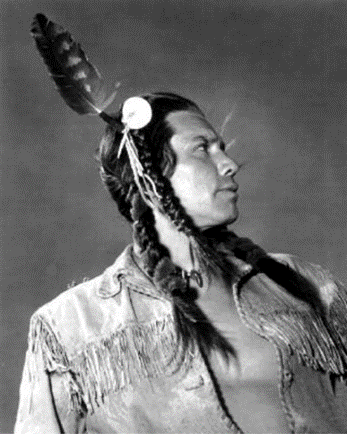
The second story was told in a sporadic monologue in monotone by one of ATL’s regular actors whose name eludes me at the moment. He was a gaunt, Sam-Waterston-Abe-Lincoln-Harry-Dean-Stanton-looking fella. For this show he was dressed like Tonto. Whenever the show’s innate hilarity moaned towards out-of-control, the lights would come up on Tonto. He would gaze at a spot about ten feet over my head (looking for what?…inspiration?…his light?…his lines?) and drone. I caught occasional words (kemo sabe, walla wah walla walla walla wah, bibbity bobbity boo) but we were never EVER in the same time zone as a coherent thought.

The third story…

Ah YES-S-S, the third story…

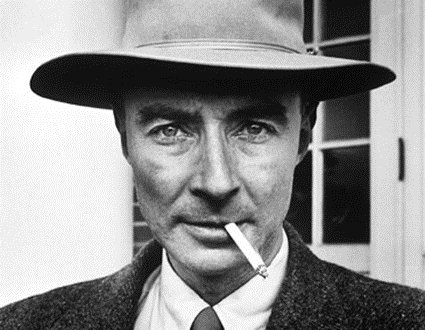
The third story involved J. Robert Oppenheimer and his merry pranksters in the desert working on the atomic bomb. At one stretch in the second act (of twelve, I’m sure), Oppenheimer is standing in the desert night, holding a smallish volume of the Bhagavad Gita (you can’t make this up!). His assistant is standing next to him. For ten minutes he reads aloud, translating on the fly, from his book by the light of his assistant’s Bic lighter…YOU CAN’T MAKE THIS STUFF UP!!

At this moment Janie, who had shed her shoes and was curled up in her seat in the fetal position, tugged on my sleeve, leaned near and whispered “there are 87 lights up there.” Why not count the lights? What else was there to do?

It ended…as all things eventually must (except baseball games).

Now, one of the obligatory rituals involved with attending shows in Louisville is the pre-drive-home bathroom visit. Well, I’m there, at the urinal, “inflagrante delicto” as it were, when the bathroom door is banged open by a three-piece-suit type who angrily declared to the room; “Well I have been to the desert on a horse with no name!”

I just about missed the urinal.