Tag Archives: Shakespeare

Montana Joe & Weird Willie

“I am sure, as many as have good beards or good faces or sweet breaths will, for my kind offer, when I make curtsy, bid me farewell.”

Rosalind said it prettily and clearly and thus endeth our final run-through before technical and dress rehearsals and then opening night.

I was in the wings, muttering; “I’ll bid you farewell. There won’t be a half-dozen people a night that’ll understand that line.”

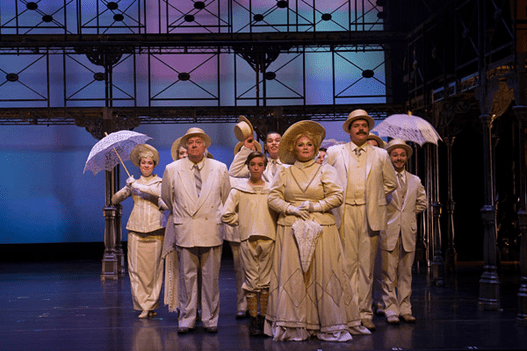
It was 2007 and the play was Shakespeare’s As You Like It.

My head-shaking over the prospects of decipherability of this closing line was not a singular bobble. I was doubtful about many such moments in the play. Moments? How ‘bout whole ten-minute segments of brilliant verbiage swirling over, around, and through a 21st century audience like Casper the Friendly Ghost, leaving them feeling like something remarkable had happened, but who knows what it was…and I guess it’s okay…it sounded impressive.

And most of those bewildering lines were mine.

I don’t like As You Like It, but I admire it.

The speech; “All the world’s a stage…” is worth the price of admission by itself.

I have seen the play four times and now performed it once.

‘At’s enuf fer me.

Bitterest Fool

I was playing one of the fools and was well on my way to crafting the bitterest fool in the history of theatre. I was too old to be flopping about in voluminous motley, toting elfin ingénues and scolding the audience in iambic pentameter.

But I did it.

Why?

Well…

…it was Shakespeare…

…it was a fine cast…

…and it was being directed by Montana Joe and he asked me to do it.

As I said, the run-through was now completed, and I could go home, flip though the script, and look for a bit of brightness that I was sure I was neglecting.

But no-o-o-o-o.

Montana Joe assembled the cast for a few notes.

Joe sat in the front row.

The cast sprawled on the apron of the stage.

Rapt and waiting.

Else, why would you show up for the first read-through, except to hear Montana Joe’s musings for the run of the journey?

Joe slouched and stared a hole in the carpet about three feet in front of his feet. He slow-tugged at the end of his not-quite-Fu-Manchu mustache. His eyebrows lifted to allow room for his pupils to beseech the firmament for le mot juste.

“There is a moment…when we are working on a play…probing and exploring…and playing…and stumbling…and discovering.”

Joe sank a little in his chair, his shoulders and arms and head folded in. We leaned in to hear.

Inherently, we are lost and looking. A director is pointing and guessing…we find things. Some finds are rejected. Some finds are clung to.”

Joe sank further in his sucking pit of a seat.

“Then…there is this moment…when the play takes on a life…when that life is taken on by the cast…and no longer belongs to the director.”

Seat A12

At this point, Joe’s seat (seat number A12, I believe) became a full-fledged black hole and began to whisk him away. His chin was curled to his knees and he plunged away butt-first, muttering…growling…crooning;

“What……a………joy!”

After the guffaws from the cast, we called the local fire department. They came promptly and managed to retrieve Montana Joe and we quickly established call times for the remaining tech rehearsals and headed home.

What a spellsinger.

The Clan Assembles

No, no. Not that clan.

Unbeknownst to Lexington, a Clan assembles for an evening of mayhem.

The South is renowned and mostly disowned for its Klan. Dividing and judging people by the shades of their skin…foolishness. Politically and physically acting on that foolishness…shameful. We know better.

Dividing and judging people for what’s going on voluntarily in their bedrooms…foolishness.

Dividing and judging people……foolishness.

We have important and glorious things to do with our days and we need the talents of everyone to do them. Could we please keep our eye on the ball here?

But…

…this is not that kind of clan.

Instead of the KKK, one could call this group, the CCC (Classical Cinema Clan).

War Gods of Babylon

One could.

To avoid confusion, one should reveal that “Classical” refers to the age of the members rather than the quality of the films. This octet has amassed over 500 years on this planet. I can’t accurately speak to their whereabouts before then, though I harbor suspicions.

One would assume that in 500+ years, some wisdom would have also been amassed and perhaps it has, but that’s not what this assemblage is about. No, the CCC is probably about as foolish as the KKK, but much more benign. Their foolishness is much more centered on good pizza and happily bad movies than lynching and gerrymandering. Their rants tend to be more about the uselessness of ubiquitous standing ovations on the theatrical stages of Lexington rather than Hillary’s emails or Stormy’s career choices.

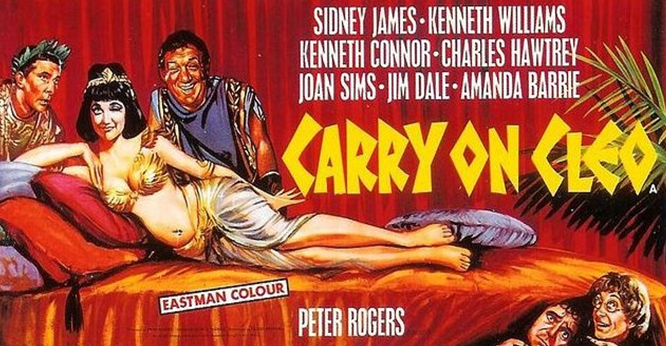
While I personally believe our country is diminished by the hi-jinks of the KKK, I can’t honestly assert that Lexington is in any way enhanced by the activities of the CCC. Who is made better by our devouring (inhaling?) of an “Ultimate Warrior” pizza from Puccini’s Smiling Teeth or a “Hudson” from Big City Pizza, followed by a double-feature of War Gods of Babylon and Carry on Cleo?

Classical, if not classy

Well…of course WE are…but the pleasures are ephemeral at best and the digestive dreams that ensue rival those of Dickens’ Scrooge.

Be that as it may, no damage is done by the CCC. No animals are harmed – in fact, Chloe the wonder pup and the only female in the group, scores big from “pizza bones” slipped to her clumsily and surreptitiously by the easily charmed clansmen.

We assemble in the kitchen, munching on beer cheese and chips, drinking wine, bourbon, beer, and herbal tea, filling the time until the pizza arrives with stirring accounts of various physical ailments (500+ years, remember?). That sounds deadly dull and it is but it doesn’t last long. The discussion morphs quickly into passionate descriptions of current projects of the clansmen. Here, I should point out this group is comprised of a painter, a director, an attorney, a writer, an actor, a teacher, a critic, and a junesboy. The members of the group always have something going on; a script, a play, a showing, a concert… And every one of this group has performed on stage. Thus, there is always much to discuss.

The Writer has just finished a new play and, not being averse to a little self-promotion, offers; “Richard III got a bum rap.”

The Lawyer; “So…you’re sayin’ Shakespeare was puttin’ out fake news?”

The Teacher; “Maybe he’s a victim of the Deep State.”

The Actor; “Oh yeah. I got yer Deep State right here.”

The Critic snorts and giggles ominously.

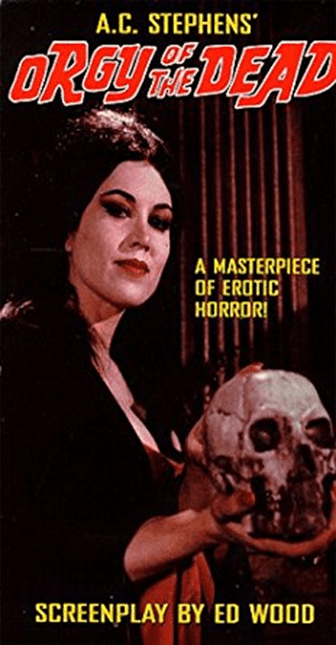
Ed Wood & Kreskin — not since Fred & Ginger has there been such a cinematic duo

The Director; “I remember one day in Montana I drove 836 miles to watch some Udder Pagans play baseball and do some unmentionable things to local cows. I remember thinkin’ that Montana was a Big State and perhaps an Odd State, but I never remember thinkin’ it was a Deep State…and I don’t think I ever met anyone named Dick there.”

This was met with a significant pause as we pondered all the images and possibilities sparked by that pronouncement.

Finally the painter summed it all up; “What kind of pizza did you order and what are we watchin’ tonight? Any pepperoni and pulchritude on deck?”

Junesboy answered; “I ordered copious pizza – the best kind. As for the flicks, I thought we’d start out with some old trailers, followed by an old local commercial featuring The Actor in our group talkin’ ‘bout a rubber ducky, and then move on to the Ed Wood rarity; Devil’s Night Orgy.”

The Painter replied; “I’m very happy.”

Broken Things

I’m old enough now to have been several things. Over the last six decades, I’ve been a library clerk, a husband, a retail store manager, a stepfather, a student, an advertising manager, a wine consultant, a friend, a singer in musical theatre, a husband again, a Frisbee artiste, a party planner, a government relations director, a voracious reader, the president of a chain of liquor stores, a book collector, a singer in a rock-n-roll band (the whitest soul-singer you’ve ever seen), and……an actor/storyteller.

I’ve been pretty good at some of these things. Others? Well…I still throw a decent Frisbee.

During the “ugly hour” (thank you, David Bromberg for that troubling concept) of looking in the morning mirror, the person I most often see is that last listed; actor/storyteller. It feels like I have consumed a huge chunk of my life by instantly pondering in every situation; “How am I gonna tell other people about this?”

Storytelling and acting…it’s my comfortable place.

So…

I’m remembering a time when I was rehearsing a play.

It was Athens West Theatre’s production of The Christians by Lucas Hnath and I was spending my evenings rehearsing a gripping and relevant script with a literate and incisive director and a cast whose passion humbled me.

It was a real good time.

What enhanced the rehearsal process were the spaces in which we rehearsed.

We rehearsed in various rooms at a private school in Lexington. One night we would be in the school’s cafeteria, the next in the school’s music room, the next in the school’s theatre office. The spaces were warm and clean and neat. Everything worked. Everything pointed to civility and creativity. Their hygienic competency inspired us to leave the spaces as pristine as we found them. That was their message to us; “Work. Create. Dream. Respect those that follow.”

I have worked in rehearsal spaces (and theatres themselves) that were far from pristine. In one space we tried to create an Antarctic setting in the basement of a downtown building that was thermostat-challenged in January (I assure you imagining the cold was no problem at all). In another, we rehearsed Sam Shepard and Sherlock Holmes in a building that shook with every passing car and the dust hovered in the air looking for a parking spot in our lungs. Another space nourished our creative efforts with water fountains that spewed burnt-siena-tinged fluids. Other spaces saluted our presence with deliberate car horns. Shakespeare was challenged by rain and heat and barking dogs (sometimes simultaneously).

Our storytelling efforts were not improved in these broken environments.

Striving to create, surrounded by broken things.

It reminds me of a Christmas I witnessed where a six-year-old boy received a bonanza of presents. Every complicated gizmo advertised on TV that holiday season was unwrapped Christmas morning. He was delighted and overwhelmed…for a day. By the next day, the charms of every toy and gizmo had faded. The six-year-old with six-year-old motor skills had compromised every item in some way. He sat in his play space pitifully surrounded by things that did not work as they should. They were all broken…in some way.

Surrounded by broken things.

What good can possibly come from that?

I was envious of the bubble created by the private school. I wanted to play with all the guitars and drums. I wanted to share their meals and thrill to their daily discoveries. The message to the students was clear; “We don’t expect you to merely survive. We expect you to thrive. We expect you to make things better.”

But outside the bubble…?

What about the broken things elsewhere?

Bridges, water slides, county water systems, sinking cities, neighbors sinking into substance abuse, and teenagers carrying weapons of mass destruction and brains that will not be fully developed for another five to ten years…

We are surrounded by broken things.

We are not improved by the messages those broken things impart.

We must fix the broken things for everyone.

It’s not dramatic…or sexy…or rapid. I’m old and may not see the harvest of such a mending, but I know it’s the better path and I’ll sleep better and tell a better story if we’re heading in a better direction.

Work.

Create.

Dream.

Respect those that follow.

This is not hard.

Just Act the Hell Out of It

In the theatre, I have been blessed to work with inspiring directors. Many of them seemed to enter and re-enter my life at times when they could fulfill dual roles; stage director and off-stage mentor. Just as I could not have become the on-stage kings, fools, lawyers, doctors, and errant knights required, so I could not have become the geezer I am today (for better or worse) without their genuine care and, at times, curious advice.

Prof. Charles Dickens lurking on the right

Perhaps preeminent among them, if for no other reason than my bewildered youth at the time, was Charles Dickens.

Yes, that was his real name.

Charles was my adviser at UK. On the Tuesday before my first year at UK, during the “advising” session required before classes began on Monday, Charles filled out my roster of classes (my input was restricted to an awed and tiny “ok”), and informed me that my part-time job at the public library wouldn’t impede my freshman theatre activities since they didn’t cast freshmen anyway…but that I should attend and participate in the Sunday auditions of the season’s opening show (which he was directing) for the experience.

I responded with another tiny; “ok”.

Monday morning, at 9:00, I attended my first college class (Physics: 101 – we learned to bend water with a comb) and was cast in my first show (“Playboy of the Western World”). I was slack-jawed that September at my Physics classmates (“Is that real water?”), and dazzled by my sometimes shabby but always quick cast mates in rehearsal. My path was clear.

That was in the fall of 1969.

In the spring, Charles cast me in his elaborate production of Shakespeare’s “Measure for Measure”. By then, I was a complete “gym rat” in the theatre. Every day began and ended in the Fine Arts Building; the Guignol Theatre, the Laboratory Theatre (now the Briggs), the Green Room, the Scene Shop, the Costume Shop…even an occasional classroom. I lurked in every rehearsal I could find.

Angelo, on the right, acting the hell out of it

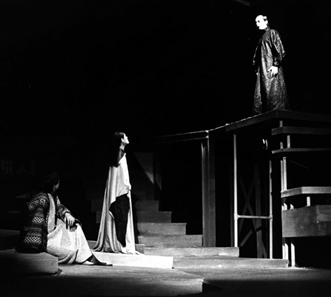
During “Measure”, Charles was deep into his Peter-Brook-THE-EMPTY-SPACE period. I may have learned half of what I know about the theatre listening to him coach actors in these rehearsals. One night, Bill Hayes, a nice actor and UK alumnus brought in by Charles to play “Angelo”, paused rehearsal to question the meaning of the line; “Let’s write ‘good angel’ on the Devil’s horn, tis not the Devil’s crest.” Charles sprang to the stage and took Bill’s script and they pondered…and pondered… Finally Charles handed the script back to Bill with the profound instruction; “Just act the hell out of it.”

Just act the hell out of it?

I had fallen in love with Shakespeare with “Measure for Measure”.

I knew what that line meant!

I could say that line!!

I could change people’s lives with that line!!!

Trump would never be elected if I said that line!!!!

I swore if I ever got the chance…

Well, of course, having sworn, I did, 23 years later.

Me acting the hell out of it in 1993

In 1993, the uber-smart Ave Lawyer cast me as “Angelo” in her production of “Measure”. This production featured a remarkable cast; Eric Johnson, Sidney Shaw, Holly Hazelwood Brady, Laurie Genet Preston, Jeff Sherr, Joe Gatton, Glenn Thompson, Donna Ison, Karen Czarnecki, Spencer Christiansen… WOW!

I had my chance.

I said my line.

I acted the hell out of it.

I changed people’s lives.

I saved the planet…from something.

And dammit, Trump was still elected.

I got up the next day and went to my day job.

Joe Gatton; You Say Lichen & I Say…

It was a brutally cold night in Lexington and for some unfathomable reason I was recalling a blistering hot summer afternoon in 1989.

We were rehearsing King Lear for Lexington’s Shakespeare in the Park. It was directed by Joe Ferrell and it was a strong cast, featuring Fred Foster, Lisa and Paul Thomas, Walter Tunis, Becky Smith, Robert Brock……and Joe Gatton.

Joe Gatton is a fine actor and a remarkable fellow. Smart, loyal, loud, murderously thoughtful, imaginative, hard-working, and an ardent admirer of cheezy movies featuring diaphanous costuming and intense backlighting. In short, a renaissance man.

Joe possesses a pragmatic artistic wisdom that affects those who work with him. Michael Thompson, another highly experienced local actor explained to me one evening that he made many creative decisions by considering; “what would Joe Gatton do?” Was he serious? Knowing Michael, probably not, but it was just plausible enough…

This particular summer afternoon was a true ordeal by fire. Sunny, ninety-something degrees, 150% humidity…a real beauty. Amplifying these balmy conditions was our rehearsal space. It was outdoors, in the sun, on a concrete slab that had at one time doubled as a shuffleboard arena.

The air simmered – it was hard to breathe.

The concrete sizzled – our shoes melted.

Gatton and I weren’t required on stage for a spell. We sought a shady respite. I can’t just sit and melt in the heat. I pulled out my ever-present Frisbee. Joe and I began a super-slow-motion tossing of the disc. The emphasis was not on running and jumping. The goal was tossing and catching with a minimum of actual movement.
It was cerebral, like a meditation.

Who am I fooling?

It was @%^&$#* hot.

I suggested we instead imagine something amazingly cool to fool our brains into cooling our bodies. Joe was game for the experiment. I suggested a co-o-o-ol, dark, cave with walls covered in lichen. I pronounced it; “litchen”.

“What’s that?”

“Litchin…litchin! That green moss that grows in co-o-o-ol, dark caves.”

“Oh, you mean ‘liken’.”

“No-o-o, I think it’s litchen.”

“I always thought it was liken.”

Well, we could never agree on the pronunciation, but we tried the thought experiment anyway. It failed (big surprise there) and we attributed the failure to the pronunciation uncertainty. These were pre-Google days. How’ya gonna look it up? Besides, we were being called to the stage – our turn to broil in iambic pentameter under a rampant thermometer.

However, the question has festered in the back of my mind for 28 years and a few weeks ago I thought I had stumbled upon the answer.

I was binge-watching a 1962 British TV sci-fi series called Pathfinders to Mars (no diaphanous costuming, no backlighting, just a boxy studio set with un-moving dials and blurry monitors). Yes, I am the world’s oldest hippie-nerd. Everyone else binge-watches Outlander and Game of Thrones. What can I say? Nerds gonna nerd. In the first episode of the series, the young actress uses “litchen”, but in every other episode it’s “liken”. I’m guessing the first actor goofed.

I’m ready to call Joe after 28 years and announce my discovery.

BUT!

There’s always a “but”.

BUT…I live in a new and wondrous age now. We have (as the 2nd President Bush called it) “the Google”. I found a site that offered an audio pronunciation for the US and the UK.

US = liken

UK = litchen

Now we know. I’m not quite sure of the usefulness of what we know, but now we know.
Does that mean we have to do King Lear again?

@%^&$#*

Pronounce that.

Cue the Fog………Ack!!

If you hang out with theatre people for any length of time (say 15-20 minutes), you will hear many stories and quickly perceive that many of their stories fall into genres. Most theatre folks have tales about;

  • Working with children.
  • Working with animals.
  • Costume or prop malfunctions.
  • Outdoor theatre misadventures (there’s a sub-genre about bugs).
  • And……fog.

Yes, fog.

And yes, I’ve got a few fog tales if you’ve got a minute (or say 15-20 minutes).

My fog adventures, unfortunately, are not John Carpenter’s; pirates emerging to terrorize my home town while Adrienne Barbeau croons seductively on the local radio station from her lighthouse studio.

Sigh.

I attribute that lack to the fact that Lexington is land-locked. Our nearest body of water is the Town Branch of Elkhorn Creek (and we covered that trickle with concrete a long time ago), our closest Pirates are the baseball team in Pittsburgh, and our closest lighthouse might be 400 miles away on Sullivan’s Island in Charleston.

No, my on-stage fog experiences are more pedestrian, but here they are anyway.

Fog in the theatre usually comes from machines though there are exceptions.

I was in a production of The World of Carl Sandberg in the spring of 1972. My friend and fellow cast member, Vicki James, gave a rendition of Mr. Sandburg’s poem “Fog” that was so evocative I remember it vividly 50+ years later. Indeed, I have many times been balked or paused in life, gathered myself……”and moved on.” Fog won’t stop me. It will only make me pause…think……and move on.

Ten years later, in a more-than-dubious production of Dracula, my friend and fellow cast member, Paul Thomas, managed to manufacture a personal fog bank by furiously puffing (heaving!) on his pipe in a sad attempt to obscure his presence in one particular way-more-than-dubious scene. I still harbor hope that I can forgive him for his attempted escape one day.

But those are exceptions. Most stage fog emanates from machines wittily referred to as “fog machines.”

My first experience with fog machines was in a 1981 production of Brigadoon. Oddly enough, it also included Paul Thomas, though in this case he is blameless. The show was in the Opera House in Lexington. The opening scene featured Paul and me as American hunters in the wilds of Scotland who have lost our way in the fog. We discuss our predicament and spot a village in the distance (neat trick considering the fog in which we’re supposed to be lost) – all behind a scrim as the orchestra in the pit plays gorgeous Lerner and Loewe music.

The dress rehearsal went fine, but the director wasn’t satisfied with the quality and quantity of the fog in the first scene. It wasn’t convincing as a fog that would baffle vibrant Americans. He ordered a second fog machine for opening night.

On opening night, the music began and the fog machines (plural) began. By the moment our opening lines were required, the fog, restrained by the scrim, had achieved a height of 7.3 feet. Paul and I could not see the audience, and the audience could not see us. When we spoke we waved our guns in the clear air above the fog to let the audience (and each other) know where we were.

Then the scrim arose and a slow tsunami of fog rolled out over the edge of the stage, into the orchestra pit, and into the first few rows of the audience. It was a blurry sight to see; the violinists slashing at the fog with their bows. I think they feared pirates were eminent. I think the audience in the front row feared they had been lured into a bizarre Gallagher-esque experience (albeit with prettier music).

We all tend to resist taking steps backwards in our lives, especially in the arts, but the second night’s performance of Brigadoon employed but one fog machine.

In 1989 I was cast in an outdoor production of King Lear as Lear’s Fool. I have played a couple of Shakespeare’s fools. I have a wealth of personal, real-life experience to bring to such roles. It’s a gift.

Early in the rehearsal process, I made a creative decision that was accepted as valid by the director, Joe Ferrell. I felt the Fool would grovel and slither throughout the story as he insinuated his opinions on Lear’s actions and decisions, never reaching past the height of Lear’s waist. I wore out a set of kneepads during the show’s run.

Mr. Ferrell had also made quite a few creative decisions himself (as directors are wont to do), one of which was to employ fog machines during Lear’s nighttime meanderings through the stormy countryside, bereft of shelter and family, and increasingly bereft of his very senses.

Reasonable enough.

From my Fool-ish point of view however (about three feet high, remember), the fog machine was at eye level and only an arm’s length away. In one long scene, as Lear (my friend and fellow cast member, Fred Foster) raged against his daughters, his fate, and the weather for what seemed like four iambically-pounding hours, I crouched in the mouth of the belching fog. My makeup melted off. My costume dripped in streams. I gurgled my lines.

When I came out for my curtain call, I didn’t bow.

Instead I shook myself like a dog to share my wealth of moisture with those nearby.

It’s good to share.

My favorite and grandest stage fog episode was on closing night of a 1992 production of Sweeney Todd.

The house was sold-out. The cast was in place behind the curtain prepared for their grand reveal. I was storming around backstage, working myself into a damn decent homicidal frenzy.

The fog machines commenced.

However, a sold-out house was not enough for the kind-hearted and slightly greedy director, Dr. James Rodgers. He was scurrying about to find room to seat some last-minute, ticketless arrivals. He had folding chairs located and brought to place one-by-one in the corners of the house.

The fog machines dutifully blew.

A pre-show announcement was deemed necessary.

The fog machines gleefully blew and blew.

The orchestra finally began the overture.

The curtain was raised.

The cast began to “…tell the tale of Sweeney Todd.”

I strode to the doors I expected to open and allow me to attempt to scare the bejeezus out 400+ people.

Instead, the fire alarm, triggered by the fog, had summoned first responders.

The fire department arrived with the Lexington and UK police – all with bells and whistles and lights a-blazin’. We were evacuated from the building; the audience to the front lawn of the Fine Arts building and the cast and crew to the street behind the building’s loading dock. Both groups could see other in the emergency-light-decorated twilight of a lovely Kentucky summer evening – a far cry from the dingy, industrial Fleet Street of our show.

Eventually, the authorities were persuaded that conflagration was unlikely. They were thanked for their efforts and invited to stay for the show. They chose to go about their duties instead, which was a good thing as I don’t know where Jim would’ve seated them! The audience, the orchestra, the crew, and the cast reassembled and an evening of theatre juiced by the pre-show capers turned out to be real nice clambake after all.

The fog machines were smug despite having grossly overplayed their part.

Funeralville

Funeralville

Kentucky is unendingly interesting to me. I’m perfectly happy to spend all my time here. It is composed of many things that are unsurprising, predictable …pedestrian even. Still, it combines its un-exotic components and its people in small ways that don’t change the world, but delight me, or disappoint me, or both. Whatever, I have never not been interested.

A friend of mine died.

I can’t say I knew her well, even though she was one of my ex-wives – I have many ex-wives from the stage.

We did one show together. For about seven weeks we explored Shakespeare’s AS YOU LIKE IT. She was bright, quick, supportive, intuitive, and enthusiastic. As far I knew that was all she was and it was all good. I can assume she had bad days and moments, and possessed the same weaknesses and peccadilloes endemic to the species, but I didn’t spend enough time with her to know. I only saw the pleasant and the productive. AND I witnessed over the ensuing years the beneficent effect she seemed to have on my other friends and their children.

I knew enough to know she made the world better. S’enough.

Her funeral was being held in a small town about an hour south of my home.

It was a fine summer day. Sunny, warm and humid (but not stifling). Ample rain for the season meant everything green was in full celebration. It was a day for ignoring the interstate highway and instead, meandering to my destination on smaller state roads. Kentucky does state roads pretty well, asphalt being the life blood of politics in the state. Along the way there were discoveries, perhaps not on the scale of the first sights of Daniel Boone on his wanderings but happier (and safer) discoveries for me.

  • The box turtle precariously plowing his way across the highway with the same confused alacrity of newly hatched sea turtles on the beach on Sullivan’s Island. I made a mental note to once more drag out my old Pogo books and ponder the adventures of Churchy LaFemme when I returned home.
  • I felt I had been properly admonished to; “Be prepared! The Lord is coming!!” The spray-painted 4X8 sign was effective, though it occurred to me that another line might have been added; “And she’s pissed!!!”
  • There appeared a yellow traffic sign like those signs that warn of “Deer Crossing” and “Falling Rock”. This one showed an icon of a horse and buggy. I was just registering the import of the sign when I popped over a rise and there in front of me was the sign made manifest; a real-life horse and carriage toting two bonnet-ed heads. It took me a moment to radically reduce my speed to 10 mph to prevent the acquiring of some intriguing, if gruesome, hood ornaments. Though I passed them carefully, the bonnets were still startled. My hybrid runs silently.
  • Trumpet vine was rampant along the fence rows. It has become in these days of warmer temperatures and milder winters a slower, more substantial kudzu, but with the advantages of blooms attractive to hummingbirds and butterflies. I love this plant, but spend too much of my summer days physically defying its ceaseless attempts to gerrymander my backyard.

It was a happy, thoughtful journey also aided by the jazz stylings of Conte Candoli on the car’s sound system.  <<boo-waaaah, boo-waaaah…>>

Journeys eventually arrive…dammit.

This one arrived at the funeral home, as I suppose all our journeys eventually do…double dammit.

Funerals in Kentucky vary – but not that much. This one was solidly within the range of what passes for normality ‘round here.

  1. Ya gotta sign the book.

For a goodly number of people, that’s the nuts.

Mission accomplished.

My work here is done.

I use this as a lesson in participation all the time. If you say you want to participate in what we’re trying to do, that doesn’t mean just “signing the book”. Ya gotta participate.

I do this part of funerals OK.

I stand in line.

I sign.

  1. Visitation is always intense. It may be two hours long. It may be 16 hours long (over two days). I’ve experienced both. There’s usually a dead person lying openly nearby, which invariably troubles me. There are people in various stages of grief and anxiety all around. These stages are not always compatible. There are old grudges, new feelings of shame, and cultural resentments adrift in the room. It’s easy to lose track for whom this event is happening.

Visitation worries me.

I wanna sneak off to a private room with my friends and eat and drink and tell stories.

I think “for whom this event is happening” might be me. My deceased friend doesn’t care. It’s me who’s lost something. It’s me who has to face tomorrow without my friend. I could use a little time away alone or with other friends in a similar frame of mind to come to grips with this now altered universe.

  1. And then there’s the actual service. <<cue the music from JAWS>>

Today’s service is being conducted by a local minister who admittedly didn’t know my friend very well. This is not unusual. I’ve attended several funerals where the minister spent 15-30 minutes describing someone I never knew. It‘s OK. I believe rite and ritual, even devoid of content and context can still facilitate the grieving process and offer comfort to those of us going on with life.

The minister invited participation in the form of stories and thoughts about my friend from the assembled mourners. I suspected he did so to fill the time and to garner some research for his message. I also suspect he failed to accurately judge the ramifications of offering an “open mike” to the two dozen plus theatre folks in attendance. The minister and the 50-60 local attendees were treated to stories about the love and tolerance the deceased showed to everyone – all types of people; republican, democrat, white, black, gay, straight, left-handed, right-handed, Baptist, Catholic, Jewish, Zoroastrian, Hari Krishnan, Kentucky fans, Louisville fans…

I watched and wondered if perhaps the world and spirit being described might have exceeded the expectations and comfort level of the local attendees who were most likely just as passionate about the deceased, but less verbal about it.

Still, love and hurt was in the air for everyone and that’s we’re gathering to assuage…yes?

Well, it was time for the preacher’s message.

I perceived he was in a bit of a spot.

To whom should he direct this message?

  1. To the 25% of the crowd who were the theatre folks who’d be hittin’ the interstate back Lexington the minute the service was over?
  2. To the rest of the room who would be looking to him for counsel and comfort for the rest of their lives?
  3. To everyone? Was there possibly a message that would knit the room into a single-minded community of caring?

He tried #3.

I admire him for trying.

He reached back in his schoolin’ and dredged one line from AS YOU LIKE IT; “All the world’s a stage…” He got immediately hung up on ”entrances” and “exits”, got the two reversed a couple of times, and never quite sorted it out. It was far from iambic…hell, it was barely coherent. I didn’t mind it so much. I did the play myself and occasionally found it barely coherent.

He didn’t give up.

He reached back in his schoolin’ once more and suggested we could look to “Old Walt” for inspiration.

Now, I’ll fess up here. I was jarred by this suggestion…in a good way. I didn’t know what wisdom Walt Disney could impart to this solemn occasion, but I knew my departed friend. She was a gleeful gal and a quote from Mickey Mouse or a chorus or two from “It’s a Small World After All” would no doubt make her smile.

But no, “Old Walt” turned out to be Walt Whitman. <<cue the JAWS music again>>

I feared the minister was navigating dangerous waters. The Walt Whitman I knew had backwaters foreign to most established religions. My misgivings were wasted (may they always be). The minister again only had one line at instant recall. He said it. We all blinked in unified incomprehension. It was the closest he got to truly unify the room.

At that point, he dropped option #3 like last week’s newspaper.

He began quoting various verses from the Bible like a rapper. The air was filled with chapters and verses……and numbers were chanted……I expected the ball to be hiked at any moment.

It became clear that he was gonna “save” the out-of-town theatre co-conspirators (his word, I kid you not) in front of his neighbors.

Too bad.

I didn’t mind so much either. I was raised Southern Baptist. I was familiar with the physical need to block the doors and pass the plate and “invite” professions of faith. I still recall several verses of “Just as I Am”. It was the guy’s job.

Yes, I felt hi-jacked and held hostage. I felt bad for my friend. She would not have wanted to be a bad host.

Meh.

I drifted away to a kind of “dream time”, filled with box turtles wearing bonnets driving horse-drawn carriages through jungles of blooming trumpet vine and butterflies (my friend liked butterflies).

Then I hit that interstate back home.

A Guignol Meditation

I have felt connected to the Guignol Theatre and the University of Kentucky Theatre Department in some way since my junior year at Bryan Station High School.

Playboy 03
Guignol Theatre; PLAYBOY OF THE WESTERN WORLD (1969)

My high school English teacher arranged for our class to have access to discounted tickets to UK’s production of Shakespeare’s Twelfth Night. Jill Geiger played a major role in that production. Jill went on to perform with and later own The Dorset Playhouse in Vermont. She was a successful person. (Side note; Jill’s bridge-playing was precise but conservative. Bridge was our time-killer of choice in the Green Room — I learned a good bit of acting while playing bridge with other actors).

The day before we attended the show, my teacher gave us instructions on how we were to behave in “The Guignol”. The quotation marks come from my remembrance of my teacher’s obvious reverence for this Temple of the Arts we were entering.

How quaint.

How helpful for me.

I wore my clip-on tie (my fellow Guignolite and playwright/screenwriter Charles Edward Pogue – a successful person – was not to teach me to tie a proper knot for another five years – how absolutely helpful for me). I applauded at all the proper places, and was profoundly impressed by the show. So much so that I attended (on my own this time) UK’s next production in the Guignol of Richard Brinsley Sheridan’s The Rivals. Bekki Jo Schneider (friend, mentor, and ex-sister-in-law) played a major role in that show. She became the owner/operator/director of Derby Dinner Playhouse in Southern Indiana – a successful person. (Bekki Jo’s bridge-playing was aggressive but distracted).

The next year, my senior year in high school, I attended Dark of the Moon in the Guignol and Under Milkwood in the Laboratory Theater which is now named the Briggs Theater (Wally Briggs spent his adult life teaching theatre to UK students. Yes, he too was a successful person – Wally’s bridge-playing, by the way, was ultra, ultra conservative). Dark of the Moon featured Julieanne Pogue. Julieanne has gone on to a strong regional acting career, become an award-winning reader of books for the blind, and an uber-caring psychologist. Julianne is another successful person. Her bridge-playing? It was occasionally brilliant when she bothered.

Both of these shows also featured a freshman in leading roles which explains why I attended UK to study theatre. Where else could I possibly want to go? UK offered an immediate opportunity to act…..in major productions…..in real costumes…..on beautiful and exciting sets…..in front of real audiences.

Real audiences…

I remember those audiences as being drawn from all of Lexington. John Jacob Niles (another successful person and a legend to me — if you don’t know him, look him up, you’ll be intrigued) sat in the middle of the first row every opening night I can remember. Teachers from all the Lexington schools were there. Mary Agnes Barnes reviewed for the Lexington Herald. John Alexander reviewed for the Lexington Leader. Betty Waren wrote a theater page for the Herald every Sunday. The Theatre Department faculty was there…usually multiple nights. One memorable Sunday matinee was attended by José Ferrer (he was successful too).

I attended UK for two and half years, performed in seventeen shows, and became an adult; a thinking, listening, caring, evaluating, listening, tax-paying, voting, listening adult.

The arts do that for you.

They make you whole.

They make you reason.

They make you listen…with all your senses…and with your mind…and with your heart.

By all means, teach our children to add and subtract…please. Teach them to write a logical paragraph. Teach them to tell a whimsical story. Teach them their country’s history — all of it. Teach them the scientific method. Teach them to sing. For God’s sake, teach them civics so they know how their government works and are thus less vulnerable to the lies filling the air about them.

Make them whole. Make them successful.

A couple of years ago, I spent a lot of time with the students at UK as a small part of Ragtime. I was frankly thrilled and intimidated by the talent and work ethic of the cast and proud to be associated with them.

Then I attended the UK Theatre Department’s production of Once on This Island. This is not my favorite show, but I was again impressed by the talent and cowed by the revelation that the cast’s closing performance was to be followed by a week of finals before graduation.

These millennials have no bridge game at all. They’re workin’. They’re becoming whole.

I’m OK with that.

Julie et Jim

The title is a total stretch but there’s a “Julie” and a “Jim” in the tale. I couldn’t pass it up. Sorry.

The Southeastern Theater Conference (SETC) was held recently in Lexington and I enjoyed reading articles about it, and hearing friends’ reports of their activities during the event. I was particularly interested and inordinately proud of my friends Julieanne and Chuck Pogue’s efforts. Chuck conducted two sessions; “Auteurs-NO!  Raconteurs-YES!!” and “Tips for Adapting Plays from Sanskrit and/or Cave Paintings”. Julieanne packed the house with her session; “Concatenations from the Clash of Jung and the Restless in Tennessee Williams’ Mother Plays”. I may not have those titles exactly right, but I was mightily impressed – so impressed, that it triggered a remembrance of my first visit to SETC.

It was spring of 1970 and SETC was being held in Memphis. I had never been to Memphis, I had a ride with other UK theatre folks, I had twenty bucks, and my friend Jim Varney agreed to split the cost of a hotel room with me. Hey, as Christine Kane says; “When courage comes, you never see it comin’.”

The conference was being held in the Peabody Hotel in downtown Memphis. I believe today it’s called the Sheraton Peabody. Jim and I couldn’t afford the Peabody. We went across the street to something called; The Hotel Tennessee. It was five dollars a night, which we split.

Decades later, when I first saw Jim Jarmusch’s brilliant film; MYSTERY TRAIN, I felt very much at home in the accommodations depicted.

There were cockroaches…lots of ‘em…big ones…and bold. One of ‘em sat on the end of Jim’s bed and bummed cigarettes from him. Another one sat on the back of the commode and charged a quarter for access and a moment of privacy. I went downstairs to the desk to complain and noticed the clerk had six arms and I quailed. I was dubious, but it was cheap and had the asset of proximity.

The proximity paid off the next morning. I awoke to Jim practicing his smile in the mirror. He had just discovered Pearl Drops Tooth Polish and was pretty sure that his new “all-teeth” smile was gonna launch his professional acting ship tout suite. He urged speed with ablutions and let’s get our “petite little small-ass bods” over to the Peabody. We might miss something!

He was right.

The Peabody had a fountain in the middle of its lobby and people gathered around it at nine o’clock AM and five PM for the ducks. That’s right, ducks. At nine AM, the public address system wheezed to life to blare; “Welcome to the Peabody Hotel and the Peabody Marching Ducks!” The elevator doors would then open and a red carpet would roll out to the foot of the fountain. A Sousa march would play on the PA and three white ducks and one brown duck would regally march down the carpet, hop up on the lip of the fountain, and splash into the water to swim the rest of the day until five o’clock when they would, with similar pomp, reverse the process and return to their evening penthouse quarters. The crowd loved it and would applaud. The applause would prompt the brown duck to turn to the crowd from the lip of the fountain, spread his wings, and……well……quack.

Yes, the crowd loved it, but Jim was enthralled. In the brown duck, Jim had found a spiritual brother. He never missed a duck event that weekend. He got there early and would sit akimbo next to the carpet and croon in “duck language” to the bird. The duck would pause, turn to Jim, and conduct a quick inventory of available exits in case this madman turned ugly.

It was a great conference and just got better from there.

At that time and perhaps still today, one element of SETC was a mass audition of actors looking for summer work. That year, 43 casting agents representing 43 southern theatres were observing those auditions. There were 568 hopeful auditionees. I was number 438 and Jim was 437. We stood leaning against the hotel hall wall for hours awaiting our chance for the Golden Ticket/Everlasting Gobstopper/Maltese Falcon/Holy Grail/Door #3.

While we waited, we rehearsed and fretted. (I’m convinced that if the proper studies were conducted, scientists would discover the leading cause for cancer is fretting.)

We were promised one minute for our audition – one minute.

Three days, 500 driving miles, $5 per night rent, and cockroaches for one minute.

Today, when see a young starry-eyed actor commencing their theatrical career, I don’t wish them luck. I wish them resilience and a full can of bug spray.

But in 1970, I was good with the proposition. I had a killer one minute segment from Tom Stoppard’s “Rosencrantz and Guildenstern Are Dead” that was gonna land me on Johnny Carson’s “Tonight Show” within the week.

Jim agonized. He had two pieces and he couldn’t choose. Should he do Hamlet’s first act monologue (“Tis not alone my inky cloak…”), or Tom Wingfield’s diatribe from “The Glass Menagerie” (“I’m goin’ to opium dens…”)? Shakespeare or Tennessee Williams? Argh-h-h-h. Plus, at the rate this is going, we’re gonna miss the ducks!

Fretting…I’m tellin’ ya, it’s deadly.

Then the SETC officials came out in the hall and announced the audition time would have to be cut to 50 seconds or they couldn’t get everybody in.

50 seconds.

Fretting went through the roof. What was I gonna do? Pragmatism was all I had to offer at that point…I was simply gonna have to speak faster.

Jim however, became serene. His quandary was solved. Somehow, 50 seconds made things clear; he would do BOTH monologues.

They took us into the audition room in groups of ten. Thus, Jim and I were in the same group and I got to witness the deed. 43 auditioner heads hovering 2-4 inches over their tables and notes in utter fatigue and defeat. Hope had left the building with Elvis.

Jim’s turn came, right before mine. He loped to the center of the room, announced his number, and began;

“Seems,” madam? Nay, it is; I know not “seems.”
‘Tis not alone my inky cloak, good mother,
Nor customary suits of solemn black,
Nor windy suspiration of forcéd breath,
No, nor the fruitful river in the eye,
Nor the dejected ‘havior of the visage,
Together with all forms, moods, shapes of grief,
That can denote me truly: these indeed seem,
For they are actions that a man might play:
But I have that within which passeth show;
These but the trappings and the suits of woe.

The tones were round and pure, the diction crisp, the anger immediate and like a knife to his betraying mother.

And then, without pause or breath, as if from the same son centuries later;

Well you’re right, Mother. I’m going to opium dens. Yes, mother. Opium dens. Dens of vice and criminals’ hangouts, mother, I am a hired assassin, I joined the Hogan gang, I carry a tommy gun in a violin case, and I run a stream of cat houses in the valley, they call me Killer, Killer Wingfield, see I’m leading a double life, really, a simple honest warehouse worker by day, but by night a dynamic czar of the underworld, mother, I just go to gambling casinos, spin away fortunes on the roulette tables, mother, I wear a patch over one eye, and a false moustache and sometimes I put on green whiskers, on those occasions, they call me “El Diablo,” I can tell you many things to make you sleepless, mother, my enemies plan to dynamite this place, they’re gonna blow us sky high! And I will be glad? I will be very happy, and so will you be. You will go up, up, up, over Blue Mountain, on a broomstick with seventeen gentleman callers! You ugly, babbling old witch!

43 sagging heads snapped to attention. In today’s litigious times, there might have been a rash of whiplash claims the next day. Jim finished and one voice intoned; “Thank you, Mr. Varney.” Forget about his number. He was Mr. Varney now.

I followed that…………

When the callbacks were posted, Jim had 34. I had 15.

Maybe it was the Pearl Drops.

Theatre sucks.

I Invented Love

“I thought I knew what love was, but…these lovers play new music; haunting me and somehow taunting me. My love was never half as true.” – RAGTIME.

I invented love.

That probably comes as a surprise to you, but it’s true.

It happened sometime in the early 1970s – I don’t remember the precise moment – odd considering the importance of the event. Oh yes, I am fully aware that love has been written of by poets for hundreds of years before that. I myself have performed and recited and sung words of love written by Shakespeare, Cole Porter, and Harry Lauder that were written long before I was born. All I can say is there are far more prophets in the world than talk radio would lead us to believe.

I invented love.

I invented it a few years before I invented sex.

Didn’t we all?

I could make a big deal out of it. In a Trumpian mood I could say it was “huge”. Channeling my inner Al Gore I could aver that the movie “Love Story” was written about me. But why? I don’t need it. The glory, the satisfaction, the thrill of knowing that no one else had truly known love before I invented it is enough.

Oops.

How does Bob Dylan say it? “I was so much older then, I’m younger than that now.”

I had a tiny role in a production of RAGTIME. It required me to immerse myself every evening in a room full of 40 to 50 impossibly young dancers and singers who insisted upon calling me “Mister” and “Sir”.

I hated them.

I loved them.

Utterly.

I could not have been more pleased with my companions.

There are moments in RAGTIME precisely……painfully about just that moment of knowing that you are old and successful and still able to grow and experience new things if only you will allow yourself to do so.

At the age of 21 I knew the full glory of what love could be. How could I not? I invented love.

At the age of 65, I was just beginning to get a glimpse of what the full glory of love can be. That doesn’t denigrate or belittle the loves and passions of the past. It reveals and exalts the fact that we can grow at any age if we allow ourselves to do so. It validates the idea that we can move toward something better and that something better may not be that far away. It may be as near as lyricist Billy Rose says; “back in your own backyard”.

In RAGTIME (America of 1906) characters are confronted with the disturbing possibility that (as the Firesign Theater puts it) everything they know is wrong – or at least could be better and bigger. How do these RAGTIME characters react? It’s the whole story.

On CNN/Fox/MNBC (America of 2025) we are confronted with the disturbing possibility that everything we know is wrong. Can we be better and bigger? How do we react? It’s the whole story.

How did the writers of RAGTIME know that we would need their guidance at this time?

There are far more prophets in the world than talk radio would lead us to believe.

Maybe we can invent a love twice as true as we believed possible. To do so we would have to first accept the tantalizing promise of “new music”.

I’m good with that.