All posts by junesboy

Unknown's avatar

About junesboy

Tending towards hermitude in the temperate bubble that is Central Kentucky, a book hoarder, a bad movie devourer, and a constant warrior against the invasive trumpet vine.

Joe Gatton; You Say Lichen & I Say…

It was a brutally cold night in Lexington and for some unfathomable reason I was recalling a blistering hot summer afternoon in 1989.

We were rehearsing King Lear for Lexington’s Shakespeare in the Park. It was directed by Joe Ferrell and it was a strong cast, featuring Fred Foster, Lisa and Paul Thomas, Walter Tunis, Becky Smith, Robert Brock……and Joe Gatton.

Joe Gatton is a fine actor and a remarkable fellow. Smart, loyal, loud, murderously thoughtful, imaginative, hard-working, and an ardent admirer of cheezy movies featuring diaphanous costuming and intense backlighting. In short, a renaissance man.

Joe possesses a pragmatic artistic wisdom that affects those who work with him. Michael Thompson, another highly experienced local actor explained to me one evening that he made many creative decisions by considering; “what would Joe Gatton do?” Was he serious? Knowing Michael, probably not, but it was just plausible enough…

This particular summer afternoon was a true ordeal by fire. Sunny, ninety-something degrees, 150% humidity…a real beauty. Amplifying these balmy conditions was our rehearsal space. It was outdoors, in the sun, on a concrete slab that had at one time doubled as a shuffleboard arena.

The air simmered – it was hard to breathe.

The concrete sizzled – our shoes melted.

Gatton and I weren’t required on stage for a spell. We sought a shady respite. I can’t just sit and melt in the heat. I pulled out my ever-present Frisbee. Joe and I began a super-slow-motion tossing of the disc. The emphasis was not on running and jumping. The goal was tossing and catching with a minimum of actual movement.
It was cerebral, like a meditation.

Who am I fooling?

It was @%^&$#* hot.

I suggested we instead imagine something amazingly cool to fool our brains into cooling our bodies. Joe was game for the experiment. I suggested a co-o-o-ol, dark, cave with walls covered in lichen. I pronounced it; “litchen”.

“What’s that?”

“Litchin…litchin! That green moss that grows in co-o-o-ol, dark caves.”

“Oh, you mean ‘liken’.”

“No-o-o, I think it’s litchen.”

“I always thought it was liken.”

Well, we could never agree on the pronunciation, but we tried the thought experiment anyway. It failed (big surprise there) and we attributed the failure to the pronunciation uncertainty. These were pre-Google days. How’ya gonna look it up? Besides, we were being called to the stage – our turn to broil in iambic pentameter under a rampant thermometer.

However, the question has festered in the back of my mind for 28 years and a few weeks ago I thought I had stumbled upon the answer.

I was binge-watching a 1962 British TV sci-fi series called Pathfinders to Mars (no diaphanous costuming, no backlighting, just a boxy studio set with un-moving dials and blurry monitors). Yes, I am the world’s oldest hippie-nerd. Everyone else binge-watches Outlander and Game of Thrones. What can I say? Nerds gonna nerd. In the first episode of the series, the young actress uses “litchen”, but in every other episode it’s “liken”. I’m guessing the first actor goofed.

I’m ready to call Joe after 28 years and announce my discovery.

BUT!

There’s always a “but”.

BUT…I live in a new and wondrous age now. We have (as the 2nd President Bush called it) “the Google”. I found a site that offered an audio pronunciation for the US and the UK.

US = liken

UK = litchen

Now we know. I’m not quite sure of the usefulness of what we know, but now we know.
Does that mean we have to do King Lear again?

@%^&$#*

Pronounce that.

A Return to Sunset Boulevard

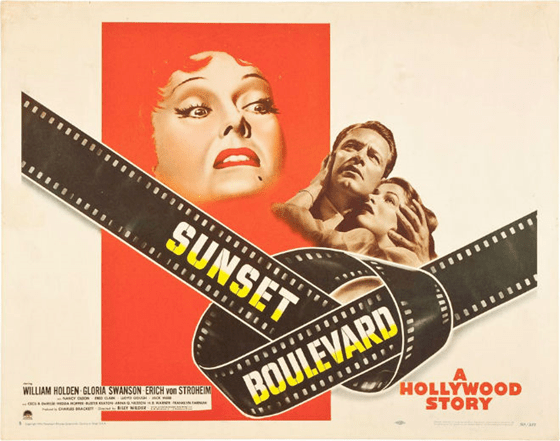
I revisited Sunset Boulevard.

Make that “An American Story”

Not the whole street – 10086 Sunset Boulevard, the home of Norma Desmond to be precise.

Before my viewing revisit, it had been almost 40 years since I’d been there and it has changed…or probably, I have.

I remember seeing it before with a sensitivity short on life experience and fresh from a recent viewing of Whatever Happened to Baby Jane, a callow and totally incorrect approach on my part. Hollywood madness played large and deadly.

I accepted the criticisms of many that Gloria Swanson’s “campy” performance to be accurate. (Cue the loud buzzer and the announcer’s voice; “Thank you for playing!”).

I believe the two most difficult things for an actor to play are;
1. Not pretty, and
2. Not smart.

Not so comfortable — not so safe

It’s not so hard to play ugly, and it’s not so hard to play stupid. It’s actually quite comfortable and safe. After all, audiences will surely know you’re merely acting and it’s not really you. Ditto with playing smart and pretty. But “not smart” and “not pretty”…that’s a little close to home. People MIGHT think you’re not having to act too much…maybe it’s what you are…not smart and not pretty. That’s not so comfortable and safe, eh?

I watched Sunset Boulevard with a group of movie lovers and one of them suggested that Ms. Swanson’s performance wasn’t campy at all. “This was how Norma Desmond and her colleagues acted in their silent roles, it only makes sense that this is how they act in life when they’re ‘on’.” That sounds right to me and Ms. Swanson’s performance seems perfectly plausible today. Now, keep in mind, I’m not averse to chewing my own share of scenery when the opportunity presents itself…or even when it doesn’t. Who am I to begrudge an actor their dose of over-the-top?

I think this is a brave performance by a 50-year-old actress in 1951 when there weren’t many roles for 50-year-old actresses. The character was exotic and glamorous…but not pretty. She was certainly not smart. And while she was not old, she was “not young”. Today, this performance could have unleashed subsequent movie offers galore. In 1951, Ms. Swanson was rewarded with few scripts and they, according to her, were merely re-channelings of Norma Desmond. Perhaps people were thinking she was not having to act too much? William Holden sprang from this film to box-office stardom. Ms. Swanson drifted into retirement…in her 50’s!

Rockin’ the threads

Speaking of William Holden, he is just fine in the flick, and he completely rocks the clothes…even the vicuna overcoat (“…since the lady’s buying…”).

But what about Joe Gillis, the character he’s playing?

I will admit to some relief when he was killed in the film. I was beginning to be teased by the outré possibility that Dobie Gillis might have been the bizarre offspring of Norma Desmond and Joe Gillis – not a good place to go.

Seriously, there is little to admire about Joe Gillis. The show opens with him in his bathrobe, in a maelstrom-designed apartment, three months behind on his rent and car payments, lying to his car re-possessors, and accepting the hospitality of a deluded older woman preparing for the funeral of her chimp.

There’s a job opening

Her chimp!
What’s that?
There’s opening for a chimp in this household? What is Joe Gillis thinking?

Joe has some of the best lines in the movie but they’re usually preceded by something amazing said by Norma. Thus, we miss his comments. For example;
Norma; “I am big! The movies got small!”
Joe (under his breath); “I knew something was wrong with them.”

It’s another of these mutterings that makes you completely write Joe off as an admirable human being. As Norma and Joe are out one evening in Norma’s remarkable car, Joe’s narration remarks; “By then, she had taught me to play bridge.” It’s a complete capitulation to comfort, clothes, chimp-dom, and the ultimately fatal swimming pool.

Buyer’s remorse

At least he has his moment of redemption. He finally jettisons the jewels, the clothes, the girl, the house, the car and the pool. BUT a Faustian bargain is made up front and there’s no going back. The terms are made early and the price of the transaction is not altered by buyer’s remorse. We have rooted for Joe in spite of his unworthiness of our sympathy, we resonate with his redemption, and we are saddened but unsurprised by his demise. Forget that $35-a-week editing job in Dayton – you bought the pool, mister.

Have I mentioned that I love this film?

A Geezer Remembers; Bill Nave

I have a bunch of video tapes (I almost said “OLD video tapes”). I’ve been transferring them to

discs off and on over the last five years. Occasionally I run across one that affects me a little too much.

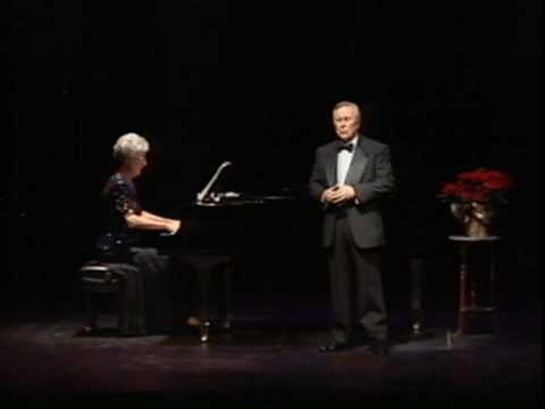
The other day I picked up the tape of Bill Nave’s 1996 concert on the Guignol Theatre stage.

Sigh.

I miss Bill and frankly, as much I cherish living in present-day Lexington, it was an even better place when Bill was here.

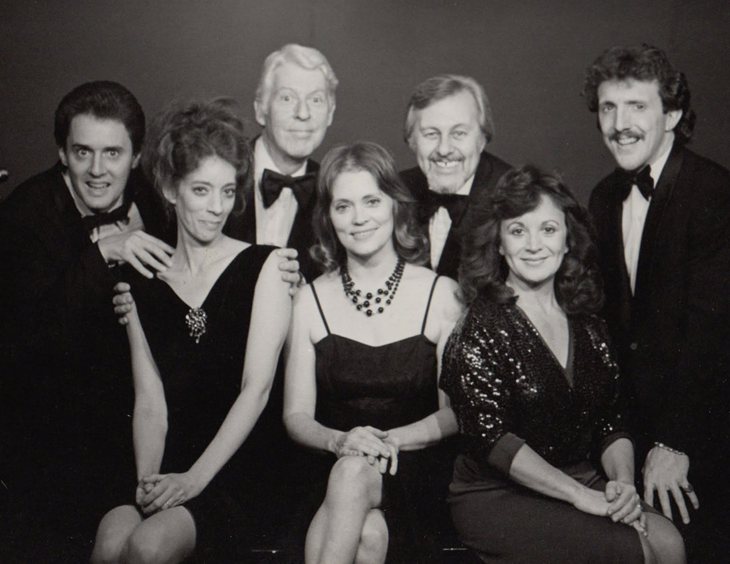
Bill established two dinner theatres in Lexington; the Red Mile Dinner Theatre (1970’s) and the Diner’s Playhouse (1980’s). There are still veterans of those theatres haunting Lexington’s theatre scene today. I’ll let them raise their own hands.

Bill performed and performed well. The list of shows is long, but my favorite was his starring turn in Most Happy Fella (1983, I think) directed by Dr. Jim Rodgers in the Guignol. I was rehearsing The Fifth of July in the Music Lounge (now the Dickens Movement Studio) next door. I’ve written about that experience in this blog before; “Hey, It’s What We Do”. During breaks and after rehearsal I would sneak into Bill’s rehearsals to watch.

Bill’s various efforts were all important to Lexington theatre.

But the best was Café Chantant.

Café Chantant was his French restaurant. It was elegant, it was tasty, and it was civilized (“civilized” meaning it had a fine wine list).

It also had Le Cabaret in the basement. It was elegant, it was tasty, and it was civilized (“civilized” meaning the ghosts of Noel Coward and Cole Porter regularly materialized). It was open until the wee hours, an unusual thing for Lexington in those days. You could go to the theatre and finish the night at the Le Cabaret. Who knew such a thing was possible?

The company of Le Cabaret was witty, boisterous, a bit tipsy, and fiercely talented. Just when an evening seemed to be spinning into mayhem, Bill would unleash that voice and stun the room into gratitude for just being there to hear it. I loved those evenings.

In the concert on the tape, Bill explains that his first singing teacher was Nelson Eddy. His grandmother had a bunch of Nelson Eddy records (I almost said “OLD Nelson Eddy records”). Bill would listen to them and imitate what he heard. Similarly, my first singing teacher was Bill. He would perform around town in shows and at the Café Chantant. I would hang on every song like a groupie. I would imitate his sound and his demeanor. I never achieved either, but trying led me to far better places artistically than I would have ever found on my own.

Bill was smart, gracious, generous, and he sang like a dream. All of that was in full view on the concert tape.

I still miss Bill.

Audition Valor

I love to audition.

That sounds insane but it’s true, and it’s always been true. If it involves speaking and/or singing I’m in heaven. If it involves dancing…well…I might be busy that day.little-night-music-01 My point is; it takes no special bravery, or any bravery at all, for me to show up for an audition. I think it’s a pretty jolly time.

I know this is not true for everyone and I admire those performers who persist in auditioning in the face of dread. That’s bravery. The bravest audition I ever witnessed was one evening in 1987 in the Guignol Theatre at the University of Kentucky.

Eric is a great friend of mine. He is a fine illustrator/water-colorist and a fine actor. He can also carry a tune, but in his mind at that time, as a singer…he was a fine illustrator/water-colorist and a fine actor.

One afternoon we were chatting and I mentioned that I would be auditioning that night for Sondheim’s A Little Night Music. I urged him to join me. He dismissed the suggestion summarily; “I’m no singer!” He looked a little pale at the suggestion. Always sympathetic (well…occasionally), I made a mental note that if I ever had to express utter dread on the stage, his reaction to the thought of a singing audition would be a good reference memory (an actor prepares, right?).

That evening, about an hour into the auditions, I was sitting in the last row of the theatre watching the efforts of others. I had already sung and read a few scenes and was foolishly longing to be asked to read another 20-30 scenes – did I mention I love to audition?

BANG!

The door to the theatre flew open and Grimness and Ferocity entered, personified by my friend Eric. He commandeered (commandeered – yes – le mot juste) an audition form from the stage manager, and slouched into a seat as far from humanity as the Guignol allows. All evidence suggested to me that it would be prudent to leave him the hell alone.

He was called upon to read a couple of scenes.

Then he was called upon to sing.

He marched on the stage and waved the provided accompanist away with; “I won’t be needing you.” He then announced; “This is my favorite Christmas carol.” He proceeded to sing/declaim an acapella rendition of “Good King Wenceslas” that was loud, in tune, and capable of being marched to by any competent armed forces unit.

It was stunning and strange and perfect for the part of Carl-Magnus in the show.

I understood what it had cost him and I was proud to know him…and maybe a little relieved to know he was not a concealed-carry type of guy.

His reward for his valor?

He was cast.

He and I shared a duet in the second act. It was singled out by the local reviewer as one of the highlights of that year’s theatre season in Lexington.

My reward for his valor?

I now have a new favorite Christmas carol in loud 4/4 time.

Cue the Fog………Ack!!

If you hang out with theatre people for any length of time (say 15-20 minutes), you will hear many stories and quickly perceive that many of their stories fall into genres. Most theatre folks have tales about;

  • Working with children.
  • Working with animals.
  • Costume or prop malfunctions.
  • Outdoor theatre misadventures (there’s a sub-genre about bugs).
  • And……fog.

Yes, fog.

And yes, I’ve got a few fog tales if you’ve got a minute (or say 15-20 minutes).

My fog adventures, unfortunately, are not John Carpenter’s; pirates emerging to terrorize my home town while Adrienne Barbeau croons seductively on the local radio station from her lighthouse studio.

Sigh.

I attribute that lack to the fact that Lexington is land-locked. Our nearest body of water is the Town Branch of Elkhorn Creek (and we covered that trickle with concrete a long time ago), our closest Pirates are the baseball team in Pittsburgh, and our closest lighthouse might be 400 miles away on Sullivan’s Island in Charleston.

No, my on-stage fog experiences are more pedestrian, but here they are anyway.

Fog in the theatre usually comes from machines though there are exceptions.

I was in a production of The World of Carl Sandberg in the spring of 1972. My friend and fellow cast member, Vicki James, gave a rendition of Mr. Sandburg’s poem “Fog” that was so evocative I remember it vividly 50+ years later. Indeed, I have many times been balked or paused in life, gathered myself……”and moved on.” Fog won’t stop me. It will only make me pause…think……and move on.

Ten years later, in a more-than-dubious production of Dracula, my friend and fellow cast member, Paul Thomas, managed to manufacture a personal fog bank by furiously puffing (heaving!) on his pipe in a sad attempt to obscure his presence in one particular way-more-than-dubious scene. I still harbor hope that I can forgive him for his attempted escape one day.

But those are exceptions. Most stage fog emanates from machines wittily referred to as “fog machines.”

My first experience with fog machines was in a 1981 production of Brigadoon. Oddly enough, it also included Paul Thomas, though in this case he is blameless. The show was in the Opera House in Lexington. The opening scene featured Paul and me as American hunters in the wilds of Scotland who have lost our way in the fog. We discuss our predicament and spot a village in the distance (neat trick considering the fog in which we’re supposed to be lost) – all behind a scrim as the orchestra in the pit plays gorgeous Lerner and Loewe music.

The dress rehearsal went fine, but the director wasn’t satisfied with the quality and quantity of the fog in the first scene. It wasn’t convincing as a fog that would baffle vibrant Americans. He ordered a second fog machine for opening night.

On opening night, the music began and the fog machines (plural) began. By the moment our opening lines were required, the fog, restrained by the scrim, had achieved a height of 7.3 feet. Paul and I could not see the audience, and the audience could not see us. When we spoke we waved our guns in the clear air above the fog to let the audience (and each other) know where we were.

Then the scrim arose and a slow tsunami of fog rolled out over the edge of the stage, into the orchestra pit, and into the first few rows of the audience. It was a blurry sight to see; the violinists slashing at the fog with their bows. I think they feared pirates were eminent. I think the audience in the front row feared they had been lured into a bizarre Gallagher-esque experience (albeit with prettier music).

We all tend to resist taking steps backwards in our lives, especially in the arts, but the second night’s performance of Brigadoon employed but one fog machine.

In 1989 I was cast in an outdoor production of King Lear as Lear’s Fool. I have played a couple of Shakespeare’s fools. I have a wealth of personal, real-life experience to bring to such roles. It’s a gift.

Early in the rehearsal process, I made a creative decision that was accepted as valid by the director, Joe Ferrell. I felt the Fool would grovel and slither throughout the story as he insinuated his opinions on Lear’s actions and decisions, never reaching past the height of Lear’s waist. I wore out a set of kneepads during the show’s run.

Mr. Ferrell had also made quite a few creative decisions himself (as directors are wont to do), one of which was to employ fog machines during Lear’s nighttime meanderings through the stormy countryside, bereft of shelter and family, and increasingly bereft of his very senses.

Reasonable enough.

From my Fool-ish point of view however (about three feet high, remember), the fog machine was at eye level and only an arm’s length away. In one long scene, as Lear (my friend and fellow cast member, Fred Foster) raged against his daughters, his fate, and the weather for what seemed like four iambically-pounding hours, I crouched in the mouth of the belching fog. My makeup melted off. My costume dripped in streams. I gurgled my lines.

When I came out for my curtain call, I didn’t bow.

Instead I shook myself like a dog to share my wealth of moisture with those nearby.

It’s good to share.

My favorite and grandest stage fog episode was on closing night of a 1992 production of Sweeney Todd.

The house was sold-out. The cast was in place behind the curtain prepared for their grand reveal. I was storming around backstage, working myself into a damn decent homicidal frenzy.

The fog machines commenced.

However, a sold-out house was not enough for the kind-hearted and slightly greedy director, Dr. James Rodgers. He was scurrying about to find room to seat some last-minute, ticketless arrivals. He had folding chairs located and brought to place one-by-one in the corners of the house.

The fog machines dutifully blew.

A pre-show announcement was deemed necessary.

The fog machines gleefully blew and blew.

The orchestra finally began the overture.

The curtain was raised.

The cast began to “…tell the tale of Sweeney Todd.”

I strode to the doors I expected to open and allow me to attempt to scare the bejeezus out 400+ people.

Instead, the fire alarm, triggered by the fog, had summoned first responders.

The fire department arrived with the Lexington and UK police – all with bells and whistles and lights a-blazin’. We were evacuated from the building; the audience to the front lawn of the Fine Arts building and the cast and crew to the street behind the building’s loading dock. Both groups could see other in the emergency-light-decorated twilight of a lovely Kentucky summer evening – a far cry from the dingy, industrial Fleet Street of our show.

Eventually, the authorities were persuaded that conflagration was unlikely. They were thanked for their efforts and invited to stay for the show. They chose to go about their duties instead, which was a good thing as I don’t know where Jim would’ve seated them! The audience, the orchestra, the crew, and the cast reassembled and an evening of theatre juiced by the pre-show capers turned out to be real nice clambake after all.

The fog machines were smug despite having grossly overplayed their part.

How Deep Does It Go?

Let’s assume for a moment that Russia at least attempted to determine the result of the 2016 US presidential election. Can we all accept that assumption?

If not, would those of you who cannot accept that assumption, simply absent yourselves from this pondering? I’m not looking to change your vote or remove your guns, but frankly, I can’t do business with you anymore.

That was an uncivil request.

I apologize.

But I’m moving on.

Let’s assume for a moment that Russia at least attempted to determine the result of the 2016 US presidential election. If so, then a few other assumptions present themselves as possible;

  1. They tried but had no affect (Are we OK with that? – I’m not), or
  2. They were successful by swaying voters’ opinions (ARE WE OK WITH THAT? – I’m not), or
  3. They were successful by actually changing votes in our voting mechanism (good grief!), or
  4. Assumptions “2” and “3” (…crickets…).

I don’t know which of those assumptions, if any, is true. But I know they are all important and scary. Yet the current occupant of the White House and much of our Congress (bicameral and bipartisan) don’t seem terribly perturbed by these possibilities.

Why is that?

By the way, if you don’t know the terms “bicameral” and “bipartisan”, please look them up. Yes, you are entitled to your opinion – your informed opinion. Informed…informed…INFORMED……that’s sorta important and useful. It’s a good thing to actually know what you’re talking about. It’s not “fake” or “elite”, it’s useful.

If any of the assumptions above are true, what makes us think this was their first try?

Does it seem logical that their first attempt to affect US elections was the US presidency? Wouldn’t you wanna practice first before you took on the big game? Wouldn’t you wanna see what you could do in say…Fresno…or Wisconsin or…Kentucky, before you took a shot at Washington?

Maybe the un-urgency of the response to this cyber-attack has something to do with the culpability of the respondents……in various state capitols and various buildings in Washington.

In my business life, when I was confused or uncertain about the people keeping an eye on my business, I changed the eyes.

It usually opened mine.

Jes’ sayin’.

Baseball on Gay Place

A memory of an older Lexington.

Great.

Now I’m gonna want a Dodger Dog all night.

I know I’ve mentioned once or twice…or perhaps a hundred times before how much I love baseball. I come by this infatuation honestly and early.

I grew up in North Lexington, on a street named Gay Place. Go ahead, snicker if you wish, but all it meant to us then was that it made it easy to fill out any forms requiring a home address. I didn’t need to write out street names like “Henry Clay Boulevard” and “Avenue of Champions” until much later in my intellectual development. To be perfectly accurate, the street was South Gay Place and yes, there was and still is a North Gay Place. Today I suppose we would call this configuration a cul-de-sac, but in the late 50’s/early 60’s the only French we knew was French’s Yellow Mustard (See? Completely obsessing on those Dodger Dogs).

On Gay Place, in the summer, we played baseball all the time, everywhere, and with all kinds of equipment.

We mowed the vacant field behind our street and played on the stubble. The field was severely canted on a hill. What did we care? Yes, the run uphill to first base was arduous and rarely successful unless you had packed a light lunch, but if you made it, you could attain Olympic speed from first to third. Flat is seriously over-rated.

We played intense wiffle ball. We would locate the most dense shrub in the neighborhood and put home plate in front of it. That eliminated the need for a catcher. I recall one memorable game when my participation was cut short after I reached into the catcher/bush to retrieve the ball and retrieved a wasp nest instead.

We played in driveways using a fishing cork for the ball and a broomstick for the bat. Our eyes were better then.

My favorite games were played in our backyard. The ground rules were remarkable and vital to know to determine a winning strategy.

  • A ball hit over the right field fence was a home run UNLESS;
    • It crossed over my dad’s vegetable garden. Then it was a foul ball. If it landed in the garden, it was an out – no, it was the ultimate out. We weren’t allowed to play anymore that day. OR…
    • …if the unsympathetic neighbors (probably hockey fans) who lived in the house over the right field fence were home. Then the ball hit over the right field fence was considered un-retrievable until they left home and the game was over or suspended until such time.
  • A ball hit over the left field fence was considered to be “in the outfield”. It could be caught on the fly for an out or fielded to hold the runner to a single or a double. UNLESS…
  • …it was a ball hit over the left field fence AND traveled beyond the tree in the middle of the neighbor’s back yard. That was considered to be a home run and would invariably initiate an argument over the distance measurement of such vitriol it would dwarf today’s chats between Trump and Clinton supporters.
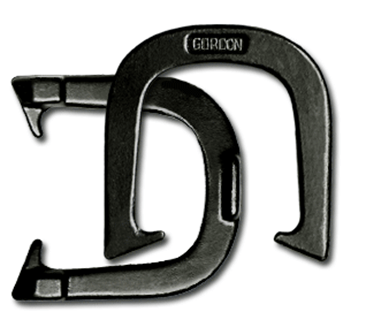
  • Games would continue until twilight, at which time we would switch to horseshoes, just to irritate ALL the neighbors.

No matter which incarnation of “baseball” we happened to be playing each day, the score for each game was meticulously kept and just as meticulously forgotten the next day. Players switched teams with complete fluidity. Feelings were hurt…and healed. People were offended…and survived. Heroes were made…and humbled. The sun set…and then rose again. We could spell “Gay Place”, but we couldn’t spell “Republican”, or “Democrat”. We had heard of the Reds and the Yankees, but we had never heard of conservatives or liberals. If, in the middle of the game, we felt the call of nature, we ran home or to a neighbor’s house or behind the catcher/bush and no one checked any birth certificates about it.

We had all the time in the world, but there was no time to waste on foolishness like that. We had a game to play.

Oh yeah, I love baseball. I earned the right to that love. Those wasps…!

The Kindest Critic

If you do theatre, you will face critics.

How do you feel about that?

If you do one play and one play only in your life, you either soar or you crash. A good review, and you are Icarus unbound – and we know how that turned out. A bad review (or even a lukewarm notice), and you wonder how you’ll ever be able to face any living being on the morrow, you are outraged by the vindictive cruelty of the reviewer (who you probably don’t even know), and you conduct a Carl Sandberg-ish dialogue with yourself about the desirability and logistics of ending it all. Eventually, you get up, you face all the people in your life (who didn’t even know you were in a play or that the paper actually reviewed plays), and you reach the same conclusion about suicide that Sandburg did; it’s overrated and way more trouble than it’s worth.

But if you do a lot of theatre, you have to reach some accommodation between yourself and published criticism. Who can live with roller-coasters of life-and-death repeated after every opening night?

Not this cowboy.

I think I was still in my teens when it occurred to me the foolishness of allowing one person’s opinion on one night validate or invalidate 6-10 weeks of my life. Hell, they might have had a tough day or a bad meal…you don’t know. Or, perish the thought, the reviewer might be right.

So what?

Frankly, after opening night, their correct or incorrect opinion doesn’t affect you much. You and your cast mates are pretty well committed to your chosen path by opening night. The show generally goes on.

Please understand.

A good review is still a boost and a bad review still stings, but the reviews don’t provide either a raison d’être or a raison not to d’être.

It’s interesting to me that most of the actors I know rarely quote their own reviews. Oh, they remember them…word for word. They squirrel them away in needy corners of their psyche and nurture them to cyclopean proportions (could that be the derivation of the phrase; “big head”? And if you prompt these outwardly modest thespians, after a few drinks, reviews from 30 years past may come tumbling out to the glee or utter boredom of others in the room. That’s a genetic flaw in the species and can surely be forgiven as it harms no one.

Yes, the reviews are remembered, especially the bad ones.

I have been reviewed favorably and unfavorably, cleverly, pointedly, accurately and inaccurately. Stephen Sondheim seems apt to quote at this moment; “I’m still here.”

I think the kindest bad published review I ever received was no review at all.

I was playing the key character in a drama. Six weeks of fine, engrossing rehearsal had us poised for a successful opening night, and it was. The review came out and it was enthusiastic about the production.

It didn’t mention that I was in the show at all.

Ouch.

I was bewildered…and then angry…………and then grateful.

Obviously the critic was unimpressed by my performance…no, make that bothered and possibly offended by my performance.

The critic could have put that in writing for the world of local newspaper readers to see.

But the critic didn’t.

The silence hurt.

I disagreed with the negative implication of the silence, but perhaps I should be grateful for it.

Part-Time Jobs?

Caught by surprise in November, 2016, I withdrew into stunned silence; afraid and ashamed and angry.

The anger faded. It will do no me no good. I will resist every unfair, greedy, and unwise effort I can identify, but I have always done that – it’s a reflexive urge taught to me by my Southern Baptist Sunday School childhood – nothing’s changed as far as that’s concerned.

I was afraid of what the election results’ results would be.

I was ashamed of my own surprise and fear of my neighbors’ choice.

Why didn’t I know? What have I missed? What should I have done?

I can do better. I can listen harder. I can seek a better and more useful understanding.

I can act on what I learn.

I will…because I want to be a good neighbor.

But, (isn’t there always a “but”?) …so must others.

I have no answers, but I have glimmers of a suggestion.

If I have lost connection with my neighbors, so have my political representatives…and how could they have not? They must solicit campaign funds 24/7/365. They must run campaigns to retain their offices for six to twenty-four months. They serve in legislative sessions for months at a time every year. Senators and representatives who were elected by and theoretically answer to constituents all over the U.S. maintain homes in Washington. Some Kentucky state legislators who were elected by and theoretically answer to constituents all over the state have regular living quarters in Frankfort.

These are full-time lawmakers elsewhere…

… far away from me…

…all while they’re supposed to be representing me and Janie on Providence Road.

That was not what was intended by our founding fathers.

George Washington was president, but he also went home to run his farm. He had to listen to and represent his neighbors. The same was essentially true for all elective officials.

I would suggest considering a move back toward those conditions.

Rather than point fingers at how little time the Senate and the House of Representatives spend in session in Washington, perhaps we should reduce the length of campaigns and legislative sessions (and the participants’ pay accordingly).

Send them home to local concerns.

Perhaps we should rescind the expansion of the Kentucky legislature from bi-yearly sessions to yearly sessions. Have we really been improved by having the legislature meet every year?

Send them home to local concerns.

Make all of them part-time lawmakers and full-time neighbors.

Just a thought…

High Flyin’

I would have been 13 or 14 years old when one day I heard this funny little song about outhouses on the radio. It was Billy Edd Wheeler’s “Ode to the Little Brown Shack Out Back.” It got a lot of play for a few weeks before local radio returned to its breathless documentation of the British Invasion. Whimsical fantasies about plumbing architecture trends in Appalachia didn’t stand a chance against the Rolling Stones, the Dave Clark 5, and that other group.

But there was wisdom in the whimsy. Mr. Wheeler described the titular facility;

Now, it was not a castle fair, but I could dream my future there,

And build my castles to the yellowjacket’s drone.

I could orbit ‘round the sun, fight with General Washington,

Or be a king upon a golden throne.

Life-changing?

Hardly.

But it stayed with me and suggested something I was just beginning to suspect; my imagination and a quiet place might be a powerful antidote to the random adult violence depicted by Cronkite and Huntley/Brinkley.

The next year I heard the Kingston Trio deliver with typical Kingston Trio gusto the instructions of Billy Edd Wheeler’s “Desert Pete”;

You’ve got to prime the pump.

You must have faith and believe.

You’ve got to give of yourself

‘Fore you’re worthy to receive.

A simple thought; one I had learned in Sunday school and Cub Scouts, but now had outgrown in my teenage cynicism. I was so much older then…

It wasn’t until I heard Judy Collins on her concert album talk about Wheeler and sing three of his songs that his songs became important to me.

Ms. Collins sang his elegant description of a “Red-Wing Blackbird”;

O can you hear that pretty little bird singin’ with all his heart and soul?

He’s got a blood-red spot on his wing, and all of the rest of ‘im’s black as coal.

That’s my bird now.

It belongs to me and my part of the country.

I may not be happy about the sombre imagery (“When a man spills blood on the coal…”), but it belongs to my home state.

It’s my bird singin’.

Ms. Collins also sang his amazingly prescient “Coal Tattoo.”

Travelin’ down that coal town road; listen to my rubber tires whine.

Goodbye to buckeye and white sycamore. I’m leavin’ you behind.

I got no job and I got no pay – just got a worried soul,

And a blue tattoo on the side of my head left by the #9 coal.

This in the mid-60s’ and more true now.

A couple of years later, Wheeler anticipated the coal country environmental anxieties of the 21st century in his “Coming of the Roads”;

Look how they’ve cut all to pieces our ancient poplar and oak,

And the hillsides are stained with the greases, and they’ve burned up our heavens with smoke.

Is Mr. Wheeler the the Madame Cleo of the Smokies or have we not been paying attention? Perhaps a bit of both.

Grim stuff.

It gets grimmer.

Two of my favorite Wheeler songs speak of the longing to fly…but with a price.

In “High-Flyin’ Bird”;

There’s a high-flyin’ bird flying way up in the sky

And I wonder if she looks down on me as she goes on by?

Lord, look at me here. I’m rooted like a tree here.

Got those sit-down, can’t cry

Oh Lord, gonna die blues

And the song ends with specificity;

And the only way to fly is die.

He echoes this thought in “Winter Sky.”

Out under the winter sky

Out under the winter sky

Stars come tremblin’ on my eye.

Hand me wings for to fly.

And I feel like somethin’s gonna die.

I feel like somethin’s gonna die,

And me with it.

I wonder if once again Mr. Wheeler has accurately predicted, 50 years ago, a mind-set of today. In a geography of few opportunities, no jobs, education possibilities starved of funds, and little hope, how can you fly?

How?

In a geography of dwindling art experiences to spark dreaming of futures and castles and orbiting the sun, how can you even dream of flying?

How?

Well…………of course…………………………..there are pharmaceuticals.