Category Archives: Lexington-70’s

My Favorite Bookstore – 2

Through the Booking Glass

Benjamin Andante got up a little too quickly, wobbled a bit, negotiated a sustainable balance, and visually assessed the shop; not an easy thing to do this time of day. The light was strange. Romantics might call it sepia-toned but they’d be selling it short. It was golden. Carson McCullers would have approved, but she’d have been wary. Every spine of every book was a lighter or darker shade of gold. Every drifting mote of dust was golden and there were a blue million motes.

“S’pose that would technically be a gold million. Blue million…wonder where that comes from?” He made a note (for real, not mental) to look it up. He took the note, pulled a piece of Scotch tape, and stuck the note on the shelf nearest the book shelf marked “Economics”.

“Scotch tape”…why “Scotch”? Another note was duly made and attached to the shelf marked “Gaelic Studies”.

He shuffled over to the front window. The outside heat radiated through the letters on the glass;

“pohS .T .I .A .B regooC & etnadnA”
And under that;
skoo-B
dn-A
gniugirtn-I
stibdi-T

Standing in the quivering wheat field of scotch taped notes that commanded the bookshop, he noticed the fluttering of paper across the street. Had one his notes escaped? A newspaper flickered in the hands of a more-than-amply-haired young man, sitting on his butt, leaning back against the front of the chili parlor, gaping at the bookstore like he’d just seen…what?
…A light on the road to Damascus?
…An alien encounter?
…His mama kissing Santa Claus?

“Well…” Ben thought; “Close, but no cigar.”

Then it hit’im;
“Uh-oh.”

From the back of the shop came a familiar, and inevitably hideous “plonk”, followed by two more; “plonk, plonk”, and an animal growl; “This bastard’s gonna be a bitch to tune today.”

“Sam, you just used ‘bastard’ and ‘bitch’ in the same sentence referring to the same sexless object.”

“Well, I guess that’s just the kinda fuckin’ poet I am.” Sam Cooger replied from the depths of the alcove marked “Counter-Culture Studies”. Four pristine copies of “Big Table” literary digest sacrificed their pristine-ness in a suicidal plunge to the floor in protest of the banjo assault.
The gender-bewildered banjo chirped obliviously; “plonk-PLONK plonka plonk” in a key from which Schoenberg would flee.
“Dammit!”

“Sam, we may have a problem. There’s a student-type across the street. I think he may have seen us arrive.”

“Do I need to kill the son of a bitch?

“No…not yet……but he’s comin’ this way. Maybe we’ll hire him. He could useful. If not…”

Julie et Jim

The title is a total stretch but there’s a “Julie” and a “Jim” in the tale. I couldn’t pass it up. Sorry.

The Southeastern Theater Conference (SETC) was held recently in Lexington and I enjoyed reading articles about it, and hearing friends’ reports of their activities during the event. I was particularly interested and inordinately proud of my friends Julieanne and Chuck Pogue’s efforts. Chuck conducted two sessions; “Auteurs-NO!  Raconteurs-YES!!” and “Tips for Adapting Plays from Sanskrit and/or Cave Paintings”. Julieanne packed the house with her session; “Concatenations from the Clash of Jung and the Restless in Tennessee Williams’ Mother Plays”. I may not have those titles exactly right, but I was mightily impressed – so impressed, that it triggered a remembrance of my first visit to SETC.

It was spring of 1970 and SETC was being held in Memphis. I had never been to Memphis, I had a ride with other UK theatre folks, I had twenty bucks, and my friend Jim Varney agreed to split the cost of a hotel room with me. Hey, as Christine Kane says; “When courage comes, you never see it comin’.”

The conference was being held in the Peabody Hotel in downtown Memphis. I believe today it’s called the Sheraton Peabody. Jim and I couldn’t afford the Peabody. We went across the street to something called; The Hotel Tennessee. It was five dollars a night, which we split.

Decades later, when I first saw Jim Jarmusch’s brilliant film; MYSTERY TRAIN, I felt very much at home in the accommodations depicted.

There were cockroaches…lots of ‘em…big ones…and bold. One of ‘em sat on the end of Jim’s bed and bummed cigarettes from him. Another one sat on the back of the commode and charged a quarter for access and a moment of privacy. I went downstairs to the desk to complain and noticed the clerk had six arms and I quailed. I was dubious, but it was cheap and had the asset of proximity.

The proximity paid off the next morning. I awoke to Jim practicing his smile in the mirror. He had just discovered Pearl Drops Tooth Polish and was pretty sure that his new “all-teeth” smile was gonna launch his professional acting ship tout suite. He urged speed with ablutions and let’s get our “petite little small-ass bods” over to the Peabody. We might miss something!

He was right.

The Peabody had a fountain in the middle of its lobby and people gathered around it at nine o’clock AM and five PM for the ducks. That’s right, ducks. At nine AM, the public address system wheezed to life to blare; “Welcome to the Peabody Hotel and the Peabody Marching Ducks!” The elevator doors would then open and a red carpet would roll out to the foot of the fountain. A Sousa march would play on the PA and three white ducks and one brown duck would regally march down the carpet, hop up on the lip of the fountain, and splash into the water to swim the rest of the day until five o’clock when they would, with similar pomp, reverse the process and return to their evening penthouse quarters. The crowd loved it and would applaud. The applause would prompt the brown duck to turn to the crowd from the lip of the fountain, spread his wings, and……well……quack.

Yes, the crowd loved it, but Jim was enthralled. In the brown duck, Jim had found a spiritual brother. He never missed a duck event that weekend. He got there early and would sit akimbo next to the carpet and croon in “duck language” to the bird. The duck would pause, turn to Jim, and conduct a quick inventory of available exits in case this madman turned ugly.

It was a great conference and just got better from there.

At that time and perhaps still today, one element of SETC was a mass audition of actors looking for summer work. That year, 43 casting agents representing 43 southern theatres were observing those auditions. There were 568 hopeful auditionees. I was number 438 and Jim was 437. We stood leaning against the hotel hall wall for hours awaiting our chance for the Golden Ticket/Everlasting Gobstopper/Maltese Falcon/Holy Grail/Door #3.

While we waited, we rehearsed and fretted. (I’m convinced that if the proper studies were conducted, scientists would discover the leading cause for cancer is fretting.)

We were promised one minute for our audition – one minute.

Three days, 500 driving miles, $5 per night rent, and cockroaches for one minute.

Today, when see a young starry-eyed actor commencing their theatrical career, I don’t wish them luck. I wish them resilience and a full can of bug spray.

But in 1970, I was good with the proposition. I had a killer one minute segment from Tom Stoppard’s “Rosencrantz and Guildenstern Are Dead” that was gonna land me on Johnny Carson’s “Tonight Show” within the week.

Jim agonized. He had two pieces and he couldn’t choose. Should he do Hamlet’s first act monologue (“Tis not alone my inky cloak…”), or Tom Wingfield’s diatribe from “The Glass Menagerie” (“I’m goin’ to opium dens…”)? Shakespeare or Tennessee Williams? Argh-h-h-h. Plus, at the rate this is going, we’re gonna miss the ducks!

Fretting…I’m tellin’ ya, it’s deadly.

Then the SETC officials came out in the hall and announced the audition time would have to be cut to 50 seconds or they couldn’t get everybody in.

50 seconds.

Fretting went through the roof. What was I gonna do? Pragmatism was all I had to offer at that point…I was simply gonna have to speak faster.

Jim however, became serene. His quandary was solved. Somehow, 50 seconds made things clear; he would do BOTH monologues.

They took us into the audition room in groups of ten. Thus, Jim and I were in the same group and I got to witness the deed. 43 auditioner heads hovering 2-4 inches over their tables and notes in utter fatigue and defeat. Hope had left the building with Elvis.

Jim’s turn came, right before mine. He loped to the center of the room, announced his number, and began;

“Seems,” madam? Nay, it is; I know not “seems.”
‘Tis not alone my inky cloak, good mother,
Nor customary suits of solemn black,
Nor windy suspiration of forcéd breath,
No, nor the fruitful river in the eye,
Nor the dejected ‘havior of the visage,
Together with all forms, moods, shapes of grief,
That can denote me truly: these indeed seem,
For they are actions that a man might play:
But I have that within which passeth show;
These but the trappings and the suits of woe.

The tones were round and pure, the diction crisp, the anger immediate and like a knife to his betraying mother.

And then, without pause or breath, as if from the same son centuries later;

Well you’re right, Mother. I’m going to opium dens. Yes, mother. Opium dens. Dens of vice and criminals’ hangouts, mother, I am a hired assassin, I joined the Hogan gang, I carry a tommy gun in a violin case, and I run a stream of cat houses in the valley, they call me Killer, Killer Wingfield, see I’m leading a double life, really, a simple honest warehouse worker by day, but by night a dynamic czar of the underworld, mother, I just go to gambling casinos, spin away fortunes on the roulette tables, mother, I wear a patch over one eye, and a false moustache and sometimes I put on green whiskers, on those occasions, they call me “El Diablo,” I can tell you many things to make you sleepless, mother, my enemies plan to dynamite this place, they’re gonna blow us sky high! And I will be glad? I will be very happy, and so will you be. You will go up, up, up, over Blue Mountain, on a broomstick with seventeen gentleman callers! You ugly, babbling old witch!

43 sagging heads snapped to attention. In today’s litigious times, there might have been a rash of whiplash claims the next day. Jim finished and one voice intoned; “Thank you, Mr. Varney.” Forget about his number. He was Mr. Varney now.

I followed that…………

When the callbacks were posted, Jim had 34. I had 15.

Maybe it was the Pearl Drops.

Theatre sucks.

Hey! It’s What We Do

fifth-07

I’ve written before about the first time I was directed by Joe Ferrell in That Championship Season on the Laboratory Theatre stage at the University of Kentucky. A couple of years after that show, Joe cast me as Kenny Talley in The Fifth of July on the Guignol Stage at UK. It was a wondrous cast, though at the time they were all new to me as performers except for the actor playing Jed. I had just finished directing him in Whodunit Darling at Studio Players, but I had never worked with Martha, Sheila, Tim, Michael, or Sue. The early rehearsals were filled with delightfully intimidating discoveries as we explored each other’s’ storytelling gifts. I’ve gone on happily to do a lot of theatre with those folks. I count every one of them as an admired friend.

“Jed” and I had the interesting challenge (for the mid-1980’s) of two straight actors playing gay lovers. My character had the further complication of being a double AK amputee veteran of the Vietnam War.

Hey!

I know it’s a stretch.

That’s why we’re here.

It’s what we do.

In the first scene of the play, in the first ten minutes of the play, Jed and Kenny (my character) quarrel about our garden, our house, our guests, and our lives. The argument reaches its peak and a relationship-testing silence ensues. In that silence, Jed kisses Kenny and we all understand in that moment there are things on the planet more important than our garden, our house, and our guests…and maybe our lives. It is our loves that matter. Having established that “minor” understanding, we can now have a play and tell our story.

An explanation is in order here.

I love to rehearse.

Strangely enough, I also like to audition. Un-strangely enough, I really like to perform.

But I love to rehearse.

By the time an audience sees the show, they’re only seeing one of about a dozen things we’ve tried in rehearsal. Many of those unseen choices are embarrassing or just plain awful, but in rehearsal it’s OK to try ‘em anyway. It’s where a useful new reality gets invented; the “alternative” reality of an imaginary world. For me, there may not be a more powerful reality. But…it’s not for the real world. Don’t try this at home. And most certainly don’t try this in the White House. Please.

This was our first rehearsal on our feet for The Fifth of July.

The first few rehearsals of a Joe Ferrell-directed play usually take place around a table, reading and discussing. That’s good, that’s good…but let’s get up and move, even if it’s with crutches (double AK amputee, remember?).

For this first rehearsal on our feet, we were in a large rehearsal room and we began at the top of the show. “Jed” and I were on stage and the rest of the cast arranged themselves around the perimeter of the room with their books and knitting and whittling. I’m lyin’ ‘bout the whittling, but remember these were primitive days before laptops, ipads, and smart phones. Hell, this was back when you actually had to know things – you couldn’t just google it – primitive! I like it better now.

Jed and I stumbled through the opening argument and arrived at the kiss.

The rehearsal room became silent. Everyone was still bent over their distractions, but their eyes had shifted to an impossible position on the side of their heads. Avid nonchalance reigned.

Silent…

Like the first time you mentioned a girl to your parents…

Silent…

Like your wisest response to the officer’s query; “Sir, do you know why I pulled you over?”…

Silent…

Like your friends’ reactions when you let slip the fact you actually liked Independence Day: Resurrection.

Silent.

We went on for a few more lines and then Joe stopped us. I vaguely remember we discussed the opening spat and the possible reasons for it. We discussed phlox and verbena in Jed’s garden and what legless Kenny might see every morning in the mirror. Then we did the scene again from the top.

The big moment returned and so did the silence.

We stopped again and discussed how we felt about Aunt Sally’s (Martha’s character) visit, and my feckless friends’ (Sue and Michael) visit, and the heat of a Fourth of July weekend in Missouri. And we did the scene again.

And again.

And again.

By about the tenth time through, the kiss meant nothing except in the flow of the story of these two men. It also meant nothing to the rest of the cast except for their desire for us to get it right so they could finally rehearse their scenes.

Awkwardness had been diffused – an urgent truth had coalesced in its place.

A new reality had been established in about 45 minutes.

Hey!

It’s what we do.

25 years later or so, I was cast by Joe in his production of A Lion in Winter at Woodford Theatre. My character had to kiss his mistress (30+ years younger than me) in front of his wife and his grown children in full knowledge of all involved. Awkward.

We did the scene once, stopped, discussed, Joe suggested a cruel, slow, twirl of the young lady in the face of the family to precede the kiss. We did the scene once more. A new reality was created in about 15 minutes.

Hey!

It’s what we do.

We seek surprise to capture it and add it to what we are.

We open ourselves to growth and growth comes.

We grow bigger as our world grows bigger.

It’s what we do.

My Favorite Bookstore – 1

Close Day.

It was a close day in 1971.

Summer afternoons in Central Kentucky can be that way. They portend delicious summer nights, viscous and promising.

We call a day “close” because it wraps itself around you; a lover that wants more and then more. It closes in on every cranny of you, insisting on your total attention and concentration. It obliterates free will. It obliterates independent thought and movement. It ridicules quickness. It ferrets out any remnant of energy, and smilingly, triumphantly commandeers it for its own. And you offer no objection. The southern night will soon follow…promising, remember?

This was a close day indeed.

Heat, yes… Humidity, certainly… And an impending doom or salvation in the form of a draft lottery. The air was saturated. All kinds of dew points were high.

The sidewalk was certifiably warm on Cayton’s butt as he squatted under the awning of Streemer’s at the corner of Grove and Proclus. He was waiting for the evening newspaper to be dropped at the stand.

Streemer’s was renown in the county as serving the best chili in town. The Iconic Basketball Coach at the college had pronounced it as such and was believed to consume serious quantities of the stuff every other day. Fans without season tickets, wishing to catch a glimpse of the Iconic Basketball Coach, would patronize the restaurant and dutifully order the chili, or peer into the establishment through the street windows. But today wasn’t “chili” weather and it wasn’t basketball season. It was a slow day at Streemer’s, Cayton had the sidewalk and the newspaper stand to himself.

There were two businesses across Proclos Street, a florist and a shop that apparently sold pianos and cacti. It seemed to be a slow day for them too. 86 degrees, chili, flowers, pianos, and cacti…Cayton couldn’t imagine anyone’s shopping list requiring a visit to this retail mecca. Strangely enough, his did.
He needed information; detailed information.

The results of college had been…mixed for Cayton. Classwork had been a disaster for two years, but theatre work had been challenging and exhilarating. He suspected the success in one area compromised the other – duh. He didn’t care. He loved the theatre. He loved rehearsing. He loved the emotional exploration. He loved the puzzle of script and character. He loved the audience. He loved to speak loudly. He loved to sing…yes, loudly. And, God help him, he loved to pretend to be someone else. Most people travel geographically to expand their experience – he traveled through characters and stories for same reason. For him, it was a fair trade and reasonable choice; skip Physics 101 – rehearse “Measure for Measure” instead. “Be absolute for death. Either death or life will thereby be the sweeter.” made more sense as way to spend time than bending a stream of water with a comb.

There was a “rub” in the swap, however.

It wasn’t money. These were days when student debt was a non-factor. A semester’s in-state tuition was in the $120-150 range in the early 70’s.
No, it wasn’t money.

It was freedom.

While theatre work made Cayton a bigger, happier, and more valuable person, it did not maintain his deferment from the military draft. Because of his sterling academic record, his deferment was about to evaporate.

Not to worry.
The draft lottery had been held earlier today. Each date of birth was drawn and given a random number; 1-365. Eligible men would be drafted in that order. Cayton had done the math (he was dedicated to an unusual path of study but he wasn’t stupid) and felt pretty good about his chances. 80-90 numbers is about what would be drafted. Higher numbers were assumed safe forever after that. He needed to know so he could get on with his next show. He had lines to learn.

The evening newspaper was the easiest and fastest way. Cayton didn’t have a TV and even if he did, the network news didn’t come on till six and they wouldn’t waste their precious half hour giving out all 365 results. Ditto for the AM radio news; five minutes at the top of every hour? How much detail could they provide?

Cayton was sweating. He was out of the direct sun and the odds were in his favor, but it was a close day and the moment was close at hand. His head was swirling.

“I got this. It’s OK. I’m supposed to be off book for tonight’s rehearsal. Who the hell buys a cactus from a piano store? Look at the heat waves over the street. Act two tonight – don’t have much to learn. Look at the buildings shimmer in the heat. How am I gonna explain this? I won’t have to. The odds are in my favor. No sweat. So what if I’m drafted – I’ll go to Canada. It’s cooler there. I’m sweatin’. I got this.”

The newspaper’s panel truck pulled up. The driver climbed out and opened the back and hauled out a stack of papers. He carried it over to the stand and cut the strings that bound the stack. Cayton shuffled over. The driver looked at him; “You waitin’ for these? Here, it‘s on me.” Cayton took the paper back under the awning and unfolded his future. The story was on the bottom of the front page, but the details were on page three. He flipped the pages and checked the chart for his birthday.

His number was 12.

12.

He sat hard on the cement. The day sat hard on him. The day was no longer close – it had arrived.

He squinted out from under the awning into the glare of summer and truth reflected off the three stores across the street.

Three?

The piano store, the book store, and the florist…

Book store?

……tbd……

Fire Truck (Revised)

Now before I start ramblin’, all you fact-checkers, and score-keepers – just let it go.

Relax.

This little tale has been pressed through a 50-year-plus filter of memory. If it’s not perfectly factual and accurate…as the very fine Kentucky songwriter Mitch Barrett puts it; “I ain’t lyin’, I’m tellin’ you a story”.

Besides, it’s not like I have the codes to our country’s nuclear arsenal or anything.

This is simply how I remember it.

I’ve related the story Groucho Marx told of how he ended up in show business;

“I saw this advertisement in the newspaper for a job. I needed a job. I ran 6 blocks and up 3 flights of stairs and I knocked on the door. This fellow answered the door wearing lipstick and a dress. I thought; ‘How long has this been going on?’”

I suspect most theatre participants have had a similar moment of truth (or deception).

I know I had several. This is one.

When I was in high school, I had a part time job in the children’s department of the public library in Lexington. At that time, the library’s main (and only) branch was in what is now known as the Carnegie Reading Center in Gratz Park. I would finish my school day at Bryan Station High School, walk over to the junior high building (middle school not having been invented then), and catch the city bus for a 35-minute ride to my 70-cents-an-hour part-time gig at the library. Did I also mention that it snowed every day and the roads all ran uphill – coming and going?

I loved the job and I loved being in the Gratz Park neighborhood.

The bus would drop me at the Apothecary (not drug store, mind you – apothecary) on the corner of Market and Second, usually about 30-40 minutes before I was scheduled to start my shift. The Apothecary was next door to the original Morris Book Store. Occasionally, I would peruse the book store. Mr. Morris himself special-ordered for me my hardbound editions of THE LORD OF THE RINGS in 1968. But most of the time, I would slip downstairs to the Apothecary and get a bag of chips and a coke and slink through their back door and down the hall to a strange little subterranean chamber in which resided a parrot (or macaw or dodo…or whatever) on a guano-ringed floor stand. I never knew why the bird was there. It didn’t respond to questions. There were also stacks of story magazines in the room. No, not porn, just story magazines. I would feast on my chips and coke and reading material under the baleful eye of the parrot (or macaw or dodo…or whatever) until it was time to cross the street to the library. It all sounds so exotic today – not so much then.

On my lunch breaks I had options. I could throw my frisbee in the park until Mrs. Gratz (for real!) came out and explained that her-husband-had-given-the-land-to-the-city-and-frisbee-throwing-was-not-what-he-had-in-mind-and-how-come-my-hair-was-so-long-if-I-was-a-boy. Or, I would walk down to Brandy’s Kitchen on the corner of Main and Lime, step over the Smiley Pete (the town dog) memorial, and get a $1.35 daily special. This was my introduction to chicken-fried steak. I never knew exactly what a chicken-fried steak was. It didn’t respond to questions either.

At nine o’clock, I would catch the bus home unless my mom came down to give me a ride home. Any excuse for mom to visit the library was legit.

My duties were sometimes tedious, but mostly heavenly. I would shelve the returned books (restricting myself to only reading every other one), assist the “kiddie-lit” students from Transy, and listen to the children recite their reading adventures so they could gain credit in their “Busy Bee Reading Club”.

I fear it was during this period that Dr. Seuss, Walter Farley, Carol Kendall, Hugh Lofting, and Enid Blyton became more important to me than Milton, Coleridge, Byron, and Shelley (Mr. or Mrs.).

One afternoon, my assignment was to read and tell a book to several Head Start classes visiting the library. It was a rainy day. Thus, I think there were 80+ kids in that session. I read the story and then selected several kids to act it out. There weren’t nearly enough parts for all the kids. There were two six-year-old boys on the front row who were raucous in their desire to participate. (RAUCOUS PARTICIPATION IS ENCOURAGED – wouldn’t that be a great title for someone’s biography?) I pointed to one of the six-year-olds and asked him if he could play the fire truck mentioned in the story. He roared; “YES!” and began to wail his “siren” and wave his arm as a ladder. His partner and lifelong friend (six years old, remember) was crushed to be left behind. I asked him what color the fire truck was. “Ray-udd!” he shouted, and with my extraordinary but certification-lacking linguistic dexterity I immediately interpreted that as “red”. I asked if he could be “red”. He leapt to his feet, stood next to his fire-truck-playing friend, made “jazz hands”, and danced frantically around his friend.

The room and I went graveyard silent in sheer awe and admiration.

That was a Groucho Marx moment.

“How long has this been going on?”

At that moment, I wanted to grow up to be that 6-year-old.

I still do.

A Horizontal Lincoln at That

Seeing pictures of Washington last week sparked a memory.

The scene of the crime…er…opera

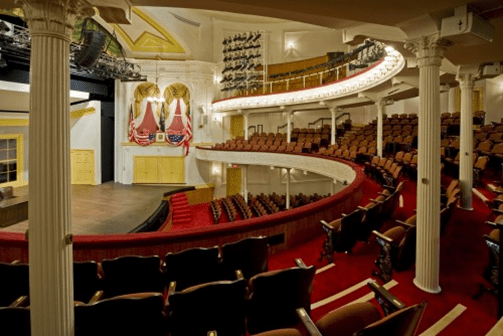
I played Abraham Lincoln on the Ford Theatre stage in Washington, DC,

…at the age of 18,

…in an opera,

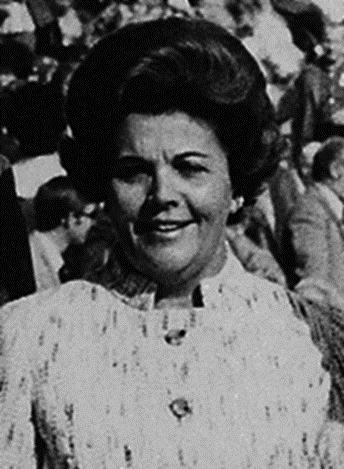
…with Mrs. Nixon, Mrs. Agnew, and Col. Sanders in the audience.

It gets better.

It was in the spring of 1970. I was in my freshman year at the University of Kentucky. My un-mown hair cascaded between my shoulder blades. I wore moccasins, a poncho, army surplus shirts, and a poorly-stitched leather hat.

I knew everything. “I was so much older then, I’m younger than that now.” –Bob Dylan.

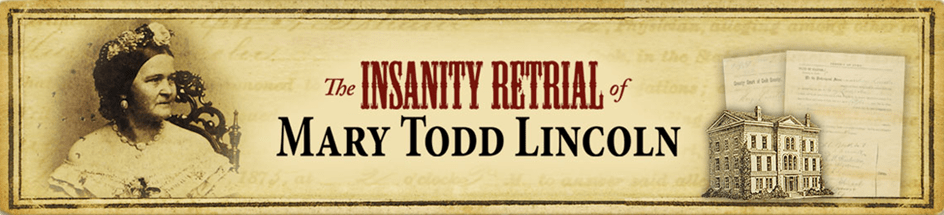
Dr. Kenneth Wright of UK had written an opera about the insanity trial of Mary Todd Lincoln.

Ponder that for a moment while I digress.

<< You know, it’s my blog, and if you’ve spent any time at all here you know I don’t feel at all tethered to facts – actual or alternative. I agree with my friend Chuck Pogue; if you have to choose between the facts and tellin’ a story, you go with the story…every time. Hell, It’s not like I’m runnin’ fer president!

That said, everything I’ve written in this piece (thus far) is actually true. Dr. Wright wrote an opera about the insanity trial of Abraham Lincoln’s wife. What kind of mind would write an opera about that kind of mind? It’s a wunnerful world. >>

There was a historic preservation group in Washington, DC working on restoring the house across the street from the Ford Theatre to which a wounded Lincoln was carried. It is the house in which President Lincoln actually died. As a part of their efforts to raise interest and funds for this restoration, the group commissioned UK to produce Dr. Wright’s opera; “Wing of Expectation” and perform it in the Ford Theatre.

The horizontal Lincoln

Ray Smith directed.

<< I could write a book about that last sentence……and may one day……, but I’ll try not to splinter in this narrative. >>

Ray decided he wanted me to be his stage manager.

God knows why.

I was a freshman. I had yet to take a single technical theatre class. I was an actor/storyteller. Still am for that matter.

The technical staff and faculty at UK objected. For several of them, it was their first year at UK. They are to be forgiven for not knowing that objecting to Ray’s whims only transformed those whims into concrete ramparts. I certainly wasn’t gonna refuse the assignment – I knew everything, remember? Sing it with me; “I was so much older then…”

In addition to being the stage manager of the show, I also had to play the role of the Drunken Farmer in a second act number. It required me to stagger around the stage (poorly, as I recall), warble a couple of slurred lines, get picked up bodily and tossed in the air (let’s sing again; “I was so much lighter then…”), and get carried off the stage.

Not to worry – hold my beer – I got this.

Those were my duties in the show…until we got to Washington.

When we got to Washington, the group that was picking up the tab for this fiasco finally had the epiphany that there was nothing in Dr. Wright’s opera that had anything to do with the house they were trying to save. They insisted on adding a silent scene, behind a scrim, depicting the carrying of Lincoln’s wounded body from the theatre on a stretcher from the theatre to the house in question.

OK, no big deal.

Wait! Not so fast.

Three professional singers had been hired for the leads in the show. The gentleman hired to play Lincoln decided that being carried on a stretcher was not in his original contract and was not a desirable way to extend his evenings in the show. After all, he had counted on bein’ shot and bein’ through for the night and settling in for some quality Green Room time (AKA: the dead people’s happy hour). Now, perhaps this was ungenerous on his part, but given the timbre of the reviews of the show, perhaps truncation of participation was a wise career choice.

Mrs. Spiro Agnew aka my audience

What to do?

Opportunity beckoned and the Stage Manager/Drunken Farmer answered. Yes, I was supine on a stretcher, but who could pass up the chance to play Abraham Lincoln on the Ford Theatre stage?

Certainly not this fool.

And before you ask, yes I did recreate Booth’s balcony-to-stage leap one afternoon after rehearsal. Those were looser times and stage managers (and drunken farmers…and former presidents, I suppose) were allowed much latitude.

Audition Valor and Good King Wenceslas

little-night-music-01

I love to audition.

That sounds insane but it’s true, and it’s always been true. If it involves speaking and/or singing I’m in heaven. If it involves dancing…well…I might be busy that day. My point is; it takes no special bravery, or any bravery at all, for me to show up for an audition. I think it’s a pretty jolly time.

I know this is not true for everyone and I admire those performers who persist in auditioning in the face of dread. That’s bravery. The bravest audition I ever witnessed was one evening in the Guignol Theatre at the University of Kentucky.

Eric is a great friend of mine. He is a fine illustrator/water-colorist and a fine actor. He can also carry a tune, but in his mind at the time, as a singer…he was a fine illustrator/water-colorist and a fine actor.

One afternoon we chatted and I mentioned that I would be auditioning that night for Sondheim’s A LITTLE NIGHT MUSIC. I urged him to join me. He dismissed the suggestion summarily; “I’m no singer!” He looked a little pale at the suggestion. Always sympathetic (not), I made a mental note that if I ever had to express utter dread on the stage his reaction to the thought of a singing audition would be a good reference memory (an actor prepares, right?).

That evening, about an hour into the auditions, I was sitting in the last row of the theatre watching the efforts of others. I had already sung and read a few scenes and was foolishly longing to be asked to read another 20-30 scenes – I love this!

BANG!

The door to the theatre flew open and Grimness and Ferocity entered, personified by my friend Eric. He commandeered (commandeered – yes – le mot juste) an audition form from the stage manager, and slouched into a seat as far from humanity as the Guignol allows. All evidence suggested to me that it would be prudent to leave him the hell alone.

He was called upon to read a couple of scenes.

Then he was called upon to sing.

He marched on the stage and waved the provided accompanist away with; “I won’t be needing you.” He then announced; “This is my favorite Christmas Carol.” He proceeded to sing/declaim an acapella rendition of “Good King Wenceslas” that was loud, in tune, and capable of being marched to by any competent armed forces unit.

It was stunning and strange and perfect for Carl-Magnus in the show.

I understood what it had cost him and I was proud to know him…and maybe a little relieved to know he was not a concealed-carry type of guy.

His reward for his valor? He and I shared a duet in the second act. It was singled out by the reviewer as one of the highlights of that year’s theatre season in Lexington.

Damn straight!

I Killed Peter Pan

summertree-11
The resurrected Mr. Pan on the right

I think the statute of limitations has run out. I can confess.

It’s not something I’m proud of and I don’t include it on my resume.

But I did it…or at least I thought so at the time.

For historical context; in 1970 Lexington Children’s Theatre performed their plays on the Guignol Stage at the University of Kentucky. That fall they were staging PETER PAN.

In 1970, I was a sophomore in the Theatre Department. That exalted status required me to take Stagecraft 101, a class that introduced theatre majors to the rigors of technical theatre. Participation in the class led to building flats and platforms, spackling sets, and being on the running crews for Guignol productions.

Peter Pan had to fly. That was my job.

It’s called a Foy System. It involves two ropes and pulleys attached to Peter onstage and an operator offstage. One rope moves Peter from stage right to stage left and the other moves him from downstage to upstage. Pulling the ropes lift Peter higher. Relaxing the ropes lowers him. Simple, n’est-ce pas?

Well, maybe for competent, coordinated people but we’re talkin’ ‘bout a long-haired hippie actor whose mindset and physical skills only coincided when flinging Frisbees (and then only occasionally).

The part of Peter Pan was being played by Geoff Moosnick; a sweet kid. Geoff’s mom, Marilyn, was a god to me. Marilyn was a Guignol veteran from the 50’s. She raised money and served on arts boards her whole adult life. She raised beautiful, bright children and mentored young artists throughout Kentucky. AND she told great stories…AND she made you feel that everything you said or did was an amazing and delightful discovery for her that day. These are the people we cherish.

It was final dress. I don’t remember what the distraction was. It might have been something as inconsequential as an invective haiku from Barry Baughman (UK’s Technical Director at the time) or something life-redirecting as contemplating my next meal (21-shrimp platter for $1.49 at the Kampus Korner or a grease-swimming double order of hash browns from Tolly-Ho). Whatever, the die was cast;

  • Peter spun and leapt for the hearth.
  • I pushed with my left when I should have pulled with my right.
  • I sailed Peter smoothly and head-first, straight into the corner of the hearth at an unsafe rate of speed.
  • Crunch.
  • Peter…Geoff…oldest son of one of my most-admired friends…hung in the air…head down…motionless, except for a slow, slow spin……clockwise I suppose since we are north of the equator………dead.

My first thought was; “You can clap your hands all you want but that sucker ain’t comin’ back to life.”

My second thought was; “Marilyn’s gonna be pissed.”

I lowered him to the floor. He lay there.

And finally groaned.

He breathed and then I breathed.

We lived on to do two shows together (SUMMERTREE, Guignol, 1971, and THE NIGHT THOREAU SPENT IN JAIL, 1972).

Moral of the incident?

Two things you should never do;

  • Travel with Tom Hanks, and
  • Have Roger do anything backstage.

Cinema Scarcity – Ack!

A geezer thought.

We rarely watched movies on TV in Lexington in the 60’s. There were few channels and thus, few movies to watch.

I remember there were two channels; Channel 27 (CBS) and Channel 18 (NBC). When Channel 62 (ABC) finally began broadcasting, it was overwhelming. How would you find time to watch it all? That turned out to be a non-problem since no household I knew owned more than one TV and dad controlled it. Lawrence Welk, Walt Disney, and Jackie Gleason’s domination of my home’s screen (singular, please notice) was assured no matter what channel the Beatles were on.

The only time movies were offered was in the mornings (I was at school) or after the 11pm local news (I was in bed on school nights). The late flick (singular, please notice) would be followed by a recitation of the poem “High Flight” over images of jet planes (“Oh, I have slipped the surly bonds of Earth…”), the Star-Spangled Banner over a static image of the flag, and a sign-off announcement from the station until tomorrow morning over a geometric image that looked like the title of a musical piece by Anthony Braxton who none of us had ever heard of much less heard. None of this late programming could remotely be called inspiring.

Things improved when ABC took a chance one Saturday night and screened The Day the Earth Stood Still under the TV banner; “Saturday Night at the Movies”. It was a surprise ratings hit and within a couple of years almost every night had a “… Night at the Movies” broadcast.

Still, there were only three channels, and no such thing as video tapes, DVD’s, DVR, NetFlix, YouTube, or Roku. It was tough for movie lovers. The Student Center at UK would screen foreign films once a week, but it always snowed on those evenings or rained frogs and it was a three-mile walk (uphill both ways) to the theater. I’m tellin’ ya, it was tough!

If Channel 27 scheduled Frankenstein at midnight on Saturday, you sucked it up, stayed awake and open-eyed, and prayed your antenna was aimed in the proper direction coz there was no recording capability and the chance might not come around again in your lifetime to experience Colin Clive screaming “It’s alive!!!”

Desperate times for movie addicts, indeed.

I remember in 1971, my friend Chuck Pogue and I would climb to the top floor of the UK residential towers on Saturday nights at midnight to commandeer the communal TV set and tune in Channel  9’s broadcast (out of Cincinnati) of Uncle Bob Shreve’s blurry presentation of awful all-night flicks sponsored by Schoenling Little Kings Malt Liquor.

It doesn’t get more desperate than that.

Awful films.

I loved ‘em.

When I hear today of the “good ol’ days” and let’s “make America great again”, one of my many trepidations concerning that thinking is the fear of returning to those movie-watching options of my youth. Call me shallow, but I’ve seen all the Lawrence Welk I need to in this lifetime. Bobby and Cissy, the Lennon Sisters, and Myron Florenz on the accordion…just kill me now.

Lawrence & Myron – What’s worse than one accordion?

A Tale of Two Conventions

Four years ago, about this time, I was watching the political conventions. I’ve been fascinated by these events since 1964; Huntley, Brinkley, Cronkite, Vidal, Buckley…and balloon drops. Part of me died in 1968 in the parks of Chicago…but I hit pause on my demise while I enjoyed the balloon drops.

Little did I know four years ago that I might be enjoying my last political conventions as we know them. These unreality shows appear to be evaporating in the stark reality of COVID19 and social media.

But enjoy them I did. I grabbed my popcorn and I watched.

And I had thoughts…

I you will, “return with me now to those thrilling days of yesteryear” (apologies to the Lone Ranger).

******************************************

After watching two weeks of political conventions. My head is not spinning. I have a passel of thoughts but they seem pretty clear.

  • It was the best of conventions: it was the worst of conventions. I confess I plagiarized and paraphrased that.
  • I enjoyed seeing Paul Simon and Carole King while flinching at hearing them. Gettin’ old sucks.
  • The Trump family is lovely to look at – sans pere.
  • One of the things I enjoy about traveling is hearing languages and accents I rarely hear in Lexington. It humbles me a bit (always useful in my case) and reminds me I’m part of something bigger than the blissful bubble Janie and I live in and cherish.
  • In his late eighties, my grandfather was taken hunting one afternoon by one of my cousins. When they emerged from their hunting ground, they were confronted by a game warden waiting by their car. He asked for my grandfather’s hunting license and in the ensuing confusion about the existence of such a document (not to mention any relevant emails, birth certificates, or tax returns), the warden said he would need to have my grandfather’s gun/rifle/bazooka/whatever. My grandfather responded by cocking his gun/rifle/bazooka/whatever and saying “I don’t think so.” I think my mom had to bail him out on that caper.

I relate this to point out that I, like many of us, come from a culture of personal weaponry that is not even in the same area code as rational thought. I, like most of us, would like to see some improvement in the number of weapons of mass destruction currently in the hands of dangerous people (toddlers and terrorists alike). But I also think this is one of the two “third-rail” issues in US politics today. This issue will be tough for Democrats.

  • By the way, the other “third-rail” issue is Social Security. Republicans might want to tread warily here. This geezer would respectfully suggest they get offa my lawn. Or, to quote my grandfather; “I don’t think so.”
  • A wall. Really? A wall? Didn’t Russia try that in Berlin? If we’re gonna build something, let’s RE-build our infrastructure. Bridges, roads, and airports – yes! Wall – I don’t think so.
  • I’ve witnessed history-making things in my lifetime.
    • Humans bounding on the moon.
    • Martin Luther King’s “I have a dream” speech.
    • John F. Kennedy’s assassination.
    • Barack Obama’s election to the presidency.
    • Hillary Clinton’s nomination for the presidency.
  • I’ve also seen a good many balloon drops in my lifetime and I always like’em. Yesterday’s Democratic Convention balloon drop was the best.

Finally, I’m watching a couple of films by Danish director Carl Theodore Dreyer. In his film Gertrud, one of the characters advises;

“Two things have been and still are more important to me than anything else. These two things are love and thought. You’ve spoken about love. As far as thoughts go, we should have courage to think good thoughts for the good thoughts bring us to the summit of truth, and truth is the only thing worthwhile.”

Michelle Obama might have said that more succinctly; “When they go low, we go high.”

No, my head’s not spinning…I’m goin’ high.