The word “improvisation” in the theater sends me cowering to the nearest corner.
S-s-s-s-s-s-s!
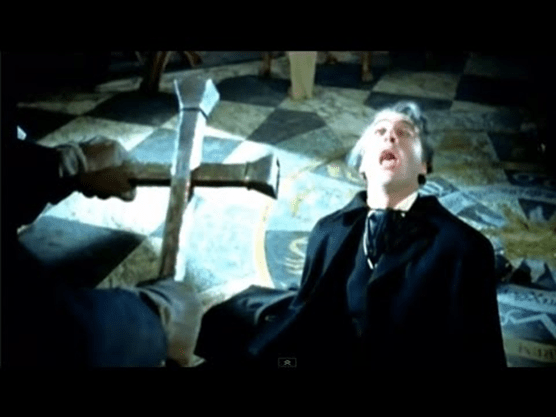
I leap away from the word, hissing like ol’ Christopher Lee when facing a crucifix.
It’s irrational, I know.
It seems to me that improvisation in the theater usually means one of two things.
I love the first meaning. It is the air I breathe in rehearsal. When I am immersed in the script and the character and the moment; when I am listening and alert and listening and watching and listening; every gesture, every glance, every inflection has the immediate potential to send us spinning into places we’ve never been…maybe places where no one has been. Sometimes when we reach those places, we find the character we’re searching for. Sometimes we find bits of ourselves…which may be the same thing. It is thrilling and addictive.
The second meaning though… …is theater games.
Theatre games are disguised as “fun” and “team-building” and “warm-ups.” They can involve balls and circles and imaginary boxes. Notice please, they don’t as a rule involve characters or scripts. I sign on for characters and scripts…not imaginary boxes.
Theater games tend to be just that; games. They usually decay rapidly into competitions won by the clever and the funny. How that furthers our explorations of MacBeth or Willie Loman plumb evades me. I’ve yet to hear MacBeth or Willie Loman described as clever or funny.
(Insert various grumpy comments here. Any will do. “Get offa my lawn!” is trite but appropriate enough.)
I mostly despair of any good rehearsal time lost to theater games.
Mostly… There are special moments, however…
Once upon an evening, I was involved in a particularly useless “warm-up” game before a rehearsal. The cast formed a circle with one member in the center. The person in the center had to chant; “I’m (state their name) and (state some fact about themselves).” At that point, every person in the circle for whom the fact stated was also true had to abandon their spot in the circle and assume another spot. The center person would try to poach an abandoned spot and whoever was left out would be relegated to the center and would repeat the process.
Whee!
Whee!
Most of the chants proceeded along the lines of;
– “I’m Jane Doe and I went to the movies today.” (scurrying and giggles) – “I’m John Doe and I drive a Chevy.” (scrambling and guffaws) – “I’m Becky Doober and I like pizza.” (chasing and chortles)
All very helpful when ferreting out the subtext of a Sam Shepard script. You can only imagine the utter hilarity that filled the room. Ri-i-i-i-ght.
This jocular exercise continued until a middle-aged fellow (no, not me) found himself in the center and chanted;
“I’m Joe Doober and I’m a convicted felon.”
The silence of the group… …was of the soul-searching, exit-locating variety.
The stillness of the group… …was as profound as a sudden wish for invisibility.
The director broke the meditative moment by chirping;
“Well, that’s enough for tonight. Let’s get started. Set up for Act I.”
In the prehistoric days of Lexington theatre, spring of 1970, to be precise, a new theatre entity was born; The Third Floor Theatre.
The Home of the Golden Arches currently on South Limestone was then the site of a Jerry’s Restaurant and in the back corner of the Jerry’s parking lot (just about where the McDonald’s drive-thru speakers are today) was a three-story brick building that housed Pasquale’s Italian Restaurant. Pizza had just been invented. Pizza delivery had not. Thus, “Italian Restaurant” meant lots of spaghetti and meatballs and cannoli and lousy brownish Chianti in straw-covered bottles.
<< Side note from the wine guy in the house >>
Those straw-covered bottles actually have a name. They are “fiaschi.” One bottle is a “fiasco.” Cool, huh? Don’t be fooled. The wine inside is far from cool, but the bottle looks great with candle stuck in it.
<< End of side note >>
Pasquale’s used the first two floors for the restaurant, leaving the third floor an empty space.
Empty space!
Nature has nothing on theatre practitioners when it comes to abhorring a vacuum.
According to the visionary British stage director Peter Brook, an empty space is a major ingredient for theatre. He’ll get no argument from me. I’ve performed on sidewalks (I played the Peabody Coal Company in a guerrilla theatre assault), a frigid restaurant basement (the play was set in Antarctica – it was no stretch), two libraries, in front of a movie screen, two big stairways, under a large tree, a church sanctuary, several school cafeterias and gyms, two chapels, a crumbling abandoned night club, and in a park with trains.
Thus, it was no surprise when a couple of UK theatre alumni approached the owner of Pasquale’s about using the vacant third floor as a theatre. I can imagine the sales pitch.
“Think of the theatre crowds…the lasagna you’ll sell!”
The room was tiny. It probably sat 20 folks at most. The stage was a 6-inch-high 4X8 platform. The lighting system consisted of four light bulbs in coffee cans and an on/off switch. It was briefly considered to light the arena (insert <<snort!>> here) with candle-festooned fiaschi, but it was decided that the fire marshal gods had been challenged enough by our mere existence.
Obviously, the roster of possible plays that could be mounted in that empty space was also tiny. “Oklahoma” and “Ben Hur” were scrapped from consideration fairly early. The Third Floor Theatre was pretty well capped at 2-3 performers, no orchestra, and certainly no horses.
It was decided to do a play by Strindberg. The title has faded from my jaded memory through the years, but I recall it was a laugh-a-minute romp (not) featuring two female performers who didn’t like each other (neither the characters nor the performers themselves), of which only one actor actually spoke. What could be more enthralling…a haircut perhaps?
I ran the lights for the show. I bray this fact to refute the calumny I’ve endured for decades about my legendary lack of skill or will on the technical side of theatre. Though it’s true that all the tools in our home belong to Janie and the only hammer I own is engraved “This side down,” I’m trainable and perfectly willing to perform simple tasks.
<< Another side note >>
There are indeed dissenters to that last statement. For extra credit, you might read “I Killed Peter Pan” in the archives of this blog site.
<< End of another side note >>
Where were we?
…willing to perform simple tasks.
Yes.
And running the lights for this Strindberg faux pas de deux was as simple as it gets. When the actors took their places at the beginning of the show, I flipped the light switch “UP.” When the last line was spoken to end the ordeal, I flipped the light switch “DOWN.”
UP.
DOWN.
Hold my fiasco.
Well, the show ran pretty well the first weekend. Of course, there was that Saturday night when Pasquale’s was rockin’, and the owner (our landlord, remember) made the unilateral decision to seat his overflow in our chairs in our theatre. But since our chairs were his cast-offs and our theatre was his real estate and our rent was zero, we acquiesced and waited until the last chicken marsala left with the last patron. It delayed our curtain for an hour and left a distinct garlic “je ne sais quoi” hovering over our Swedish play.
But it was OK.
I was on top of my game.
UP.
DOWN.
Hålla min söl och titta på detta.
The second weekend, however, didn’t fare so well.
I suspect word had leaked that Strindberg was not the Swedish Neil Simon and we were offering no laughs, orchestras, or horses. Our audiences dwindled. By curtain time one night, our audience consisted of one gentleman in coat and tie (No, his name was not Guffman).
We assembled an impromptu discussion group of the evening’s principals; the actors, the audience, and the lighting guy. We identified two options;
1. We could cancel the performance, refund the gentleman’s money, and invite him to return another evening for free, or
2. We could do the show for an audience of one.
The gentleman explained he was from out of town and only in Lexington for this one night and he’d really like to see the show (No, his name was really not Guffman).
I surmised the gentleman from out of town was more than a little smitten by one of our actors and was hoping to see bit more of her. I longed to explain to him this was Scandinavian drawing room material from the 19th century. The ladies would be wearing dresses that, if they had a headpiece, would be considered a burqa today, and they would retain every stitch until long after the final lighting cue and the gentleman had left the building.
I remained silent.
We did the show.
UP.
DOWN.
It occurred to me later, we had twice as many light cues as audience members that evening.
The Third Floor Theatre soldiered on for few more months until they lost the space. Pasquale’s got optimistic after that overflow evening and envisioned vertical expansion leading to riches. Alas, I believe they went out of business within a year. I’ve always blamed their failure on losing the theatre crowd.
The Third Floor Theatre moved to St. Augustine’s Chapel on Rose Street, directly across the street from the Guignol Theatre. The name was changed to The Canterbury Pilgrim Players and new legends were launched……sans garlic.
It would have been about 1:00 in the afternoon on a weekday in 1970…
…in an opera house…
…in Lexington, Kentucky.
Why was I there?
Was it to see a production of Carmen, or Madama Butterfly, or Rigoletto?
Nah!
I was there for the weekday bargain matinée at the Opera House Movie House on a fairly sketchy block of North Broadway. For a $1.50 I was settling in for a cinema mini-festival of the Barbra Streisand/Jack Nicholson classic; On a Clear Day You Can See Forever (she sang, he didn’t…thank God) followed by Waterloo featuring Rod Steiger and Christopher Plummer in the mud (neither sang as I recall…thank God).
The theme of this film pairing is strikingly apparent; tedious films employing and contrasting singing and cannon fire as mediums for selling a ticket or two…and maybe a tub of Buttercup Popcorn.
Frankly, I don’t recall much of the afternoon that was indelible in an uplifting way. I recall a long afternoon of affordable and forgettable flicks. I recall dimness, not just in the screening room, but in the lobby (skimping on lighting – a double savings; lower electric bills and less spent on actual housekeeping). I recall passing on the Buttercup offerings; the dim lighting couldn’t obscure the sharp, refinery whiff emanating from the butter(?)-dispensing mechanism. I recall the occasional skittering noises of the legendary rodent cleaning crew in the dark rows of the screening room celebrating the discarded remains of the Buttercup offerings.
Hey!
Buck fifty.
Two films.
You get what you pay for.
Plus Yves Montand and Ivo Garrano…and Mickey and Jerry (without Tom).
Well…that was then.
Eight years later, at age 27, I’m playing the 70+ year old Grandpa in Studio Players’ production of You Can’t Take It With You on the Opera House stage – same building. The seats are new. The balconies and boxes are gilded and populated with Lexington theater-goers. The lights are bright. The lobby, halls, staircases, carpets, and aisles are proudly pristine. No Buttercup products are in sight (or in smell).
What happened?
In the 70’s, the Opera House was attacked by ice storms, gravity, and old age. The wrecking ball loomed.
The city of Lexington and a group called The Opera House Fund said “No.”
A serious architect, and a serious Lexington, and a serious Opera House Fund (thank you Linda Carey and W. T. Young) redesigned and restored the structure – not to a museum roadside attraction, but to a thriving driver of Central Kentucky’s performing arts community.
A year after the success of You Can’t Take It With You, I played a deliciously young and foolish Cornelius in Studio Player’s production of Thornton Wilder’s The Matchmaker in a Saturday afternoon performance to 54 (count ‘em!) attendees in a house that seats about a thousand. Another fairly grim afternoon in the Opera House, but at least the grimness was in striving for something good, not for hygiene or affordability.
I should mention here that in both of these shows I got to work with my friend Paul Thomas. Paul has retired a myriad of times from the teaching profession and became the House Manager of the Opera House. I believe the Opera House muckety-mucks valued his participation, but were unaware that his best and highest use is ON-stage, not off. Such is fickle fame.
In 1981, I urged everyone to “Sit Down, You’re Rockin’ the Boat” in Lexington Musical Theatre’s production of Guys and Dolls. This was a notable production for Paul’s vocal exploration of musical scales of which Schoenberg never dreamed.
In 1982, Paul and I played in Brigadoon, also for Lexington Musical Theatre. Paul demonstrated a technique for holding a gun that the NRA is still trying to explain and justify.
Both of these edifying experiences were on the Opera House stage.
In 1987, I had the totaling fulfilling experience of playing Dr. Watson to my friend Eric Johnson’s Sherlock Holmes in the world premiere of my friend Chuck Pogue’s luscious script; The Ebony Ape, on the Opera House stage in an Actor’s Guild production. A two-story set, perfect and beautiful costumes, Fred Foster, Julieanne Pogue, Martha Campbell, Rick Scircle, Matt Regan…a glorious time for Mrs. Leasor’s little boy.
This was also on the Opera House stage…thank you very much.
A year later, in The King and I (a Lexington Musical Theatre production directed by my friend, Ralph Pate), Janie and I appeared in our one and only show together. She was lithe and lovely. I was…not so much, but I got to sing some beautiful songs for which I was not particularly suited (not, alas and thank God, an uncommon occurrence).
This was also on the Opera House stage. Sorry about the singing…but look at Janie! Isn’t she fine?
Now…
…skip ahead with me to 2006.
I’m asked to play the Star Keeper in the University of Kentucky Opera Theater’s production of Carousel at (you guessed it) the Opera House.
Well, I guess I could find time for that.
I got to walk out on the Opera House stage, count the stars – the stars!– , revive the protagonist and inspire him to briefly return to his former life and assure his daughter that she’ll “Never Walk Alone.”
Whoa.
This is a far cry from 1970 and Waterloo and…
“On a clear day, rise and look around you and you’ll see who you are. On a clear day, how it will astound you that the glow of your being outshines every star. You’ll be part of every mountain, sea, and shore. You can hear from far and near the words you’ve never heard before.”
Guignol Theater reunion on the set of the 2001 production of “The Importance of Being Earnest”
Oscar Wilde’s “The Importance of Being Earnest.”
We keep doing it.
Why?
If Mr. Wilde were asked, he’d probably point out the obvious; “It’s brilliant!”
He’d be correct…insufferable…but correct.
The brilliance of this script shone through in Athens West’s recent production. The young Jack and Algernon (Samuel Lockridge and Mark Mozingo) were energetically possessed of too much vocabulary and way too much privilege for their own good, but just enough for our delight. The maddeningly charming young ladies, Cecily (Amelia Collins) and Gwendolen (Raylee Magill) dominated the second act, giving us a preview of how the married life of this foursome would evolve.
It was a good evening.
I wrote about a 1980’s Guignol Theater production of “Earnest” in which I participated. I could be insufferable and say it was brilliant (which of course it was) but, being in it, I cannot attest to the accuracy of my evaluation.
There was another Guignol production of “Earnest” in 2001. It featured an impossibly young Ellie Clark as Lady Bracknell and was set in the 1950’s. I expect Ms. Clark will essay the iconic Bracknell role again (perhaps again and again) in her career. I hope so.
This 2001 production also served as a reunion of former Guignolites. We gathered to rededicate a newly refurbished Guignol and to celebrate another generation of Mr. Wilde’s “brilliant” play.
It seems like we have to do that every 20 years or so.
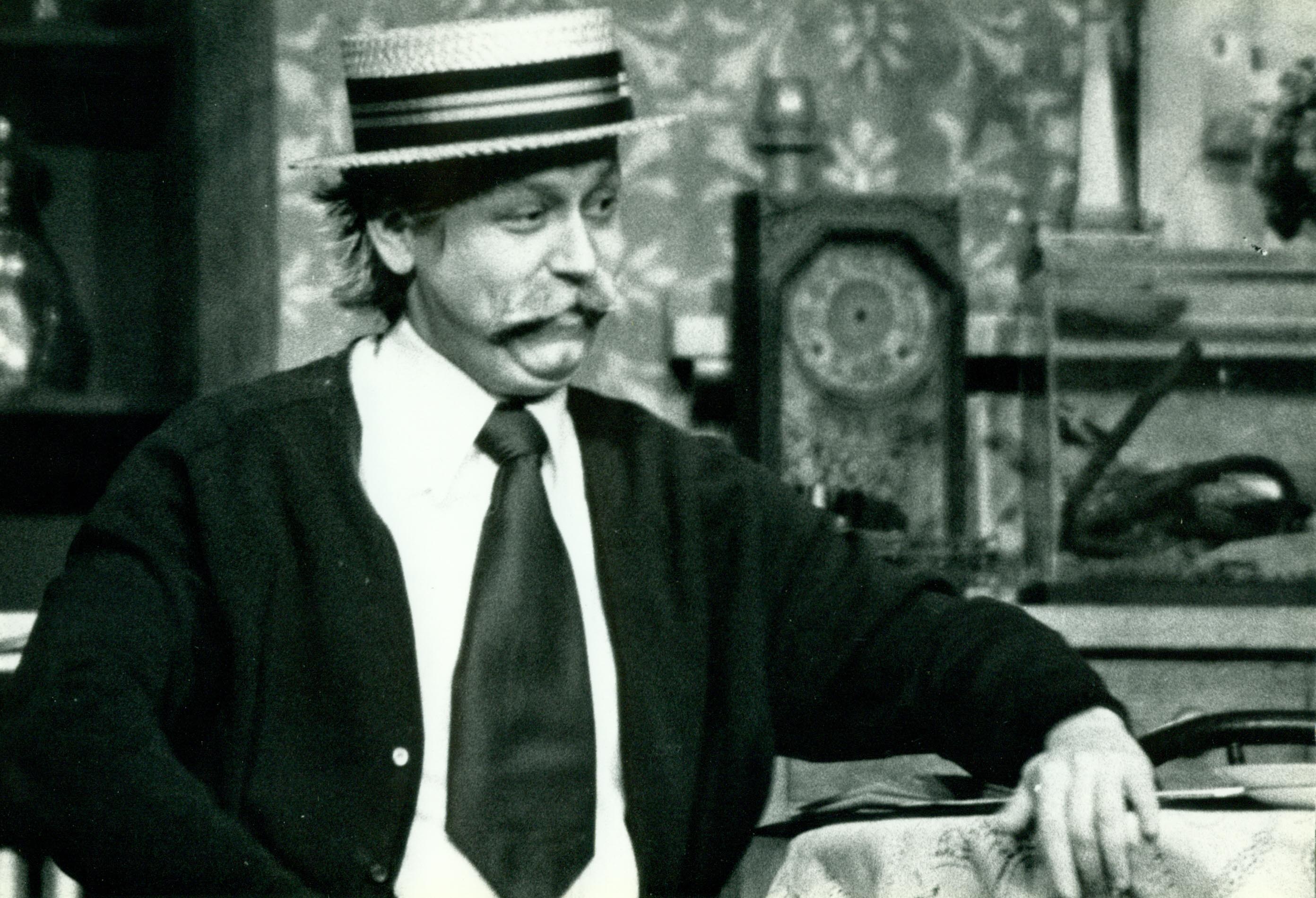
1980’s production of “The Importance of Being Earnest” in the Guignol with Eric Johnson on the right and some duffer in spats on the left.
Janie and I had a lovely night at the theatre a while back. We watched a crisp and energetic cast perform Oscar Wilde’s brilliant “The Importance of Being Earnest”. It was one our happiest nights for the year.
I admired the efforts of Shayne Brakefield as a sometimes befuddled, often pompous local reverend (think Robert Morley in African Queen with a pencil-thin mustache), Janet Scott in full sail as Lady Bracknell, and Paul Thomas as the butler(s); mysterious, disheveled, inscrutable, vaguely obedient, barely competent, and clearly the mind behind every scene……not.
I have worked with all these actors before.
I know their gifts…and cherish them.
I know their habits and peccadilloes…and cherish them as well.
A week later I participated in a reading of Robert Penn Warren’s ALL THE KING’S MEN on the Carrick Theater stage at Transylvania with Joe Gatton, Sherman Fracher, Ellie Clark, Tom Phillips, Mark Mozingo, and Geoffrey Cobb Nelson.
I have worked with Joe, Sherman, Ellie, and Tom before.
Joe, Sherman, Ellie, Tom, Shayne, Janet, and Paul…
Together we’ve been to Dracula’s Transylvania, New Jersey, New York, a Midwest Mega-Church, Agincourt, Aquitaine, Deep South Mississippi, the magical forests of Shakespeare, Deep South Alabama, Upper-Peninsula Michigan, Russia, London, Pennsyvania, Scotland. We’ve been husbands and wives and daughters and sons and kings and vassals and brothers and sisters to each other.
We have history.
We have vocabulary.
When we step on stage with each other we have a big head-start to share with an audience; a dialogue that, in some cases, has been going on for decades.
These two stage experiences prompted me into a memory (what doesn’t these days?) of an early 80’s Guignol production of “The Importance of Being Earnest”. This was, in retrospect, a wonderful cast for me; Eric Johnson, Martha Campbell, Walter Tunis, Lisa Thomas, Georgia Ferrell, Tim McClure, Ann Dalzell, and Paul Thomas (once more playing the butler – murderous, scheming, ever-expanding his role).
This production was directed by Dr. James Rodgers, and he created an atmosphere playful, quick, and creative, but fierce in language…a happy culture in which Wilde’s mots, bon et rapide, could fly.
And fly they did. At the first table read, our Lady Bracknell encountered the word “indecorous” in the script. She paused and inquired; “Is that pronounced; ‘IN-DUH-COH-RUS’?” To which another cast member replied; “No, and if you say it that way, that’s where you’ll be.”
The nation had shown hope a few months before when 400,000 scruffy young people had assembled on a farm in Woodstock, New York and flipped a non-violent bird to the election of Nixon in 1968 and to anyone over forty in general, all to a soundtrack of Havens, Crosby, Baez, Stills, Hendrix, Sebastian, Garcia, Chicago, Mountain, and Traffic. I wish I’d been there.
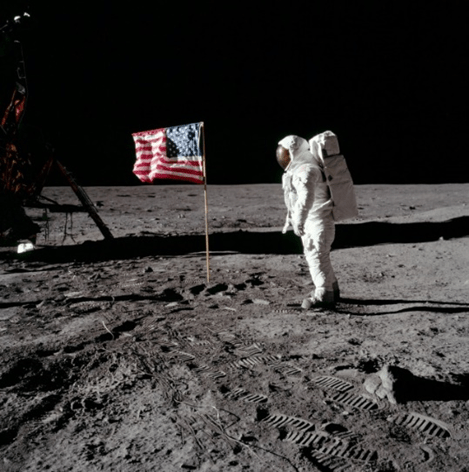
The planet had shown hope a few months before by putting two Earthlings on the Moon. I wish I’d been there.
My own hopeful expectations for college, severely damaged by Physics 101 (“Is that real water?” –actual question from one of the 15,341 students in the lecture), and the first day in Theatre Arts 101 (we spent the hour learning to spell “theatre” and “playwright”), had been nursed back to health by being cast in all three stage productions of the Theatre Department that fall.
This particular October night was sublime. I’d had a nice late afternoon rehearsal for “The Skin of Our Teeth.” I was off-book and my character was significant but not major. I could watch and admire the work the other (older) actors were doing.
My rehearsal for “Billy Budd” followed. My part was unusual, but small. He was a slimy little fellow and his intentions were obvious. No real problems and again, older actors from which to learn…plus, I got to climb ratlines and scream like Fay Wray… it was a real good time.
After those rehearsals I retired to the Paddock Club, a bar and restaurant just a few feet off campus in the shadow of Stoll Field. It was dark and decrepit. There were the requisite neon signs (“Miller High Life – The Champagne of Bottled Beer”), vinyl booths with split-open seats, and rickety bar stools with seats in similar stages of decay. It also featured clarinet and bassoon playing music majors from Tatooine (I suppose they paid out-of-state tuition) lurking and practicing in the gloomy corners of the front room, and ominous banjo plunking from somewhere in the back room. This was well before the releases of Star Wars and Deliverance, thus the tunes while ominous and gloomy, were not the room-clearing noises they later would become. But the establishment boasted cheap beer (denied to my 18-year-old driver’s license), barely acceptable burgers, and three battered and forgiving pinball machines (these being the unenlightened days before Nintendo). As such, it qualified handsomely as a bona fide theatre hangout.
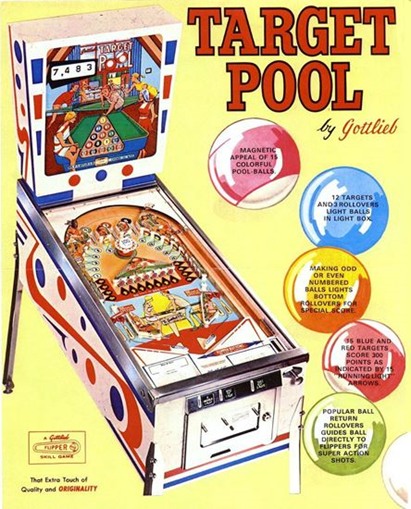
This night, I was having my way with the middle pinball machine; Gottlieb’s fine “Target Pool”. This was a hall-of-fame machine with great rollovers, crisp and quick flippers, and a gazillion target drops for those blessed with blazing flipper skills and a keen eye. It also seemed impervious to a well-timed hip shove from the right side. This machine could not even spell “tilt.”
Had “The Zone” been invented then, it would have been inhabited by me that evening. I had eighteen free games on the board when I finally stepped back, turned regally, and announced to the waiting players; “My gift to you…remember, and speak well of me.” Cheers? Jeers? Who’s to say? It was a noisy bar that evening…hard to tell.
I retired in my nimbus of tawdry glory to a table in the second room of the bar, a six-top table with an open chair. The other five seats were occupied by Clay, Cecil, Edd, Barry, and Bruce – fellow “Billy Budd” cast mates. While I had been pounding my way to ersatz high esteem on the middle machine, they had been pounding their way to a similar state of bliss with cheap brew and cheaper braggadocio. This quintet was from all over Kentucky; Somerset, Paducah, Madisonville, Jackson, and Paris. Just as everything looks better through the bottom of the glass, the hazy hometown memories of my friends had been brought into idyllic and even hazier focus through the bottoms of several glasses of the Champagne of Bottled Beer. As I joined them, the one-upmanship was breathtaking…as was their hops-enhanced breaths themselves.
“We spent every summer on the creek.” “We had the best Fourth of July celebrations at the lake.” “We had bigger lakes.” “We had a river.” “We had two rivers and two lakes.” << (reverential and reloading pause, aka take a sip) >> “We had barbecued mutton.” “Grilled burgers for us.” “Fried chicken here.” “Hot dogs…” << (testosterone gathering pause) >> “I can eat more mutton than any of you.” “I can bury you eating burgers.” “Fried chicken.” “Hot dogs…..” << (a moment of existential group angst – what did any of this mean and wither could it possibly lead except to another futile beer…and besides, it was almost closing time) >>
Throughout this redolent and blurry exchange, two things became apparent to my young, but sober perception;
1. Here was an opportunity for greatness. 2. But however that greatness manifested itself, it would probably be without the participation of Bruce. Bruce had spent the bulk of the debate reading a book (Antonin Artaud’s THE THEATRE AND ITS DOUBLE, I believe). He clearly had not had enough beer and would presumably be thinking clearly, as clearly as one could think reading Artaud.
I innocently suggested to the table; “Let’s put it to the test and have an eating contest!”
I like to think Stanislavsky would have been proud. I was drawing upon my sensual memory and recreating every Mickey Rooney flick I’d ever seen. I might just as well have said; “Hey kids! I know! Let’s put on a show!!”
And lo and behold…they responded just like Mickey Rooney’s film colleagues. No, they didn’t sing, but they eagerly demanded details and swore they were in.
Testosterone and beer…essential ingredients for good decision-making.
They each put up five dollars. It would be winner take all. These were serious stakes in 1969. You could eat for three days on five bucks. My monthly rent was $35. Hell, my tuition that fall was $125, not being from Tatooine.
The negotiation as to what food medium to use was fierce, but in the end, practical. We couldn’t afford mutton, hot dogs, burgers, or fried chicken. Besides, the logistics of preparing those items was beyond the culinary skills of actors and costume designers and set builders. Corn was affordable, but not on the cob. The vagaries of sizes of cobs and how to determine when a cob had been suitably gnawed, would invite snarls of unfairness; these being the unenlightened days before instant replay.
We settled on Jolly Green Giant Corn Niblets in a 7-ounce can. It was measurable and fast; a minute or two in a pan on the stove and voila; ready to be gobbled.
A date was agreed upon.
And lo and behold, once more…Bruce looked up from his reading and murmured; “I’m in.”
The next morning a notice appeared on the Green Room bulletin board; “Come one and come all to the FIRST ANNUAL SUPER-FANTASTIC ORIGINAL CORN-EATING ELIMINATION CONTEST AND LIGHT SHOW – PLUS SELECTED SHORT SUBJECTS”
We had agreed that Edd would be the “Light Show” since he only weighed 128 pounds and Barry would be the “Short Subject” – he was about 5’8”.
I solicited successfully a contest site, another cast member’s apartment near campus, and lined up volunteers to cook, keep time, cheerlead, and clean up the inevitable hurling incident (Cecil was a big man physically, but he went down first and hard – it was not a pretty sight).
It was a grand affair.
Wally Briggs and Mary Stephenson from the Theatre Department faculty were honored as the King and Queen of Corn. Wally composed and performed a bit of doggerel for the occasion. There was beaming all around. Bonhomie and simmering corn odors filled the air. Greatness, indeed.
The contest itself dragged into the wee hours. By the denouement the contestants were haggard and gray…except for Bruce. He sat in the corner steadily chewing while reading a book (TOWARDS A POOR THEATRE by Jerzy Grotowski as I recall).
It took till 2:30am to declare a winner.
Bruce had quietly, without fanfare, without hurling, had finished off his book and his opponents.
We all repaired to Bozo’s Diner for Bozo burgers and hash browns…Bruce was still feeling a bit peckish (as peckish as one can feel having read Grotowski).
The fall of ’69 was good. How’d we survive all that greatness?
It was a gentle question from the director of the play, delivered quietly, but the sneer behind it was clear.
I was appalled. I was nineteen and had never had an alcoholic drink in my life. What was wrong with me? How did the director know? What did I do wrong?
Wait a minute.
The question wasn’t for me.
The director, a 22-year-old student himself, was relentless; “You understand this guy’s a drunk…and he’s a hired killer…and he’s in no hurry? You understand that?”
Relentless, as only a student peer can be; “You played that like a cartoon.”
Relentless; “Have you never been drunk in your life?”
Eddie, the actor being skewered; “Well…as a matter of fact……no.”
Amidst the snickers, I tried to become invisible in my shock; (“Holy moly, there’s two of us on the planet!”)
The director, juggling his months-old worldly sophistication with two decades of Southern Kentucky parental expectations, struggled to find a path that would advance his play without making his mama ashamed.
“Well…we’ll need to fix that.”
A date was set. Eddie volunteered his apartment, which was great ‘cause he had the only TV set in our cast. The plan was to rehearse and then take the whole cast over to Eddie’s place and get him drunk. The director would question Eddie during the liquid applications, we might do some of the scenes from the show, and Eddie would absorb a useful sensory memory upon which he could draw to portray his villain on stage.
Ol’ Constantine Stanislavsky would be so proud.
Cherry vodka was the agreed-upon ingredient: one pint was the agreed-upon dosage. I’m reminded here of the gospel according to Woody Guthrie; “There’s a lotta truth in a pint of whiskey…but not too much in a quart.”
What could go wrong?
Eddie’s character in the play was Irish, sullen, murderous.
Well…
Eddie was a big fan of Fred Astaire and Cole Porter and had always wanted to sing.
He was loud. He was full of glee. He was occasionally in tune.
It was useless for the purposes of the show, but it validated my belief in the basic, boisterous, goodness of the human race and the genius of the American songbook.
Unfortunately, it made me miss the late night movie I was hopin’ to see on Eddie’s TV. I think it was Flying Down to Rio, Fred and Ginger’s first film together.
The miracle happens about six months after the summer theater season, in the depths of winter. There is a moment when snow is on the ground and the wind’s a’howlin’. There is a moment on the ninth straight day of no sun at all, a moment when the clothing layers reach seven, when soup sounds real good once too often. At that less-than-golden moment, that summer night you spent on stage the previous year becomes pure gold.
That memory is purged of the heat. The roasted rehearsal on that concrete slab on that Saharan Saturday morning in full costume evaporates from your recall.
Those multitudinous bugs (many of which unsuccessfully screen-tested for the classic film Them and still harbored virulent stage revenge dreams) that you ducked, swatted, and too often swallowed during performances were forgotten.
The memory of the “dead characters’ cocktail lounge” where the actors gathered (after their character in the show was dispatched) to swap lies and hoist a brew or two, that grew in unholy influence during the run of the show until the curtain calls became wobbly bows from which returning to a fully upright position was un-guaranteed…yes, that memory became quaint instead of alarming.
Rain? Lightning? Make-up that melted faster in the heat than it could be applied?
Hecklers?
All vanished…
…erased…
…never happened.
It’s a miracle.
All that remains are memories and tales of;
– Riding a bike home from rehearsal through the reluctantly cooling blanket of dark.
– Humidity and iambic pentameter – a surprisingly compatible combo.
– Bright, pretty, scantily-clad actresses.
– Loud voices and ringing swordplay.
– Large, well-lubricated audiences.
– Stars (thousands) and moons (one per night) and a pool of artificial light in which to speak beautiful words.
That’s all that’s left.
It’s a miracle.
However, some of the non-miraculous is worth remembering as well.
In the summer of 1999, I was lucky enough to play Atticus Finch in To Kill a Mockingbird for the Lexington Shakespeare Festival. My luck expanded to include the fact that I was working with many of my favorite people in the world; Jeff Sherr, Eric Johnson, Anitra Brumagen, Sidney Shaw, Walter May, Glenn Thompson, Michael Thompson… It was a real good time.
Most of the time.
The first act of the show ends with Atticus’ closing statement to the jury. It’s about a ten-minute summation – inspirational and dramatic as hell – an actor’s dream.
On one night’s performance I arose to give the speech to a crowd of 1,000+ people (yes, most likely well-lubricated). As I walked downstage I heard the medivac helicopter approaching from stage right and I knew from previous festival experience that the flight path to the hospital on our stage left would be directly over our stage and loud…certainly louder than me. I took a dramatic pause before commencing the speech…a pause that exactly matched the flight time of the copter.
Mrs. Leasor didn’t raise any fools.
Then I plunged into the speech and was just achieving some momentum when, about five minutes in, I heard the sirens of an ambulance in the distance go ripping through the night.
At about minute eight of the soliloquy, a low-flying private plane rattled over, and as I was winding up for the socko finish, you could hear a freight train moanin’ lonesome through the night.
Mercifully, the cacophony, the speech and the act ended, the lights went dark, and the cast trooped offstage. As I walked off the stage, Eric Johnson was exiting directly behind me and I heard him mumble; “Well, that was certainly a tribute to the combustible engine.”
Pranks in the theatre are traditional…unfortunately.
Pranks in the theatre are just good clean fun…uh…no.
Pranks in the theatre are mostly legendary…mostly.
Pranks in the theatre make the bestest stories after a few drinks…thank God.
My favorite on-stage prank story tells of Tallulah Bankhead. Ms. Bankhead was, I gather, a high-maintenance performer who, though admired for her ability to fill seats in the house and provide steady paychecks for her fellow company members, garnered little affection from said company members along the way.
One evening, in a dramatic duet scene, as Ms. Bankhead passed near the phone on the set, the sound booth thought it would cute to ring the phone unexpectedly. Ms. Bankhead paused, looked at the phone and waited. Sure enough, it rang again. She picked it up, listened for a moment, turned to the other actor on stage, and said; “It’s for you.” She handed him the receiver and exited stage right.
Touché and more than a bit touchy.
I despise theatre pranks, but I love the stories. I could bore you with a few dozen more, but despair not. I’ll simply refer you to a lovely coming-of-age-summer-stock-theatre flick; Those Lips, Those Eyes. Frank Langella plays a summer stock leading man and prime target of some very funny moments.
I will share one and only one from my own experience.
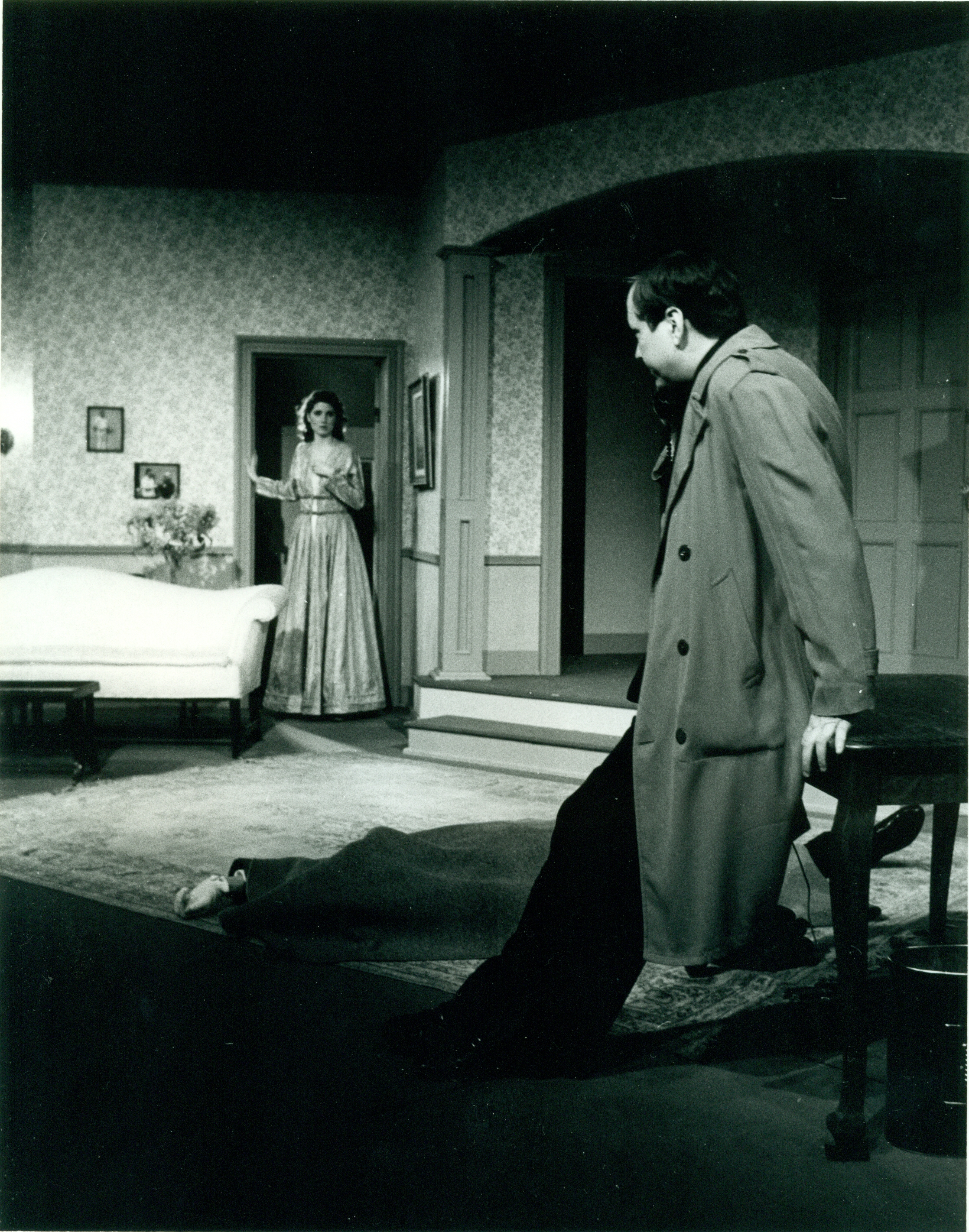
I was in a play that featured a second act moment in which I had to enter a darkened room to find a dead body sprawled. I was to turn the body over, examine it, and then leave it to rearrange the scene of the crime to suit my nefarious purposes, all before my wife entered to share a 20 minute or so scene to finish the act.
This was in a small theatre in which the audience was a mere 5-10 feet away from the action on stage, a small theatre in which the lights (the very warm stage lights) were a mere 5-10 feet away from the action on stage.
I entered, perceived the corpse, and knelt to turn it over and study it. The actor playing dead (extremely well, I might add) had used his eyebrow pencil to cleverly and legibly write a message to me on his eyelids, one word for each eye. This exercise thus required the message to be concise, no 144 characters here. I vividly recall the message to be; “F@#K YOU”. I may not have that spelling exactly right.
There I was, facing a cozy packed house, watching my every response, torn between the bred-in-me demand that “the play must go on,” and atavistic urge to defile a corpse, real or feigning.
I did both.
I rearranged the crime scene as required by the script, I also took a moment to fetch the heavy woolen blanket from its perch on the back of the sofa and respectfully and gently cover the foul corpse from head to toe…under those relentless lights…for the rest of the act.
By the intermission, when I next saw the ersatz corpse’s face in the Green Room, the message had melted away along with the rest of his makeup and the remains of his jollity.
Occasionally, there’s justice in the world, even in a world of make-believe.
As I’ve stated, I despise theatre pranks, but I love the stories and I’d be happy to hear yours.
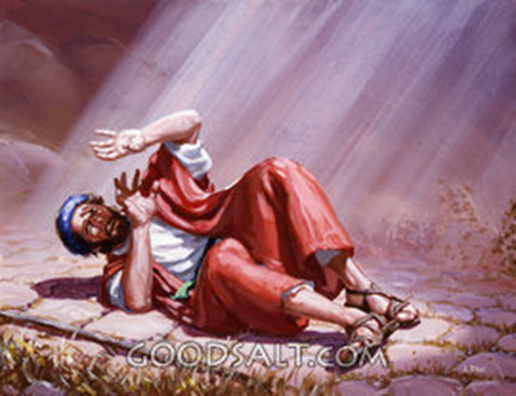
I was on the road to Damascus in 2018, sitting in the darkest back row of the Singletary Concert Hall for my fifth viewing of that year’s It’s a Grand for Singing (a hugely popular show-music extravaganza, mounted by the University of Kentucky Opera Theatre), when the light hit me.
I was listening to three dying soldiers in the show The Civil War dictating a message to their fathers;
“…I tried to remember you are judged by what you do while passing through.” I was jarred.
Live performance can do that to you.
That concept had been important to me until the last two years. I hadn’t thought about it as much lately. I’ve been too busy following the daily outrages of the Trump Family & Friends Traveling Salvation and Snake Medicine Show. Before that carnival hit town, I had resisted successfully the dubious lure of reality TV. Honey Boo-Boo, roguish pawnbrokers, Kardashians, and dynasties of ducks claimed not one minute of my attention…not one minute. Then I had allowed the Trump Reality Show powered by the 24/7/365 news industry to hijack my focus. I now am urgently convinced of the higher urgency of Melania’s jacket, Hilary’s emails, and Donald’s tax obscurity instead of the abandonment of NATO, neighborly relationships with countries that actually share our borders, and most of the progress for health care made in the last ten years.
Interlude #1 People who farm are called farmers. People who work are called workers. People who earn are called earners. People who loot… A few minutes after the soldiers’ number, a single plaintive voice grew to three voices, then to ten, then to about forty voices reassuring us from the show Dear Evan Hansen; “Even when the dark comes crashing through, when you need a friend to carry you, and when you’re broken on the ground……you will be found.” Forty young voices singing what our leaders should be offering in response to daily reports of rising suicide rates of our youth, our veterans, our rural communities, and even our successful. Instead, we are distracted by chants of “Lock her up!” and self-pitying name-calling tweets of “witch hunt”, “me”, “no collusion”, “ME”, “fake news”, and “M-E-E-E!!” Tweeting and chanting are legitimate forms of expression. Singing is better.
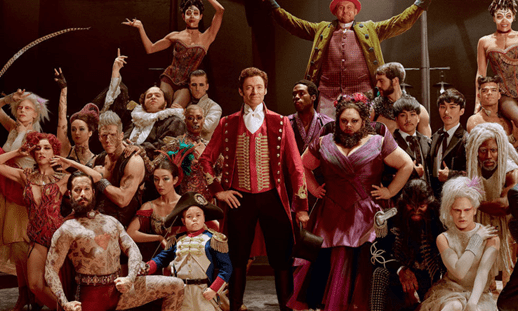
Interlude #2 People who sing are called singers. People who act are called actors. People who write are called writers. People who tell stories are called storytellers. People who mock the afflicted… People who lie… The show closed gloriously with a stage-full of circus-clad passion and hope from The Greatest Showman; “But I won’t let them break me down to dust. I know that there’s a place for us…for we are glorious!” Damn straight. The reality show people may lie, loot, despoil, degrade, mock, and commit treason. They may then flee justice or even flee the country. But they will pass and be judged by what they did while passing through…as will we all. I’m good wit’ dat.
We will rebuild and restore and fix and repair. For we are glorious. Interlude #3 People who teach are called teachers. People who nurture are called nurturers. People who heal are called healers. People who restore are called restorers. People who believe… People who resist…… Literature, drama, poetry, music, and art have become time windows through which we can look back to before 2016 and be reminded of the glorious path we were on before the reality show took over. We can recapture our distracted momentum. There will be damage to undo. We have undone damage before. I think I know where we can find about forty young voices and citizens to help.

 It would have been about 1:00 in the afternoon on a weekday in 1970…
 Now…
Now…







 June's Boy