Tag Archives: Matt Regan

A Reunion in C-8

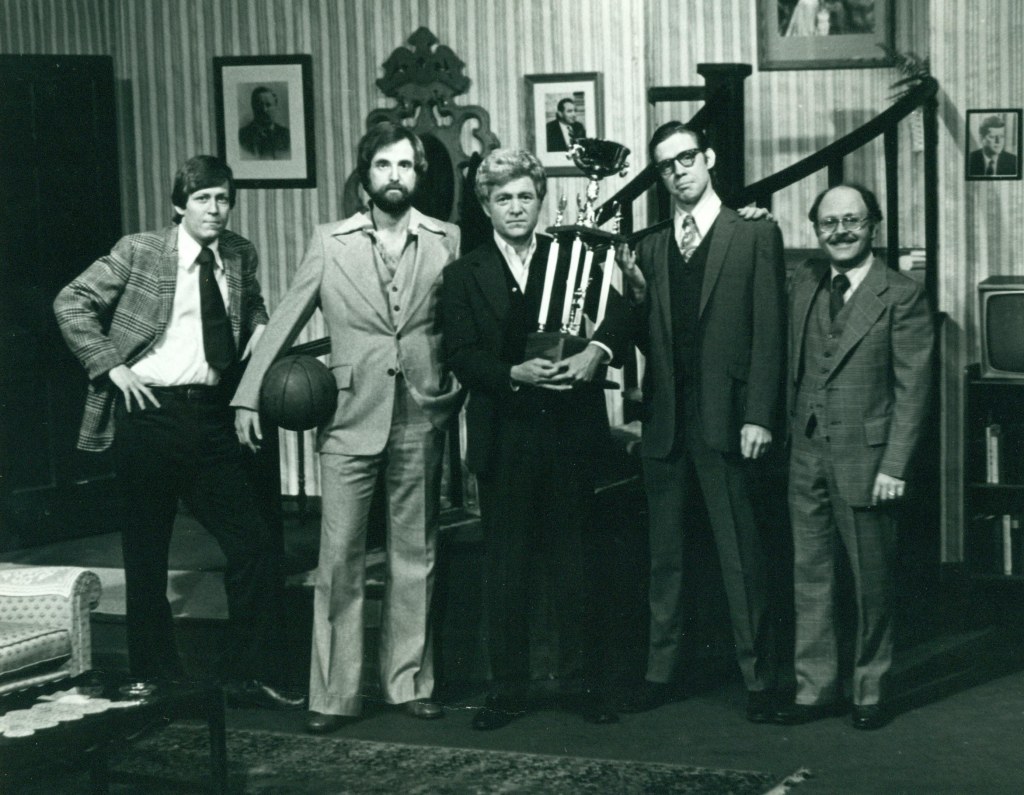
That Championship Season (Studio Players 1977)

A couple of nights ago, my hot date (Janie) and I attended Studio Players’ 10-Minute Play Festival. Studio has been presenting this event for a number of years. They are to be congratulated and thanked. Janie and I have attended for years and watched the festival get better and better. Seven short plays and a packed house made for a rollicking evening.

But as nice as the performance was, for me, the magical moment happened before the opening curtain.

I was perusing the program when I realized I was sitting in the seat (C-8) I habitually inhabited probably a hundred-plus times while waiting in rehearsals for my turn to take the stage myself. I’m a theatre gym rat. In rehearsals, when I’m not on, I watch others work. I’m mesmerized by the process…by seeing and hearing other actors making choices that never occur to me. What vicarious discoveries!

I looked to my left and saw Tim Hull, the busiest actor in town, studying his program. I relived watching Tim prepare backstage for his startling scene opening our performance of “Another Part of the Forest” for On the Verge Theatre. That triggered me to recall others in that show that were key to tonight’s performance; Bob Singleton, Allie Darden, Chris Rose were all remarkable in “Forest” and huge parts of tonight’s effort.

I looked through my program and saw Patrick Lucas’ and Jennifer Roth’s names. Patrick’s rendition of “Sara Lee” and Jen’s “Moonlight Lullaby” were two of my very favorite moments from all the years of University of Kentucky’s “Grand Night for Singing.”

I recalled the final dress rehearsal of Studio’s “The Effect of Gamma Rays on Man-in-the-Moon Marigolds” (1979) being interrupted by a large black bird flying through door propped open to beat the heat of the night (the Carriage House was not air-conditioned at that time). It flapped over my head in C-8, strutted and commanded the stage for few minutes, made a few unhelpful suggestions, before wending (rending?) its way back to its warm womb of a Bell Court late summer evening. It was an ominous omen for this first-time director. Later, when I finally saw Hitchcock’s THE BIRDS, I understood Tippi Hedren’s anxiety to the depths of my bones.

In 1983 I watched the best cast of which I never a member rehearse and perform my friend Chuck Pogue’s lovely script; “Whodunit Darling” night after night for about eight weeks. Eric Johnson, Trish Clark, Matt Regan Julie Stevens, Jack Lynch, and David Darst were simply excellent playing their roles, all of which I wanted to be playing myself. They were great…I loved/hated them all.

I first met Paul Thomas and Gene Arkle in Studio’s 1977 production of “The Runner Stumbles.” I have since worked with them in two dozen or so shows. I have been Paul’s theatrical hunting partner, wastrel son, store clerk, employer, gangster toadie, murder suspect, and political crony…all sitting with me tonight in C-8.

Nice night at the theatre…good show…good company.
An Opera House…in Kentucky?

You Can't Take It 10It would have been about 1:00 in the afternoon on a weekday in 1970…
…in an opera house…
…in Lexington, Kentucky.

Why was I there?

Was it to see a production of Carmen, or Madama Butterfly, or Rigoletto?

Nah!

I was there for the weekday bargain matinée at the Opera House Movie House on a fairly sketchy block of North Broadway. For a $1.50 I was settling in for a cinema mini-festival of the Barbra Streisand/Jack Nicholson classic; On a Clear Day You Can See Forever (she sang, he didn’t…thank God) followed by Waterloo featuring Rod Steiger and Christopher Plummer in the mud (neither sang as I recall…thank God).

The theme of this film pairing is strikingly apparent; tedious films employing and contrasting singing and cannon fire as mediums for selling a ticket or two…and maybe a tub of Buttercup Popcorn.

Frankly, I don’t recall much of the afternoon that was indelible in an uplifting way. I recall a long afternoon of affordable and forgettable flicks. I recall dimness, not just in the screening room, but in the lobby (skimping on lighting – a double savings; lower electric bills and less spent on actual housekeeping). I recall passing on the Buttercup offerings; the dim lighting couldn’t obscure the sharp, refinery whiff emanating from the butter(?)-dispensing mechanism. I recall the occasional skittering noises of the legendary rodent cleaning crew in the dark rows of the screening room celebrating the discarded remains of the Buttercup offerings.

Hey!
Buck fifty.
Two films.
You get what you pay for.
Plus Yves Montand and Ivo Garrano…and Mickey and Jerry (without Tom).

Well…that was then.
Eight years later, at age 27, I’m playing the 70+ year old Grandpa in Studio Players’ production of You Can’t Take It With You on the Opera House stage – same building. The seats are new. The balconies and boxes are gilded and populated with Lexington theater-goers. The lights are bright. The lobby, halls, staircases, carpets, and aisles are proudly pristine. No Buttercup products are in sight (or in smell).

What happened?

In the 70’s, the Opera House was attacked by ice storms, gravity, and old age. The wrecking ball loomed.
The city of Lexington and a group called The Opera House Fund said “No.”
A serious architect, and a serious Lexington, and a serious Opera House Fund (thank you Linda Carey and W. T. Young) redesigned and restored the structure – not to a museum roadside attraction, but to a thriving driver of Central Kentucky’s performing arts community.

A year after the success of You Can’t Take It With You, I played a deliciously young and foolish Cornelius in Studio Player’s production of Thornton Wilder’s The Matchmaker in a Saturday afternoon performance to 54 (count ‘em!) attendees in a house that seats about a thousand. Another fairly grim afternoon in the Opera House, but at least the grimness was in striving for something good, not for hygiene or affordability.

I should mention here that in both of these shows I got to work with my friend Paul Thomas. Paul has retired a myriad of times from the teaching profession and became the House Manager of the Opera House. I believe the Opera House muckety-mucks valued his participation, but were unaware that his best and highest use is ON-stage, not off. Such is fickle fame.

In 1981, I urged everyone to “Sit Down, You’re Rockin’ the Boat” in Lexington Musical Theatre’s production of Guys and Dolls. This was a notable production for Paul’s vocal exploration of musical scales of which Schoenberg never dreamed.

In 1982, Paul and I played in Brigadoon, also for Lexington Musical Theatre. Paul demonstrated a technique for holding a gun that the NRA is still trying to explain and justify.

Both of these edifying experiences were on the Opera House stage.

In 1987, I had the totaling fulfilling experience of playing Dr. Watson to my friend Eric Johnson’s Sherlock Holmes in the world premiere of my friend Chuck Pogue’s luscious script; The Ebony Ape, on the Opera House stage in an Actor’s Guild production. A two-story set, perfect and beautiful costumes, Fred Foster, Julieanne Pogue, Martha Campbell, Rick Scircle, Matt Regan…a glorious time for Mrs. Leasor’s little boy.

This was also on the Opera House stage…thank you very much.

A year later, in The King and I (a Lexington Musical Theatre production directed by my friend, Ralph Pate), Janie and I appeared in our one and only show together. She was lithe and lovely. I was…not so much, but I got to sing some beautiful songs for which I was not particularly suited (not, alas and thank God, an uncommon occurrence).

This was also on the Opera House stage. Sorry about the singing…but look at Janie! Isn’t she fine?

Carousel 01Now…
…skip ahead with me to 2006.

I’m asked to play the Star Keeper in the University of Kentucky Opera Theater’s production of Carousel at (you guessed it) the Opera House.

Well, I guess I could find time for that.

I got to walk out on the Opera House stage, count the stars – the stars!– , revive the protagonist and inspire him to briefly return to his former life and assure his daughter that she’ll “Never Walk Alone.”

Whoa.

This is a far cry from 1970 and Waterloo and…

“On a clear day, rise and look around you and you’ll see who you are.
On a clear day, how it will astound you that the glow of your being outshines every star.
You’ll be part of every mountain, sea, and shore.
You can hear from far and near the words you’ve never heard before.”


Well…
…maybe…
…not so very far.

A Geezer Remembers; Bill Nave

I have a bunch of video tapes (I almost said “OLD video tapes”). I’ve been transferring them to

discs off and on over the last five years. Occasionally I run across one that affects me a little too much.

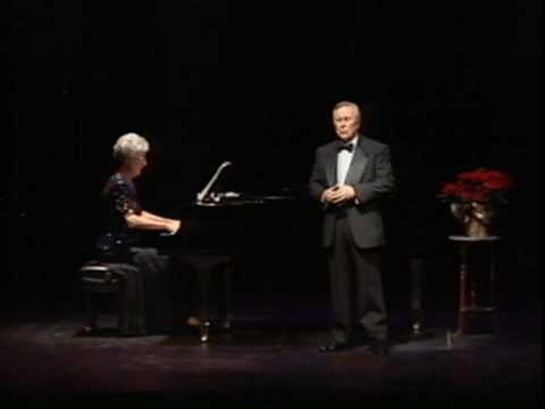
The other day I picked up the tape of Bill Nave’s 1996 concert on the Guignol Theatre stage.

Sigh.

I miss Bill and frankly, as much I cherish living in present-day Lexington, it was an even better place when Bill was here.

Bill established two dinner theatres in Lexington; the Red Mile Dinner Theatre (1970’s) and the Diner’s Playhouse (1980’s). There are still veterans of those theatres haunting Lexington’s theatre scene today. I’ll let them raise their own hands.

Bill performed and performed well. The list of shows is long, but my favorite was his starring turn in Most Happy Fella (1983, I think) directed by Dr. Jim Rodgers in the Guignol. I was rehearsing The Fifth of July in the Music Lounge (now the Dickens Movement Studio) next door. I’ve written about that experience in this blog before; “Hey, It’s What We Do”. During breaks and after rehearsal I would sneak into Bill’s rehearsals to watch.

Bill’s various efforts were all important to Lexington theatre.

But the best was Café Chantant.

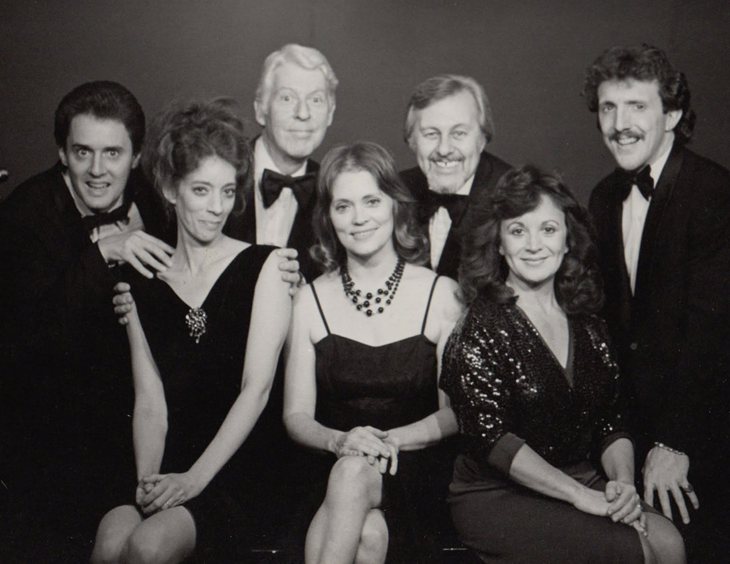
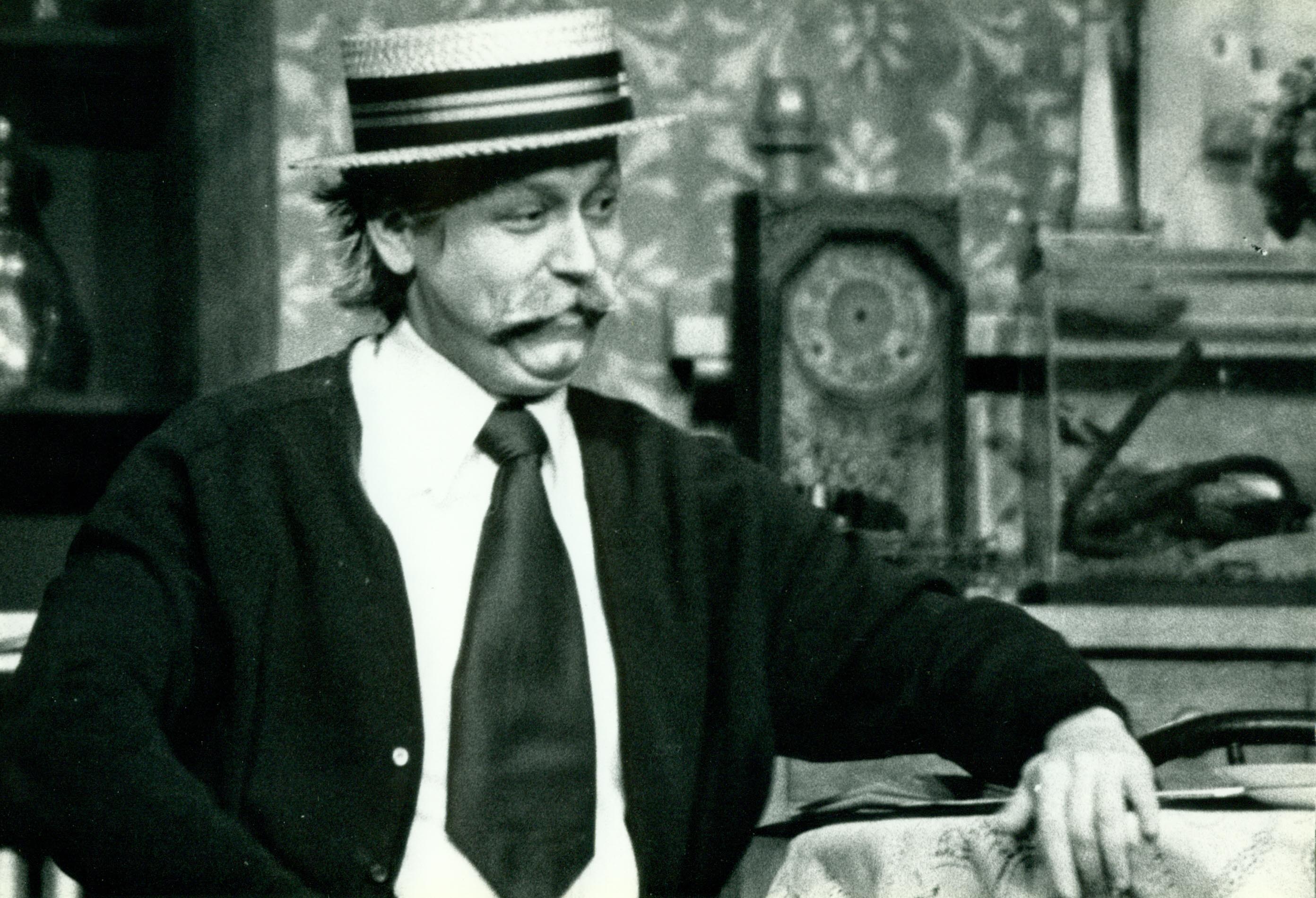
Add Matt Regan and Sharon Kinnison and this would the cast of Le Cabaret as I remember it.

Café Chantant was his French restaurant. It was elegant, it was tasty, and it was civilized (“civilized” meaning it had a fine wine list).

It also had Le Cabaret in the basement. It was elegant, it was tasty, and it was civilized (“civilized” meaning the ghosts of Noel Coward and Cole Porter regularly materialized). It was open until the wee hours, an unusual thing for Lexington in those days. You could go to the theatre and finish the night at the Le Cabaret. Who knew such a thing was possible?

The company of Le Cabaret was witty, boisterous, a bit tipsy, and fiercely talented. Just when an evening seemed to be spinning into mayhem, Bill would unleash that voice and stun the room into gratitude for just being there to hear it. I loved those evenings.

In the concert on the tape, Bill explains that his first singing teacher was Nelson Eddy. His grandmother had a bunch of Nelson Eddy records (I almost said “OLD Nelson Eddy records”). Bill would listen to them and imitate what he heard. Similarly, my first singing teacher was Bill. He would perform around town in shows and at the Café Chantant. I would hang on every song like a groupie. I would imitate his sound and his demeanor. I never achieved either, but trying led me to far better places artistically than I would have ever found on my own.

Bill was smart, gracious, generous, and he sang like a dream. All of that was in full view on the concert tape.

I still miss Bill.