Tag Archives: Edgar Wallace

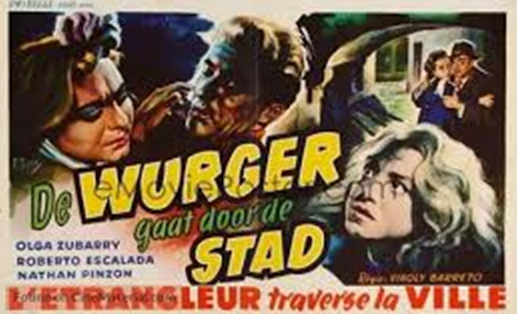
El Vampiro Negro

It sounds like a horror flick made in Mexico in the early 60’s and reworked by K. Gordon Murray, inexplicably but plangently dubbed by radio announcers in Coral Bay, Florida, and released as a third feature lagniappe on a Santo-driven Saturday all-night Southern California neighborhood screen.

But it’s not……any of it.

Instead, it’s a gripping, non-supernatural 1953 reworking of Fritz Lang’s 1931 jewel “M” that’s actually scarier than the original.

Director Román Viñoly Barreto replaces Peter Lorre’s remarkable performance in the original with a gang of sterling actors from a larger portion of the planet’s population (women in the key roles – whatta concept!)

  • Olga Zubarry is earthy and anxious, vulnerable, but fierce, and she does what the police cannot.
  • Nathán Pinzón is pathetic and pitiless and readily tearful.
  • Nelly Panizza is energetic, hot in her lingerie, and fears neither the authorities nor repercussions…and near to her is not a safe place to be.
  • Roberto Escalarda is cool, cruel, perfectly groomed, and perfectly hypocritical. He also gets my laugh-out-loud line of the film as the prosecutor; “Round up the usual suspects.”

I believe film-makers watch other films……duh.

It would not be a surprise to me to find out Barreto was impressed by Tod Browning’s FREAKS (1932). There were moments during the stalking of the killer when I almost started chanting; “Gobbo-geebo, Gobbo-geebo, now we make you one of us.” And the final corralling of the villain in the sewers smelled much like the demise of Orson Welles in Carol Reed’s brilliant THE THIRD MAN (1949).

It also would not surprise me to learn that the West German 1960’s film interpreters of the Edgar Wallace canon had been exposed to this film. I’m pretty sure I’ve seen that homeless blind match-seller before and I was expecting Klaus Kinski to jump out of the shadows at every turn.

I was also arrested by the long shots of shoes walking the rain-shiny nighttime cobblestone streets. A similar sequence opened Koreyoshi Kurahara’s excellent flick; I AM WAITING (1957).

Film-makers watch other films.
Two other odd thoughts…

This film, according to the always thoughtful analysis of Eddie Muller, was part of a golden period of Argentine film-making in the early 50’s. That productive time was truncated by government turmoil and the strangling sunami of films from Hollywood. Argentine films continued to be shown and win awards in Europe, but few made it to the States. This economic imperialism was replicated in other parts of the film world. While I’m pleased that the US product was so well-done and well-received, I ponder if the price of losing variety and diversity was awfully high.

<< sigh >>

Something we’ll never know…

Also…

There’s a scene on a roller coaster; usually a happy choice for me.

I love roller coasters and wish to ride them all…but I didn’t care for this one. It was a coaster that only held two people in each gondola for each ride and only one gondola for each ride. The two riders were genuinely terrified, as I would be. It’s one thing to be hurled to destruction doing a foolish thing along with a crowd of brave fools. It’s quite another to be a solo fool.

Perhaps that explains lemmings.

Perhaps that explains political rallies.

I need to cipher on that a bit.

The film is quite fine. If you get a chance to see it…lucky you.

The Phantom of Soho

No it’s not Ibsen, or Shakespeare, or Tarentino…or even Gaston Leroux.

It’s Edgar Wallace.

No it’s not The Phantom of the Opera, it’s The Phantom of Soho.

No it’s not set on the Parisian opera stage and its fantastic (and damp) underworld. It’s set in the smoky, underworld night club; Sansibar (doesn’t even get an exotic “Z”), where the dancers are scantily-clad when clad at all…and can be had by all for reasonable remuneration.

The music is not grand opera, it’s wheezy, sleazy jazz.

Footlights? Fergit it. It’s neon or nuthin’ in this flick.

Edgar Wallace, for a significant part of the 20th century, had more books in print than any other author in the English language. His books were popular staples in every outpost library of the British Colonial Empire. He wrote crime novels, jungle novels, and a little epic you might’ve heard of; KING KONG.

But on this movie night, we’re prowling in our trench coat through the swirling fog of Soho. We’re shrugging away the blandishments of the entrepreneur-esses on the street corners and in the shadowy doorways. We’re carefully avoiding the blackmailing ship’s-captain who resembles Popeye’s good buddy, Bluto. We’re dodging knives and politely passing on the proffered poison capsules. We have a rendezvous with a surprise twist that we saw coming in the first fifteen minutes of the film.

It can’t get much better than this.

Snarling Charles and the Case of the Christmas Gas Bag

“Look at the fog!”

Chuck peered out his front window at his first Christmas season in his new neighborhood. After decades of Christmases living under the Hollywood sign in Los Angeles, clearing the bougainvillea droppings from his hot tub, and watching reruns of Bing, Rosie, Vera, and Danny thrilling to the snows of White Christmas, coming home to a Bluegrass blurry Christmas was nettlesome.

Bouncing around his ankles, also aspiring to be nettlesome, but too wee to succeed was Nigel.

Nigel, Chuck’s fierce and tiny Yorkie was on a biological schedule. “Itstimeitstimeitstime – DadDadDad – letsgoletsgoletsgo – Igottahikemyleg-g-g-g.”

Chuck continued to survey the smudge of a yuletide evening that was far from being “…just like the one I used to know.”

“I haven’t seen fog like this since my first trip to London.”

Early in Chuck’s successful screenwriting career he wrote two most excellent Sherlock Holmes screenplays that also provided an extended stay in London as the “screenwriter-in-residence” on the set of the filming. He had spent much of the residency turning his well-nurtured Anglophilia into full-blown Angl-Oh-h-h-sweet-mystery-of-life.

He savoured (note the spelling) Scotch eggs, marmite, warm beer, and old champagne. He favoured (sic…and sick) cricket over baseball and snooker over pool, though he still couldn’t play any of them.

He adopted a sort of uniform for his post-prandial wanderings through the misty streets of night-time London. He had an ulster-ish coat. He eschewed the arms of the coat and draped it over his shoulders like a cape. He had acquired a billed cloth cap with a hounds-tooth pattern. It wasn’t exactly a deerstalker but in the fog…

He also had a cane.

Not a mere cane for walking assistance, but a cane of hidden menace.

A twist of the handle and voila – a twelve-inch blade!

But wait…there’s more, and I’m not talking Ginsu knives.

With a commanding arch of one eyebrow, a radical lift of lip, and a sideways glance worthy of Sam Elliott, Snarling Charles was born and the city on the Thames trembled.

This night though, now that he thought of it, all those ingredients were still in his possession…and the fog…and the dog…

“Alright Nigel, you silly bugger, let’s sally forth.”

“Charlie! Wait. I have something for Nigel if you’re going out.”

Chuck’s Lovely Wife Julieanne (she was contemplating a legal change of name to “Lovely Wife” but had not yet committed) ran up waving a plastic straw. It was one of those light sticks that, when violently bent and twisted, emitted a sickly green chemical glow. She wrapped it around Nigel’s neck (twice – tiny bugger that he was). Nigel bounced; “nownownownownow!”

Cap, cape, cane, canine, and sneer all in place, Snarling Charles and his noble beast were on the street and on the prowl. Thomas Burke would have approved.

Alas, there were no ill-lit shops inhabited by Quong Lee, no lamplights, no hansoms, no foghorns or chimes, no newsstands, no blind match-sellers beloved by Edgar Wallace; just prim, new residences hunkering down in the murk. Even the murk was marred by blobs of harsh light bobbing on the lawns.

There were blob reindeer, and blob Santas, and blob angels, and blob snowmen. They were inflatable plastic yard decorations, garishly lit from the inside, and staked to the earth to limit their contagion. At least that’s how Snarling Charles thought of them.

“Nailing‘em to one place is good for a start, but I can think of a more permanent cure for this infestation. I’ll nail them gas bags fer good!”

He approached a six foot high snowman doing a handstand. The sheer fantasy physics of a glowing snowman cavorting on his hands was maddening.

“How would his hat stay on?”

Charles gave his cane a twist and voila!

“I should name this little sword ‘Voila!’” He thought.

He hovered in front of the offending balloon. Nigel bounced about in triumph; “LooklooklookDad! It’s a quality poop, just like they promise on TV! Pickitup-pickitup-pickitup! We’ll add it to the collection!” Nigel had long been convinced that somewhere there was a gallery of The Poops of Nigel, the Silly Bugger.

Just then, the front door of the house to whom the prancing abomination belonged, opened and a man’s voice bellowed; “Ay! What’re you doin’ out there?”

Snarling Charles bristled at the tone, but maintained a civil front.

“I’m simply admiring your yard…art.”

“Well, you just admire it from the sidewalk and get offa my lawn!”

There was a final duet of a door slam and a vocalized “Pervert!”

Charles was left in a silent fog, the darkness broken by a radiant upside down snowman and a bouncing Chernobyl green glow stick on his dog.

No…it wasn’t London.

No…it wasn’t the snowman’s fault.

But someone must be made to pay.

He sheathed his sword…

…and left the poop.

And by the light of his good dog Nigel, he wended his way home.

This is Our Time

That’s what Governor Andy Beshear told me today.

What a blessing he has been in this season when America learned to its dismay that “corona” was not something you could drive or smoke, but something that could truncate your season basketball tickets, or hose down your spring beach hormones, or free up your Sunday mornings (but not to play golf), ……or kill you……or kill those you love……or kill what you love.

I do not want to disappoint Governor Andy…or endanger my mom, or Janie, or my friends, or total strangers for that matter. I will stay healthy at home.

But I do miss baseball.

I’m loving the free streaming from the Metropolitan Opera and looking forward to the National Theatre’s stream of “One Man Two Guvnors” this Thursday evening.

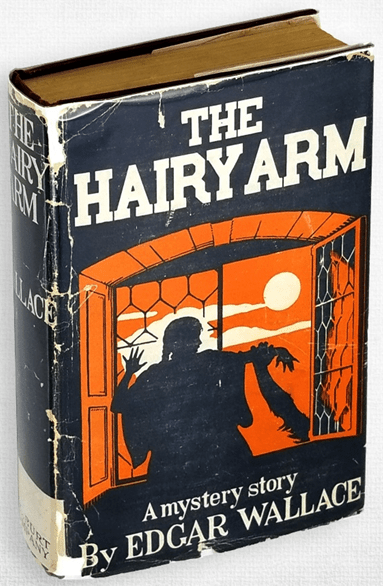
Continuing my dubious literary journey though the tawdry Edgar Wallace canon is amusing.

Walking the dog 18 times a day is fulfilling.

Janie’s cooking is jes’ fine.

But I do miss baseball.

That explains the giddiness I’m feeling over the “Baseball’s Greatest Games” series on the MLB Network. Bob Costa zips though highlights of the greatest baseball games in the last 50 years with commentary from participating players. Then the network shows practically the entire game with the original play-by-play.

So…

Tonight I’m watching the first game of the 1988 World Series between the Los Angeles Dodgers (formerly of Brooklyn) and the Oakland Athletics (formerly of Kansas City and Philadelphia). This is the Kirk Gibson game; a cherished moment for any baseball fan. Mr. Gibson’s one-legged homerun in the bottom of the ninth for a walk-off (hop-off?) victory for the Dodgers. I know it sounds like a Monte Python routine but it’s actually quite thrilling.

The play-by-play is by Vin Scully and Joe Garagiola, similarly cherish-able; “He was about three minutes late on that fast ball” or “The ball didn’t get up. It didn’t get down. It just got out.”

I got yer analytics right here. Vin and Joe didn’t need no stinkin’ stats.

Also cherish-able for this baseball nerd is getting to watch Lexingtonian John Shelby play center field for Los Angeles.

An interesting aspect of the rebroadcast is the elimination of 90% of the replays and 100% of the strolling time between pitches. It turns baseball into a rhythmic action sport. It’s gripping. You can’t take your eyes off of it.

“You can’t take your eyes off of it.”

Not even for a second.

Not even to take a bite outta yer hotdog, or turn to the friend (or stranger) next to you to discuss in complete sentences and grunts what shoulda been done on that last play or what should be done on the next, or who’s a bum and who’s not, or whether the so-called poetry of Rod McKuen was simply a long-range pre-publicity campaign for Clint Eastwood’s Play Misty for Me (that’s a close call).

In these re-broadcasts, as much as I’m enjoying them, time has been extracted from the timeless game.

Time for important stuff.

And it’s our time.

Our time for important stuff…

…like staying home…

…being healthy…

…being together…

…protecting what we love…

…protecting ourselves…

…not being part of the problem……

……waiting for the next real pitch.

I do miss baseball.