Tag Archives: Eric Johnson

Acting School in Your Own Back Yard

Actors are silly people.

Wait!

I’m not qualified to make such a sweeping generalization. Yes, I have acted on stage, but as painfully pointed out to me by attendees and reviewers of my efforts as Dracula, and the butler in Feydeau’s “A Flea in Her Ear”……sigh.

However, having had a gaggle of theater folks in the house this weekend (my friend Eric Johnson would modify that to “theater-ish folks”) for Halloween deco, chili-pots, and charades, I can vouch with confidence of the silliness of those actors.

Actors are sensitive…to everything. I know I am. If someone walks by me with a limp, I will pass them by with a pronounced and sometimes accurate lurch to my gait. If you sneeze around me, chances are I will reach for two tissues; one for you and one for me. If you drawl around me I will vocally lurch southwards, again, sometimes accurately. I just watched an interview with the Prime Minister of Jamaica bemoaning the category-five hurricane about to assault his island. I then strolled to back door of our house in Central Kentucky, picked up the remote, and closed our garage door.

Sensitive.

Whence cometh this?

Today it arrived in the mailbox in the form of a battered and tattered 65-year-old book of no immense value, but a treasure none the less.

Elizabeth K. Cooper’s 1958 Weekly Reader Children’s Book Club edition of SCIENCE IN YOUR OWN BACK YARD was an eye-opener to me at the age of nine.

I’ve written before about my mom’s complete devotion to the usefulness of reading. We weren’t rich, but the public library, the bookmobile, Mr. Dennis’s bookstore on North Lime, and the Weekly Reader Children’s Book Club filled a yawning abyss of hunger.

Every month, I devoured every part of every selection; text, introductions, forewords, table of contents, dust wrapper notes… I was saddened by any lack of indices.

The first line of the dust wrapper note for SCIENCE IN YOUR OWN BACK YARD was a question; “Would you like to be an explorer—without leaving your own neighborhood?”

Yes!

Yes!!!

The roster of the first astronauts had just been announced.

I did not see my name on the list.

My neighborhood was all I had.

The title of the first chapter was “Exploring the Yard on Your Stomach.” I did just that. I flopped myself down and asked the questions prompted by Ms. Cooper;

What do you see?

What do you hear?

What do you feel?

What do you smell?

What do you taste?

I filled up my senses.

Chapter Two; Exploring the Yard on Your Back.

What do you see?

What do you hear?

What do you feel?

What do you smell?

What do you taste?

I filled up my senses.

I “slipped the surly bonds of Earth” in daylight, before midnight when the TV stations signed off for the evening. I named clouds. I reached sub-orbital in my mind before Alan Shepard.

I learned to act.

I still run through those questions when rehearsing for a stage production;

What do you see?

What do you hear?

What do you feel?

What do you smell?

What do you taste?

Those ingredients enhanced by the memories they trigger make me as human as I can be in the crucible of pretend.

So yeah…

…the book is of no immense value………except to me.

And by the way, should you wander into the wild kingdom that is our back yard and you see me flopped on the ground;

  1. Check for a pulse.
  2. If I’m on my stomach, it’s OK, I’m still exploring.
  3. If I’m on my back, it’s real OK, I’m still looking at the stars.
  4. Or, I might just be acting.

The power of books, that’s why they want to control them.

Swamp Dreaming

It seems like a good night to pull my eyes and ears and head out of the 24/7/365 news apocalypse, and instead, sail into some YouTube videos of Blossom Dearie, Oscar Peterson, and Thelonius Monk…and perhaps visit a while with Pogo Possum.

Pogo and his friends invariably slow me down, charge me positively, and make me smile…not from a distance, but sittin’ right next to the Okefenokee denizens relaxin’ on the same log. I can smell Albert’s awful cigar and wince when he gulps Pogo’s bowl of wax fruit in its entirety before recognizing the fruit’s ersatz-ness. No problem, just a fine excuse to move into Pogo’s house (and larder) for a few days convalescence. Pogo don’t mind.

The first house I owned was on the north side of Lexington about a block from Louden House in Castlewood Park and it had a bit of that casual feel about it. I grew up in that neighborhood and felt cozy there.

Janie and I made our early discoveries together with each other there. In fact, I still believe it was my first tortoise-shell, Scandal, who convinced Janie that I might be worth taking a chance on. We would open a champagne bottle, take the foil, and roll it into a small ball, toss it, and Scandal would trot after it and return it to me. Who on this planet could resist a champagne-fetching cat?

However, not all the discoveries were pleasant in this 50+ year old (in the 1980’s) house. The morning Janie looked up in her bath and instead of the ceiling, saw a lovely azure sky was a challenge, and the unheated bedroom was a challenge of a different sort…though the latter had its upside.

But the Okefenokee-ness of the nest came from the friends who dropped in. I remember Paul Thomas coming by to help move Janie in by ordering pizza. I remember Eric and Becky Johnson watching “White Christmas” with us, and continuing to watch it to the end with Janie even though I had slunk off to bed halfway through (Hey! I was a workin’ guy!). I remember Chuck and Julieanne’s après wedding do-dah in the parlor. I remember Vic Chaney brutally critiquing my meagre collection of record albums (remember those?). I remember Gene Arkle pondering for over an hour before he made his next tragic chess move in a series of tragic chess moves. I remember Joe Gatton bouncing into our Sunday breakfast on the porch and helping us plow through the Sunday papers, about the only news we consumed those innocent days.

No, we didn’t eat the wax fruit, and the cigars weren’t awful, they were non-existent. But the company was easy. There were no conversational land-mines of which to be wary. Outrageous and wildly inaccurate things were said and then laughed away. Offense was rarely taken.

We had little…

…and thus, little to lose…

…and thus, little to defend.

We had each other…

…inside decrepit brick walls…

…a fragile and powerful bubble of heedless good will.

We had it all.

Sewing the Sea to the Sky

It was a warm, salty, sunny day in the June of 1984, on the Outer Banks of North Carolina.

I lived then, and live now in Lexington, Kentucky, the largest US city with no major water element…or so I’ve been told. We have no ocean, no lake, no river. We do have the Town Branch of the Elkhorn Creek that runs through our downtown, or at least it formerly did. We (“we” being folks before my time) paved over the creek. Thus, it now runs under our downtown.

I’ve never seen it.

But I suspect many of us Lexingtonians, like divining rods, know it’s there, and I think we harbor a longing for it. A few years ago, an enterprising local artist ran an audio cable through a sidewalk that lies between a 20-story downtown bank building and its parking structure to a microphone near the underground waterway. Hidden speakers whispered the sounds of running water to the strollers on their way to make their mortgage payments. Not exactly ocean surf…more like trickles of desperation.

I love where I live, but I do long for big water…and a major league baseball team. It’s all that stands between Lexington and perfection in my book.

The first time I saw an ocean I was on a winery/vineyard business trip to California. One late afternoon, my colleagues and I drove our rental gondola of a car due west until our path ended on two tire tracks on the grass. We walked to the cliff overlooking the biggest water I’d ever seen.

A couple of days earlier, I had made my first hajj to City Lights Bookstore in San Francisco and now I was standing at the physical and logical end of Kerouac’s road. I was at the end of the western world, basking in that western light, gazing across to where nothing was visible, nothing was promised, nothing was assured, and nothing was finished. The possibilities of Diebenkorn’s and Seurat’s blank canvases were immediate and possible. What was on the other side? Stoppard advises; “I wouldn’t think about it if I were you, you’d only get depressed.” Tolkien is more hopeful, but just as final, and since I did not want to visit those Grey Havens while still in my 20’s, I reluctantly pulled myself away…changed more than a bit, to a more pedestrian search for Dr. David Bruce’s winery and some colossal chardonnays.

I have been mesmerized by big water ever since. Key West, Clearwater, Biloxi, New Orleans, Savannah, Charleston, and the Outer Banks. Waves and tides, sunsets and sunrises, lakes, bays, rivers, marshes, herons, dolphins, pelicans…

Pelicans…

…ah yes-s-s-s, pelicans…

…back to 1984.

It had already been a long, full day and we still had a ways to go…but that was alright. By this time, I was pretty warm and salty myself, and still fairly sunny.

The Outer Banks are big water writ even bigger water. These fragile strips of sand are far enough out to sea that to the east you can’t see Africa though you’re told it’s there, and to the west you can’t see the mainland though you’re told…

Sunrise over the water inspiring your day.

Sunset over the water evaluating your day.

Promising to do better tomorrow…or perhaps, do nothing at all.

This day, the Queasy Rider and I had been covering ground all day.

We had left the third member of our expedition, P-Tom, back at the beach house, nursing his badly sunburned feet. P-Tom had camped out the previous afternoon on the deck of his uncle’s beach house, in the shade, with 800+ pages of light reading about Confederate naval fortifications. As sure as Martello walls must crumble before the onslaught of the modern cannonballs of 1861, it was just as inevitable that P-Tom’s page-turner was no match for the insidious onslaught of the warm ocean sun.

He fell asleep.

The shade moved, as fickle shade will.

His beach-appropriate bare feet were exposed.

He snored.

His feet simmered.

We’ll turn that inevitable page for him.

Queaser and I were sympathetic, but still ambulatory. Heartless and undeterred, we beat our un-fried feet down the road to adventure.

We checked out the site of the Chicamacomico Races. This is just fun to say out loud, and it was where the Blues and the Grays in the jolly 1860’s spent a jolly day chasing each other up and down a sandy stretch of beach that meant little to either side, to no discernible improvement to the strategic chances of either side. I forget who chased who first, but both factions got their turn to chase. It was like a re-enaction of something that had not yet been enacted. I dunno. It plumb evaded me. Maybe there was yelling and whooping and beer involved. Maybe it ended in a real nice clambake.

We moved on to see the lighthouse at Hatteras. This is the lighthouse that had been moved back from the encroaching sea. It was an impressive feat, but not speedy, and we had a ferry to catch. We were on our way to Ocracoke Island.

Ocracoke was pleasant and small—humps of sand, clumps of sea oats, and a squat lighthouse that was moving nowhere.  We had pretty well “done” the isle in about 20 minutes, but we had time to kill before the return ferry. We treated ourselves to a dark little restaurant and some dubious-looking, but tasty chowder.

Now we were returning on the ferry along the fringe of the Pamlico Sound to Hatteras. We were leaning on the rail looking toward the mainland we were assured by the maps was out there somewhere.

A line of ten or twelve pelicans flew sinuously past on a course parallel to our craft…above the horizon…then below the horizon…above again…then below again……repeatedly……………..sewing the sea to the sky.

I admire pelicans.

They look so ungainly on land and so commandingly graceful when they fly.

Sewing the sea to the sky, a beautiful unconscious act of nature, oblivious to and unconcerned with the fact that their stitches will never hold.

I have many friends who are stage actors and directors. They are pelicans. They create people and situations that stun and move real people. They sew the sea to the sky for the run of a show. Their stitches never hold. The show closes and the moment disappears except in the minds and hearts of those they stunned and moved…and later of course in their stories shared and expanded with other pelicans over omelets at Josie’s breakfast oasis.

These thespian pelicans are oblivious and unconcerned. They have new lines to learn. They have new, un-permanent stitches to sew.

They have new sowing to do, and new lies to tell.

I admire pelicans.

Club Nova

Rowdy and jes’ happy to be there!

I saw a video of Mt. Washington in New Hampshire this afternoon. The wind was swirling at 110mph, the temperature was -50°, and the snow was flying in every direction like a freshly and maniacally shaken snow globe.

It was intended that I should be terrified, or at least intimidated by this.

Meh.

I’ve been in Anchorage, Alaska watching the fog freeze.

I’ve landed in Edmonton, Alberta at 1am in February in an icy glaze.

I wandered jacket-less in a 45° morning in Key West seeing signs on store doors apologizing for being closed for the first time in decades because of the “frigid conditions.”

Perhaps you’re thinking; “Yeah, that’s rigorous, but you can’t compare it to Mt. Washington today.” And perhaps you’d be right.

But…

…I’ve been to Antarctica…

…in the basement of Levas’ Restaurant in downtown Lexington in January.

Hoo boy!

It was the winter of 1985.

The unfinished basement of Levas’ Restaurant was the home of Actors’ Guild Theatre at that time and rehearsals were beginning for their next production; “Terra Nova” by Ted Tally, a dramatic retelling of the heroic, but doomed attempt by Robert Falcon Scott in 1910 to be the first to reach the South Pole.

Heroic but doomed…

One might be tempted to attach that same forecast to any attempt to recreate the vastness, harshness, whiteness, and absolute cold of the Antarctic in the basement of a Greek-leaning eatery/piano bar on Main Street in Lexington, Kentucky, an almost Southern city whose snow-removal system is longingly referred to as “April.” Keep in mind, said basement had concrete floors, square metal ceiling supports, low ceilings, and just enough space for about 30 plastic chairs for the audience. Nothing screams polar extremes like plastic chairs.

But for all those geologic and climatic and architectural obstacles, we had some things going for us.

The script was fine.

The director (Carol Spence) was committed and smart and clear. She assembled a rowdy cast and herded them expertly towards a moving end.

The landlord (Angel Levas) believed in the value of the arts but also believed in the value of good business. He resisted adjusting the thermostat of his building to accommodate the non-paying underground thespians. ‘Twas brillig indeed! The Antarctic’s proximity was a nightly given.

I recall one particular rehearsal when Carol brought in an improvisational consultant to lead us in an exercise involving the medical stages of freezing to death. We were supine on the floor in the dark and listening as he read from medical books of frostbite damage and the effects of blood flow becoming blood-fled. He crooned to us of the creeping muscular constrictions on the glide path to doom.

Why this show never became a musical plumb evades me.

White sheets were hung. Shiny white material obscured the support poles. The arctic sleds were pulled four feet and we believed they had been hauled forty miles. The plastic seats were filled with enthusiastic audiences who stood at the final curtain, though they may have been trying to get their blood flowing again.

I finally warmed up again by July.

Mt. Washington, you got nothing on me.

On the Road + 70 years

I think I first read Jack Kerouac’s road-trip opus about 1968. The wheels that inspired Kerouac’s chronicle had rolled a few years before I was born, but I was now in my teens and had been driving for about 20 months. It was not unusual to find me cruising the intoxicating two-lane rural asphalt through northern Fayette County for hours after my school day at Bryan Station. My folks had moved to Omaha, I was alone, gas cost about 33¢ a gallon, Dad had left me a 1959 sky-blue Cadillac he had restored to viability for the spring…and, of course, I was gonna live forever…and maybe…just maybe…I might catch a gander at that Golden Gate Bridge on the old Athens-Boonesboro Road.

20+ years later, I finally did make it to San Francisco, not on a spiritual journey by thumb, but on a business trip by plane and by rental car…not wine spodee-odee, but Napa cabernet…not crashing at someone’s pad, but snoozing at a Holiday Inn on the Wharf. I’m not complaining. It was fine enough. But my zooming and dreaming though the tree tunnels of the Bluegrass and Jack’s crooning about jazz-inspired freedom and the end-of-the-western-world light had promised a bit more.

I had an afternoon free on that trip. I went moseying. I walked the worn wooden floors of Ferlinghetti’s book store. I smiled to see Wendell Berry so proudly displayed there. I saw an old poster for Job Rolling Papers. I smiled at that too. I’d always thought those graphics were cool without knowing anything about Alphonse Mucha at the time, and also without knowing anything about rolling my own. My own what? I was a 40-something hippie-type liquor and wine retailer who had never smoked tobacco much less anything more exotic (euphemism for illegal). That’s got to be a miniscule demographic.

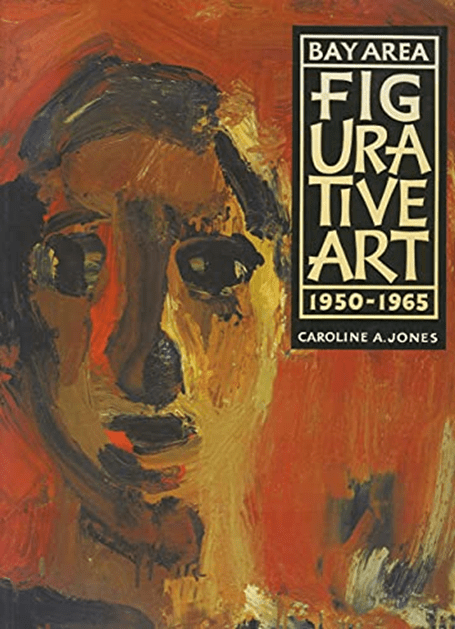
I also saw a poster for the current exhibition at San Francisco’s Museum of Modern Art. They were showing something called Bay Area Figurative Art 1950-1965.

Whoa.

I went.

For three hours I lost myself in the GI-Bill-fueled creative images of Elmer Bischoff, Richard Diebenkorn, David Park, Clyfford Still, and Paul Wonner – the same images in which Kerouac, Carl Ginsberg, and Neal Cassady would have swum after their highway hajj. I imagined myself into a 50’s garage/art studio, listening to Ginsberg chanting “Howl” while Kerouac passed the hat for wine. I know my comfort-loving geezer would not have lasted 20 minutes in that room, but once…once…I drove a ’59 big-finned sky-blue caddy on green-infused country roads…

One week, Joe, Eric and Junesboy, three mature bohemians climbed into Joe’s car and headed towards the Speed Museum in Louisville to see their current exhibition of the works of Alphonse Mucha.

What goes around…

We were on the road, yass, yass, on the road.

We lunched first at the corner drug store. It was Weeny Wednesday. Thus we were nutritionally fortified with hot dogs and milk shakes for the journey. Joe drove, it being his car, Eric navigated, I kibitzed from the back seat, geezer-splaining the ins and outs of Kentucky legislative schemes with my deep, eight-year outdated wisdom. Could there be a more potent recipe for random bewildered tedium?

But the sun was shining. The horse farms were still faintly green in January. The company was fine. We were in no hurry. Hell, we’re retired!

It’s unwise for us to be hurried. None of us are the skilled (<< snort >>) drivers we once imagined ourselves to be; Joe’s reaction time is borderline glacial, Eric likes to look directly and immediately at whomever he’s speaking to (left, right, or upwards when Joe decides the lane markers are mere suggestions), and I read mystery novels at long red lights until the guy behind me honks. We are three creative types who really should hire a limo.

Today, Joe extolled driving 100mph in Montana as a teen (as the trucks roared by us on I-64 today), Eric thrilled us with descriptions of his 30mph jaunts around Woodford County on his now-defunct Vespa (as two Harleys zipped by us on the right), and I offered a succinct assessment of the Reds’ chances in the upcoming baseball season; “I fear they’re gonna suck” (as a thoroughbred cantered past us with ease and grace and curious patience).

Against all Las Vegas predictions, we reached our destination and it was a good day. It was my first visit to the Speed since its renovation. It’s a treasure. I wish it was in Lexington, but I’m glad it’s as close as Louisville.

The Mucha exhibit was mesmerizing. It had me reliving pre-internet University of Kentucky Guignol Theatre days spent pestering local businesses to put up our production posters to attract an audience. Of course we didn’t have Sarah Bernhardt as a selling point, but we did have Betty Waren urging us on.

A special treat was crossing paths with one of my dozen or so ex-stage-wives who I had not seen for thirty years. At that distant time she wished me safe travels to the Antarctic to freeze to death in Ted Nally’s fine play; “Terra Nova,” in the basement of Angel Levas’s fine restaurant in downtown Lexington. Angel actually participated in our production by NOT turning the heat on in the basement. The Shivering Verismo School of Theatre – who knew such a thing existed?

Despite that frigid parting decades past, it was a warm reunion last week.

We three drifted through the beautiful exhibit. I concocted stories behind the images, Joe envisioned staging the plays and operas, and Eric attracted his usual entourage of other museum attendees who wanted a docent to describe and explain. He is remarkably suited for this role: he is intelligent, verbal, charming, and just happens to be a nationally recognized painter himself…and he can juggle anything.

Eventually, our trio reassembled in the museum gift shop where I made my greatest contribution of the day by finding and purchasing a killer tee-shirt for Janie’s sleep-ware collection. Priorities, gentlemen!

Back to the car and back on the road.

Three bohemians.

Three aging beatniks.

No open windows.

No open bottles.

Just cruise control and conversation.

We wended our way home.

Wended…

Le mot juste.

We missed our exit and had to wend our way through much of Woodford County.

Who cares?

It was a sunny day.

The horses (field ornaments all) were sprinkled in their paddocks.

I briefly flashed back to those après school days…

…on the road.

Montana Joe & Weird Willie

“I am sure, as many as have good beards or good faces or sweet breaths will, for my kind offer, when I make curtsy, bid me farewell.”

Rosalind said it prettily and clearly and thus endeth our final run-through before technical and dress rehearsals and then opening night.

I was in the wings, muttering; “I’ll bid you farewell. There won’t be a half-dozen people a night that’ll understand that line.”

It was 2007 and the play was Shakespeare’s As You Like It.

My head-shaking over the prospects of decipherability of this closing line was not a singular bobble. I was doubtful about many such moments in the play. Moments? How ‘bout whole ten-minute segments of brilliant verbiage swirling over, around, and through a 21st century audience like Casper the Friendly Ghost, leaving them feeling like something remarkable had happened, but who knows what it was…and I guess it’s okay…it sounded impressive.

And most of those bewildering lines were mine.

I don’t like As You Like It, but I admire it.

The speech; “All the world’s a stage…” is worth the price of admission by itself.

I have seen the play four times and now performed it once.

‘At’s enuf fer me.

Bitterest Fool

I was playing one of the fools and was well on my way to crafting the bitterest fool in the history of theatre. I was too old to be flopping about in voluminous motley, toting elfin ingénues and scolding the audience in iambic pentameter.

But I did it.

Why?

Well…

…it was Shakespeare…

…it was a fine cast…

…and it was being directed by Montana Joe and he asked me to do it.

As I said, the run-through was now completed, and I could go home, flip though the script, and look for a bit of brightness that I was sure I was neglecting.

But no-o-o-o-o.

Montana Joe assembled the cast for a few notes.

Joe sat in the front row.

The cast sprawled on the apron of the stage.

Rapt and waiting.

Else, why would you show up for the first read-through, except to hear Montana Joe’s musings for the run of the journey?

Joe slouched and stared a hole in the carpet about three feet in front of his feet. He slow-tugged at the end of his not-quite-Fu-Manchu mustache. His eyebrows lifted to allow room for his pupils to beseech the firmament for le mot juste.

“There is a moment…when we are working on a play…probing and exploring…and playing…and stumbling…and discovering.”

Joe sank a little in his chair, his shoulders and arms and head folded in. We leaned in to hear.

Inherently, we are lost and looking. A director is pointing and guessing…we find things. Some finds are rejected. Some finds are clung to.”

Joe sank further in his sucking pit of a seat.

“Then…there is this moment…when the play takes on a life…when that life is taken on by the cast…and no longer belongs to the director.”

Seat A12

At this point, Joe’s seat (seat number A12, I believe) became a full-fledged black hole and began to whisk him away. His chin was curled to his knees and he plunged away butt-first, muttering…growling…crooning;

“What……a………joy!”

After the guffaws from the cast, we called the local fire department. They came promptly and managed to retrieve Montana Joe and we quickly established call times for the remaining tech rehearsals and headed home.

What a spellsinger.

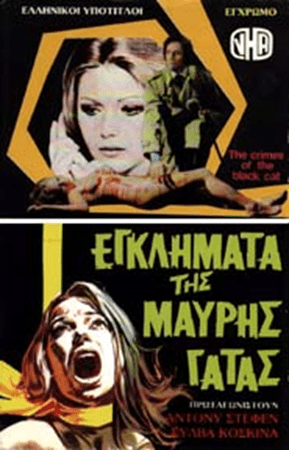
The Crimes of the Black Cat

Movie night!

The Crimes of the Black Cat sounds like it should have been directed by Roger Corman and should have starred Vincent Price and Peter Lorre. Wrong! Thank you for playing.

This gem’s a nasty little giallo from 1972 featuring the always-pleasant-to-look-at Silva Koscina. You could have loved her in Hercules (1958), Lisa and the Devil (1973), and The House of Exorcism (1975)…but probably didn’t. You might have loved her in Uncle Was a Vampire (1959), but if you did, therapy should be seriously considered – I have some names. It also features the always wooden Anthony Steffen. I doubt if you loved him in Django the Bastard (1969) or The Night Evelyn Came Out of the Grave (1971) but I couldn’t resist the name-dropping opportunity – and what names. Mr. Steffen also held his own with acting giant Lee Majors in Killer Fish (1979).

The director of the film, Sergio Pastore, has few credits, but four years before making tonight’s film, he directed; Chrysanthemums for a Bunch of Swine.

What kind of mind…?

Can you picture that on a marquee?

In the 60’s and 70’s, my generation was “…working on our night moves…” (Bob Seger), and trying to find “…paradise by the dashboard lights…” (Jim Steinman/Meat Loaf), at the drive-in theater. The screen entertained and encouraged our fumbling explorations with dancing hot dogs, buttercup popcorn, and Hammer Studio’s latest vampire/Frankenstein/mummy flicks, all with pristine sets, light from everywhere, and buxom babes in peril wearing lots of clothes with puffy sleeves. These were horror movies, but every victim died clean and the blood spilled was bright Christmas red. These were horror movies, but the monsters, be they covered by fur, bandages, or cape, felt as if they’d had a shower reasonably recently. Said monsters might assault a woman, but generally, the camera cut away from the actual deed, and clothes though disheveled and ripped, remained strategically intact even when sinking in ubiquitous quicksand.

Damn.

I admit profound ignorance about the existence of drive-in theaters in Europe during this time. But I discovered the “drive-in” films they were then making in Europe were clearly different…and I have been drawn to watch them like a car crash ever since.

They are sexy; occasionally fleetingly and implied, but often prolonged and explicit, and there are no warning labels.

They are violent; occasionally fleetingly and implied, but often prolonged and explicit, and there are no warning labels. Organs and limbs could, at any moment, become free to roam willy-nilly.

They are dark. Light with no discernible source is non-existent. In many scenes, light of any kind is non-existent.

The sets, in many cases are real…and often older than our country…and they do not feel as if they’d had a shower this century.

These films are foreign…foreign in language, and sensibility, and foreign to my personal history and experience.

That does not make them wrong.

It makes them interesting.

It does not make them good.

Just interesting.

That’s good enough for me.

Tonight’s film, The Crimes of the Black Cat is far from original. If you saw Blood and Black Lace (1964), which, frankly, would stun me, you know this story. The Crimes of the Black Cat is clearly and simply a second artistic take on a story that clearly and simply didn’t need a first take.

It does feature some novel weapons of murder; a yellow Volkswagen, a cat with poisoned claws, and a hole in the ground. It does surpass my friend Eric Johnson’s bar (not known for its height) for filmic pulchritude. It fails utterly in my friend Joe Gatton’s Creative Backlighting Standard.

Otherwise, I’ve seen it. I loved it. You can skip it. You’re welcome.

Missing Sidney on This Sunny Day

It’s strange what can trigger a memory.

I have heard my friend and adopted faux-daughter Karyn Czar asking the first reporter’s question at the governor’s press conferences. I’m always proud.

I first met Karyn on stage in a play. Recalling that play, and feeling today’s sun, and the end of the baseball lockout, triggered another happy flashback.

Today now looks to be the opening day for this year’s baseball spring training…at last. It was beginning to look like there would be no spring training and perhaps no season at all thanks to the oligarchs of baseball (the owners AND the players). My friend Sidney Shaw loved to go to the Lexington Legends’ games. He would not have been pleased with the waste of a fine sunny day with no baseball.

I first met Sidney in the same play as I met Karyn.

It was the summer of 1994. It was a production of Measure for Measure in the Lexington Shakespeare Festival when it was still in Woodland Park…and still doing Shakespeare.

I remember admiring Sidney’s ease with the language and the wisdom with which he infused the character he played. I remember being delighted the first night in rehearsal when his character cast aside that wisdom for outraged passion. It made the dramatic moment mean something more…more human. Working with Shakespeare’s foreign-to-us cadences and vocabulary can make an actor forget the humanity of the situations being depicted.

Sidney didn’t forget.

This was a nice production with a bunch of new (to me) actors, most of whom I’ve had the good fortune to work with multiple times over the ensuing years. This group of actors has gone on to mean much to Lexington’s theatre audiences; Karyn Czar, Jeff Sherr, Donna Ison, Eric Johnson, Laurie Genet Preston, Joe Gatton, Glenn Thompson, Spencer Christiansen, Holly Hazelwood, and others.

Ave Lawyer directed. It was my first time to work with Ave and certainly not my last. I’ve moved furniture and learned lines for her in a number of shows since then. It’s always a real nice clambake.

Thus it was with Sidney. He and I shared the stage in four or five productions. He was always good company and I learned something from him in every show.

However, my favorite theatre experience with Sidney was as an audience member for his performance in Death of a Salesman. I watched my friend Sidney disappear into Willie Loman. The growing desperation and evaporating control of Willie Loman was so alien to the Sidney Shaw I knew. It was a remarkable stretch for an actor and Sidney handled it adroitly and broke my heart.

I miss Sidney.

An Opera House…in Kentucky?

You Can't Take It 10It would have been about 1:00 in the afternoon on a weekday in 1970…
…in an opera house…
…in Lexington, Kentucky.

Why was I there?

Was it to see a production of Carmen, or Madama Butterfly, or Rigoletto?

Nah!

I was there for the weekday bargain matinée at the Opera House Movie House on a fairly sketchy block of North Broadway. For a $1.50 I was settling in for a cinema mini-festival of the Barbra Streisand/Jack Nicholson classic; On a Clear Day You Can See Forever (she sang, he didn’t…thank God) followed by Waterloo featuring Rod Steiger and Christopher Plummer in the mud (neither sang as I recall…thank God).

The theme of this film pairing is strikingly apparent; tedious films employing and contrasting singing and cannon fire as mediums for selling a ticket or two…and maybe a tub of Buttercup Popcorn.

Frankly, I don’t recall much of the afternoon that was indelible in an uplifting way. I recall a long afternoon of affordable and forgettable flicks. I recall dimness, not just in the screening room, but in the lobby (skimping on lighting – a double savings; lower electric bills and less spent on actual housekeeping). I recall passing on the Buttercup offerings; the dim lighting couldn’t obscure the sharp, refinery whiff emanating from the butter(?)-dispensing mechanism. I recall the occasional skittering noises of the legendary rodent cleaning crew in the dark rows of the screening room celebrating the discarded remains of the Buttercup offerings.

Hey!
Buck fifty.
Two films.
You get what you pay for.
Plus Yves Montand and Ivo Garrano…and Mickey and Jerry (without Tom).

Well…that was then.
Eight years later, at age 27, I’m playing the 70+ year old Grandpa in Studio Players’ production of You Can’t Take It With You on the Opera House stage – same building. The seats are new. The balconies and boxes are gilded and populated with Lexington theater-goers. The lights are bright. The lobby, halls, staircases, carpets, and aisles are proudly pristine. No Buttercup products are in sight (or in smell).

What happened?

In the 70’s, the Opera House was attacked by ice storms, gravity, and old age. The wrecking ball loomed.
The city of Lexington and a group called The Opera House Fund said “No.”
A serious architect, and a serious Lexington, and a serious Opera House Fund (thank you Linda Carey and W. T. Young) redesigned and restored the structure – not to a museum roadside attraction, but to a thriving driver of Central Kentucky’s performing arts community.

A year after the success of You Can’t Take It With You, I played a deliciously young and foolish Cornelius in Studio Player’s production of Thornton Wilder’s The Matchmaker in a Saturday afternoon performance to 54 (count ‘em!) attendees in a house that seats about a thousand. Another fairly grim afternoon in the Opera House, but at least the grimness was in striving for something good, not for hygiene or affordability.

I should mention here that in both of these shows I got to work with my friend Paul Thomas. Paul has retired a myriad of times from the teaching profession and became the House Manager of the Opera House. I believe the Opera House muckety-mucks valued his participation, but were unaware that his best and highest use is ON-stage, not off. Such is fickle fame.

In 1981, I urged everyone to “Sit Down, You’re Rockin’ the Boat” in Lexington Musical Theatre’s production of Guys and Dolls. This was a notable production for Paul’s vocal exploration of musical scales of which Schoenberg never dreamed.

In 1982, Paul and I played in Brigadoon, also for Lexington Musical Theatre. Paul demonstrated a technique for holding a gun that the NRA is still trying to explain and justify.

Both of these edifying experiences were on the Opera House stage.

In 1987, I had the totaling fulfilling experience of playing Dr. Watson to my friend Eric Johnson’s Sherlock Holmes in the world premiere of my friend Chuck Pogue’s luscious script; The Ebony Ape, on the Opera House stage in an Actor’s Guild production. A two-story set, perfect and beautiful costumes, Fred Foster, Julieanne Pogue, Martha Campbell, Rick Scircle, Matt Regan…a glorious time for Mrs. Leasor’s little boy.

This was also on the Opera House stage…thank you very much.

A year later, in The King and I (a Lexington Musical Theatre production directed by my friend, Ralph Pate), Janie and I appeared in our one and only show together. She was lithe and lovely. I was…not so much, but I got to sing some beautiful songs for which I was not particularly suited (not, alas and thank God, an uncommon occurrence).

This was also on the Opera House stage. Sorry about the singing…but look at Janie! Isn’t she fine?

Carousel 01Now…
…skip ahead with me to 2006.

I’m asked to play the Star Keeper in the University of Kentucky Opera Theater’s production of Carousel at (you guessed it) the Opera House.

Well, I guess I could find time for that.

I got to walk out on the Opera House stage, count the stars – the stars!– , revive the protagonist and inspire him to briefly return to his former life and assure his daughter that she’ll “Never Walk Alone.”

Whoa.

This is a far cry from 1970 and Waterloo and…

“On a clear day, rise and look around you and you’ll see who you are.
On a clear day, how it will astound you that the glow of your being outshines every star.
You’ll be part of every mountain, sea, and shore.
You can hear from far and near the words you’ve never heard before.”


Well…
…maybe…
…not so very far.

Earnest Words

Importance 06
1980’s production of “The Importance of Being Earnest” in the Guignol with Eric Johnson on the right and some duffer in spats on the left.

Janie and I had a lovely night at the theatre a while back. We watched a crisp and energetic cast perform Oscar Wilde’s brilliant “The Importance of Being Earnest”. It was one our happiest nights for the year.

I admired the efforts of Shayne Brakefield as a sometimes befuddled, often pompous local reverend (think Robert Morley in African Queen with a pencil-thin mustache), Janet Scott in full sail as Lady Bracknell, and Paul Thomas as the butler(s); mysterious, disheveled, inscrutable, vaguely obedient, barely competent, and clearly the mind behind every scene……not.

I have worked with all these actors before.
I know their gifts…and cherish them.
I know their habits and peccadilloes…and cherish them as well.

A week later I participated in a reading of Robert Penn Warren’s ALL THE KING’S MEN on the Carrick Theater stage at Transylvania with Joe Gatton, Sherman Fracher, Ellie Clark, Tom Phillips, Mark Mozingo, and Geoffrey Cobb Nelson.

I have worked with Joe, Sherman, Ellie, and Tom before.

Joe, Sherman, Ellie, Tom, Shayne, Janet, and Paul…
Together we’ve been to Dracula’s Transylvania, New Jersey, New York, a Midwest Mega-Church, Agincourt, Aquitaine, Deep South Mississippi, the magical forests of Shakespeare, Deep South Alabama, Upper-Peninsula Michigan, Russia, London, Pennsyvania, Scotland. We’ve been husbands and wives and daughters and sons and kings and vassals and brothers and sisters to each other.

We have history.

We have vocabulary.

When we step on stage with each other we have a big head-start to share with an audience; a dialogue that, in some cases, has been going on for decades.

These two stage experiences prompted me into a memory (what doesn’t these days?) of an early 80’s Guignol production of “The Importance of Being Earnest”. This was, in retrospect, a wonderful cast for me; Eric Johnson, Martha Campbell, Walter Tunis, Lisa Thomas, Georgia Ferrell, Tim McClure, Ann Dalzell, and Paul Thomas (once more playing the butler – murderous, scheming, ever-expanding his role).

This production was directed by Dr. James Rodgers, and he created an atmosphere playful, quick, and creative, but fierce in language…a happy culture in which Wilde’s mots, bon et rapide, could fly.

And fly they did. At the first table read, our Lady Bracknell encountered the word “indecorous” in the script. She paused and inquired; “Is that pronounced; ‘IN-DUH-COH-RUS’?” To which another cast member replied; “No, and if you say it that way, that’s where you’ll be.”

I suspect Oscar would’ve been proud.

Vocabulary matters.